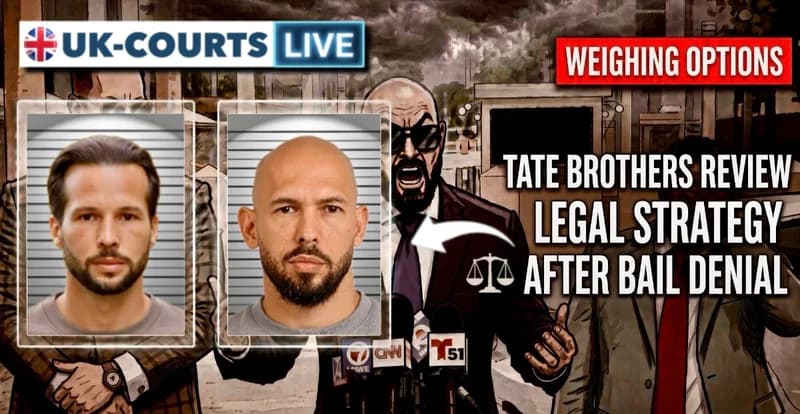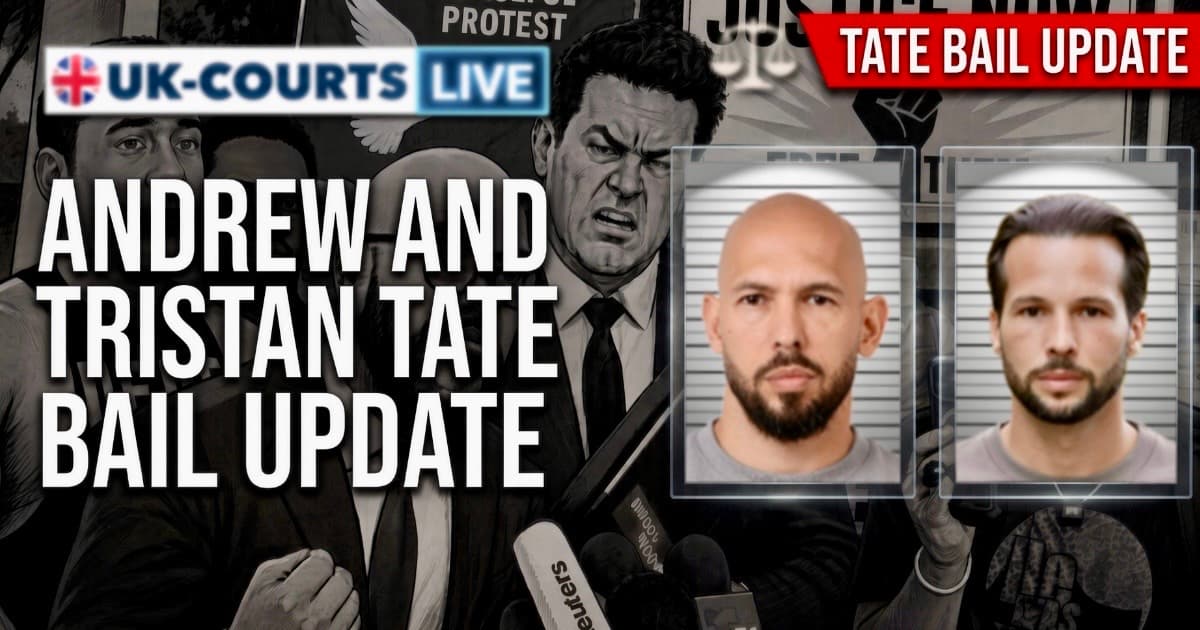
Tate Brothers Remain in Custody as Miami Judge Delays Bail Ruling in UK Extradition Fight
Andrew and Tristan Tate remain remanded in Miami as a US judge reserves her decision on bail during proceedings for their UK extradition over rape and trafficking charges.

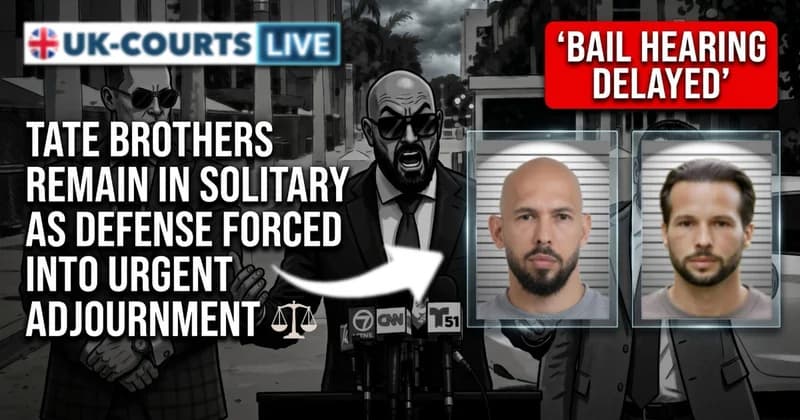
Andrew and Tristan Tate remain in federal custody following a marathon eight-hour bond hearing in Miami, with a US magistrate judge giving the defence a Monday deadline to provide evidence to support their key argument in favour of bail as they contest extradition to the United Kingdom.
Lawyers for the brothers, who appeared before US Magistrate Judge Lauren Louis at the C. Clyde Atkins US Courthouse on Thursday in tan jumpsuits and shackles around their feet, claimed that US detention would prevent them from attending mandatory check-ins and hearings in Romania, where they face multiple serious charges. This would lead to severe disadvantages, including penalties for missed appointments and the prospect of a trial being held in their absence in which they would have no possibility of defending themselves, lawyers argued.
The judge has given the Tate‘s legal team until Monday to provide the court with evidence of this.
While we await the decisions of authorities, independent analysis of the relevant laws governing EU legal rights and US extradition law points to two major areas where these claims contradict legal realities.
First, the defence’s argument that US detention would lead to penalties or a trial in absentia in Romania relies on a false premise. Under EU procedural safeguards and fundamental rights frameworks, an individual cannot be legally penalised or subjected to a trial in their absence if their non-appearance is due to a physical impediment entirely beyond their control—such as being incarcerated by a sovereign foreign power like the United States.
Second, the logic underpinning the bail request collapses under basic US extradition mechanics. Even if the brothers were granted bond during the ongoing Miami proceedings, a US federal court is legally bound to ensure the defendant remains within the jurisdiction and jurisdiction's physical territory while extradition proceedings are pending. Granting bail in the US does not unlock international travel; federal release terms strictly prohibit leaving the United States. Consequently, being released on bond in Miami would still completely prevent them from travelling to Romania to answer local court appointments, rendering their primary justification for bail structurally impossible from the outset.
The core legal contradiction at the heart of Andrew and Tristan Tate’s Miami bond hearing is simple: even if US Magistrate Judge Lauren Louis had granted them bail, it still wouldn’t have allowed them to travel to Romania to answer their bail conditions there. Under federal extradition law, any defendant released on bond pending extradition proceedings is legally bound to stay within the court's jurisdiction and on US soil. Granting bond in Florida would not unlock international travel, meaning the defence's primary argument—that US detention stops them from attending European court dates—was a structural impossibility from the start. How a legal team presented that as a viable reason for release remains an open question, and Judge Louis moved to test it by giving the defence a strict Monday deadline to provide evidence supporting the claim, effectively setting a procedural trap where failing to substantiate a legal impossibility risks exposing them to accusations of misleading the court.
That fundamental flaw sits inside a broader legal and factual showdown playing out at the C. Clyde Atkins US Courthouse, where prosecutors and defence lawyers clashed over everything from asset visibility to active witness-tampering allegations in Romania.
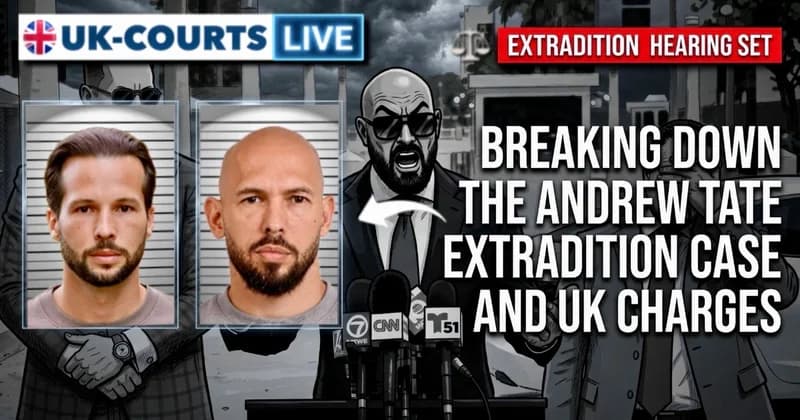
The Crown Prosecution Service (CPS) is seeking the brothers' return to Britain to face charges including rape, assault and facilitating human trafficking for sexual exploitation. Both men maintain their innocence and deny all wrongdoing, with all matters remaining Crown allegations until a formal verdict is reached in a court of law.
During the eight-hour hearing, federal prosecutors strongly opposed release, pointing to a heavy legal presumption against bail in international extradition cases. Assistant US Attorney Abbie Waxman argued that the pair pose an extreme flight risk due to their global reach, highlighting multiple passports—including a Mexican passport under Tristan Tate's photo and birth date bearing the alias "Vladimir Scorpius," lifted from a 1988 James Bond novel. Prosecutors also played footage of Andrew Tate graphically discussing violence against women, arguing that their online persona reflects their true conduct rather than an act. Furthermore, the prosecution brought up parallel legal pressures from Romania, highlighting active allegations that the brothers have sought to influence, manipulate and compromise witnesses through bribes and threats while under judicial supervision.
In a sharp tactical pivot, the defence sought to dismantle both the prosecution’s picture of limitless wealth and the seriousness of their footprint. Lawyers told the court that prominent displays of luxury, such as a $50 million yacht and a $2.1 million Aston Martin, were rented or belonged to others. Taking the witness stand themselves in tan prison jumpsuits and shackles, both brothers argued that the "Top G" moniker is a hyper-exaggerated caricature designed to provoke reactions, with Tristan comparing the routine to Sacha Baron Cohen’s Ali G character. Natasha Sesay, the mother of one of Andrew Tate's children, also testified that his public statements do not mirror his private character.
This defence strategy introduces a stark paradox for followers and observers. If the "Top G" persona is entirely a fictional act, it forces an awkward reckoning for the digital fanbase: what does it mean to idolize and emulate a posture that its creator admits is fake? More critically, while the defence argued that their immense public visibility makes it impossible for them to flee, prosecutors countered that this exact digital ecosystem weaponizes a massive following capable of mobilizing harassment and pressuring witnesses.
The brothers remain held at a federal detention centre, while UK authorities have until September 16 to supply the full evidentiary file to the US State Department before a formal extradition hearing date is scheduled.