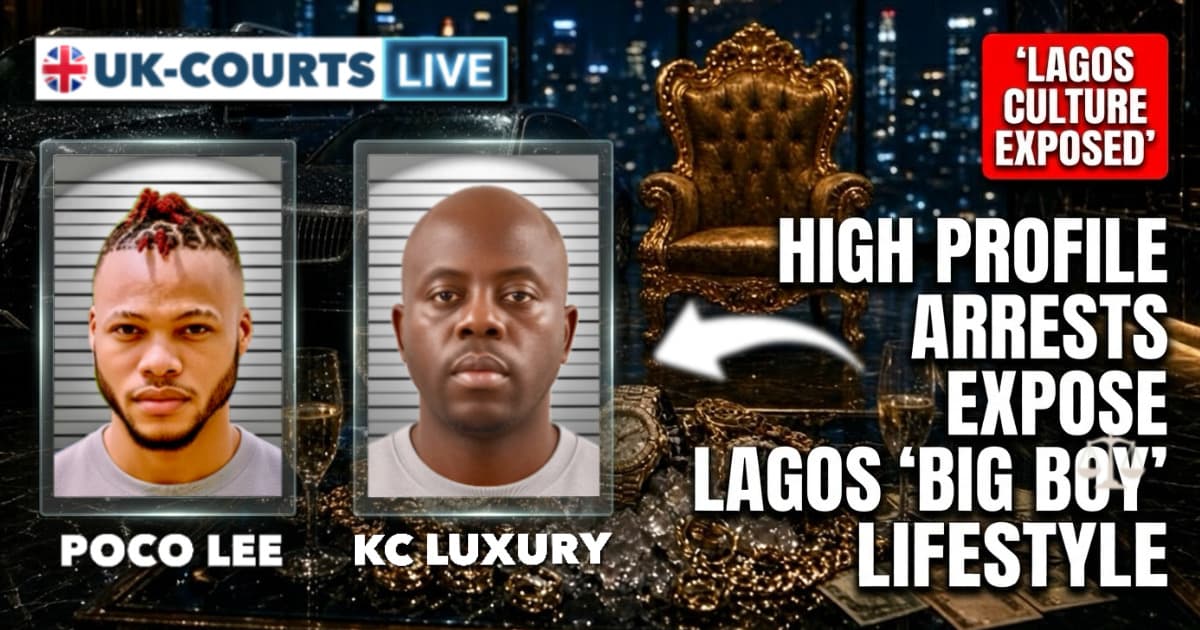
Lagos 'Big Boy' Culture Exposed Following Poco Lee and KC Luxury UK Arrests
Following the high-profile UK arrests of Poco Lee and KC Luxury on serious charges, the shallow extravagance and ostentatious lifestyle of Lagos 'Big Boy' culture is exposed.

LAGOS BIG BOY CULTURE EXPOSED:
With the recent high-profile charging of the Nigerian dancer Poco Lee with rape and other sexual offences in the United Kingdom, and the earlier arrest of the Lagos social media influence KC Luxury on alleged cocaine trafficking, a certain kind of Nigerian celebrity has been dragged into the British line of sight.

Nigerian Dancer & accused rapist, Poco Lee
The cases themselves are for the courts, but the Lagos-based culture they have exposed is equally as startling.

Nigerian Influencer & accused drug dealer KC Luxury
Neither man has been convicted. What the moment has done, for a British public that usually sees only the cars and the concerts, is to throw a light on Lagos “BIG BOY” culture — or the lack of it, to be precise — and to show how shallow, self-serving and substanceless that performance can be.
The first saying that comes to mind, when you see the culture for what it actually is, is the old childhood adage:
“They know the cost of everything and the value of nothing.”
That is the whole ethos. It is about in-your-face bling. Not taste. Not character. Not the quiet confidence of a thing well made and well worn. Just the price tag, turned outwards, so that the room is forced to read it.
A catalogue instead of a life:
The 'BIG BOY' is not an old Lagos merchant, and he is not the professional who made money and then stopped talking about it.
He is a social-media invention. His identity is a list: the Maybach, the G-Wagon, the iced watch, the Birkin, the Banana Island postcode, the clip of the private jet, the night out with musicians, the caption that says: life is for the living.
The objects are not used. They are exhibited. If they cannot be filmed, they have not happened. If the brand cannot be read at twenty metres, the purchase has failed.
That is why a 1943 antique Omega field watch on a plain black-and-grey NATO strap would never do. It tells the time. It has a little history. It asks nothing of anyone.
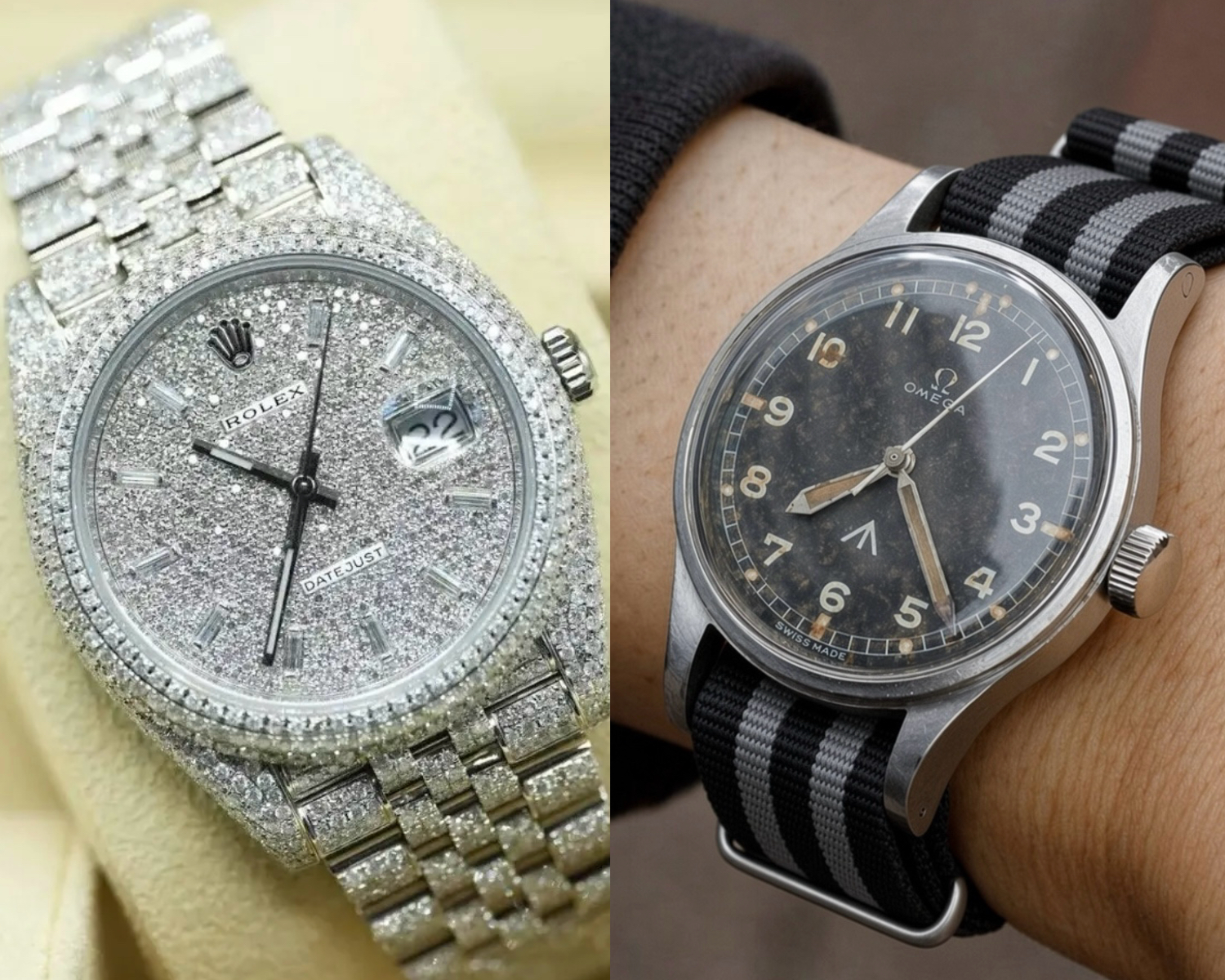
BLING vs CLASS
For the 'BIG BOY', that is not a virtue. It is a defect. The watch must be a diamond-encrusted Rolex, because the point is not the hour. The point is that every person at the table can estimate the wrist.
A mint 1984 Mercedes 190E, kept properly and driven without a speech, is a complete car – enough pace, enough dignity, no need to announce itself at the lights. To him, it looks like poverty with a good paint job. Only a new Maybach, or a G-Wagon hung with aftermarket theatre, will serve, because a car that does not turn heads has not justified the invoice.
An unlabelled three-piece from a Savile Row cutter, cut to the man rather than to the season, is clothing in the old sense: cloth, proportion, silence. He cannot use it. He needs the latest and brightest famous names, worn as a receipt, because an unmarked suit makes a man who could not afford the logo.
The supreme irony of the archetype is its ultimate source of inspiration. In the quiet moments between social media uploads, the 'BIG BOY' believes he is channelling James Bond. He sees himself as the commander gliding through a Casino Royale baccarat table – a master of international taste, lethal charm, and effortless sophistication.
"He has entirely misread the dossier"
Bond is an operative whose primary weapon is functional invisibility. His bespoke tailoring is unlabelled precisely so he can melt into a Mayfair dining room without triggering an alarm.
His watch is an instrument of plain steel and canvas, built to endure a drop-zone, not to catch the strobe lights of a VIP lounge. His car is an exercise in quiet mechanical competence, capable of rapid departure without shouting at the traffic lights.
By replacing discretion with noise, the 'BIG BOY' does not become 007. He becomes, with tragic aesthetic perfection, the Bond villain.
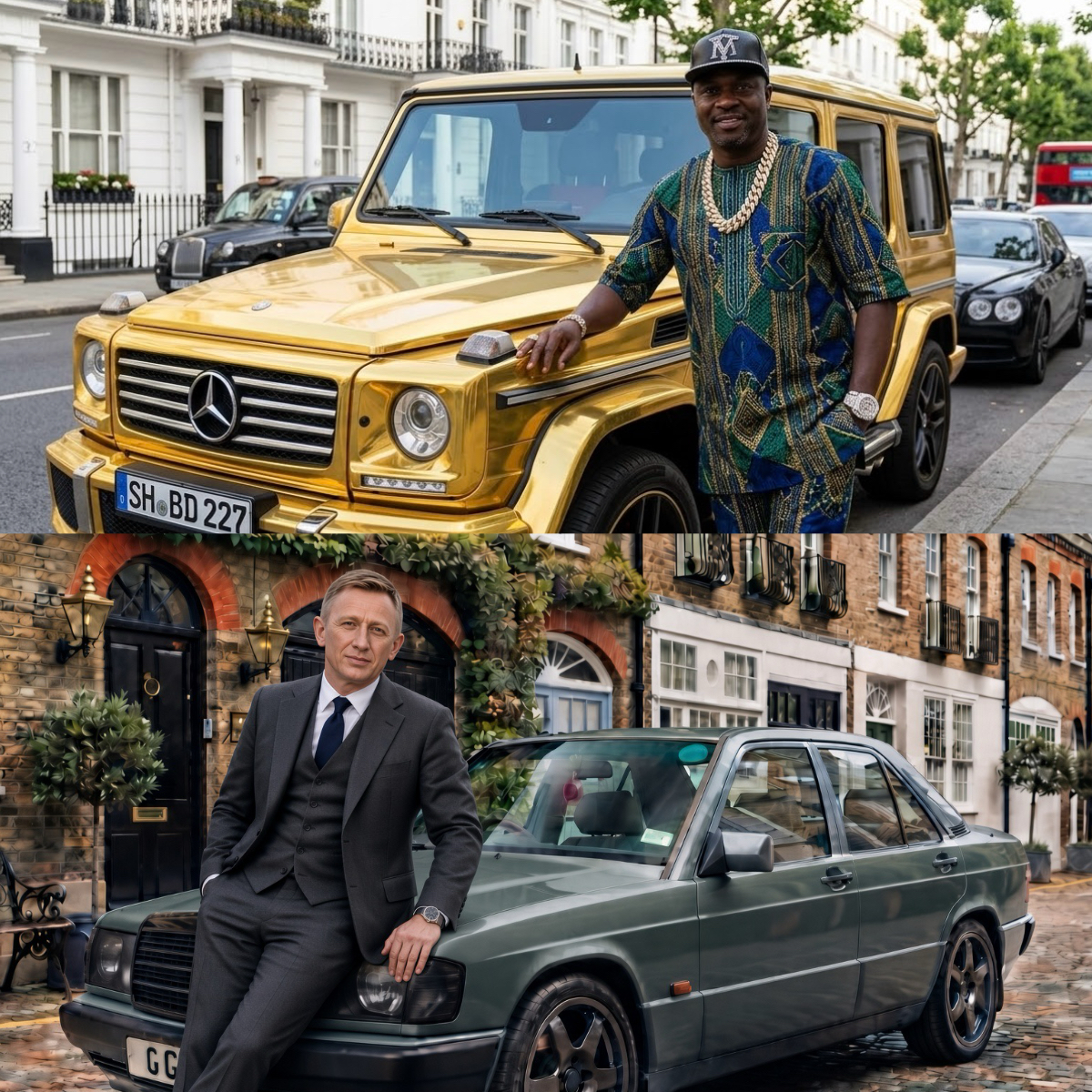
BOND VILLAIN LIFESTYLE vs BOND LIFESTYLE
The iced-out bezel, the monogrammed velvet jacket, the theatrical, gold-trimmed G-Wagon with exhaust valves tuned for maximum menace – these are not the hallmarks of the secret agent.
They are the uniform of the megalomaniac who built a volcanic lair simply because he couldn't bear to be ignored. In striving to look like the hero who controls the room in silence, he ends up dressed like the caricature about to be thrown from a helicopter.
This is not extravagance with a sense of humour. It is a fear of being unseen, because being unseen in the 'BIG BOY' lifestyle is disempowerment, the very thing they are fighting not to be in the first place. Value, in the older meaning — fitness for purpose, age, cut, restraint — does not register. Cost does. Cost is the only language the culture speaks fluently.
Style is editing. This is accumulation:
British class, at its least cartoonish, has always been a system of withholding. Money is implied. A coat lasts. A watch is chosen, or inherited, with a snobbery so quiet it looks like indifference.
The highest compliment is that one would never guess. Even vulgar new British money still argues, however badly, about the right and wrong way to be flash.
The 'BIG BOY' has abolished the argument. There is only more. Another car. Another watch. Another clip of the same man on the same marble floor in a different colourway.
Music is not listened to so much as strapped to the self as a soundtrack. Speech, when it appears, is slogan and inventory: serial numbers recited like scripture, limited editions treated as personality.
Taste would require refusal — the decision not to buy the obvious object, not to film the purchase, not to treat a handbag as a press release. He cannot refuse. Refusal would look like having less.
Nigeria is not short of culture. Yoruba, Igbo and Hausa worlds have produced dress, music, oratory and social forms of real sophistication.
Lagos has tailors, novelists, architects and night rooms that understand cut and timing. The 'BIG BOY' is not that Lagos. He is the Lagos of the algorithm: a man who has mistaken visibility for civilisation, and a shopping list for a self.
The missing question:
The more serious absence is not Savile Row. It is curiosity.
A functioning high society, even a rotten one, asks where money comes from — if only to protect itself. The British version of that inquiry is hypocritical and often cruel, but it exists: the raised eyebrow, the club that does not return the call. 'BIG BOY' culture replaced the inquiry with proximity.
The question ceased to be *what do you do?* and became *how do I get next to him?* Cars became character. Jewellery became biography. Followers became a character reference.
The source of the patronage was a rumour people would rather not finish, because finishing it might end the party.
That is the shallowness laid bare. Not merely bad taste — though the taste is bad — but a social system in which display does the work that character, craft and reputation used to do. The culture does not need the man to be interesting. It needs him to be expensive and available for the photograph.
What class actually is:
Class, in the British sense, the 'BIG BOYS' aspire to and imagine they are buying into when they land at Heathrow with the logos still attached, was never the object. It was the manner of having the object.
It was knowing which restaurant not to mention, which car not to collect in public, which story not to tell about oneself. At its best moments it was also a set of obligations: to language, to institutions, to a public world larger than the self.
The 'BIG BOY' has the objects and none of the obligations. He has the postcode and the philanthropy voiceover.
He does not have understatement, or the fear of looking foolish, or the sense that some ways of showing money are unseemly even when the money is legal. Least of all does he have embarrassment. Without embarrassment there is no style. Style is a form of editing. His feed is unedited appetite.
That is why my antique Omega field watch will never be enough, and why my vintage 190E will always look, to him, like a joke. He cannot see the value in a thing that has already done its work. He can only see the cost of the next one.
This is not a claim that Britain’s rich are morally superior. British fortunes have their own dirt. It is a claim that a culture of display without a culture of restraint produces a particular emptiness.
The emptiness is easy to miss while the G-Wagon is moving and the club is full. It becomes obvious the moment the audience is asked to look at the man without the inventory.
What remains, when the bling is set aside, is not a hidden depth. It is the ethos the childhood phrase already named. "They know the cost of everything and the value of nothing." That is not a side effect of Lagos 'BIG BOY' culture. That is the culture.