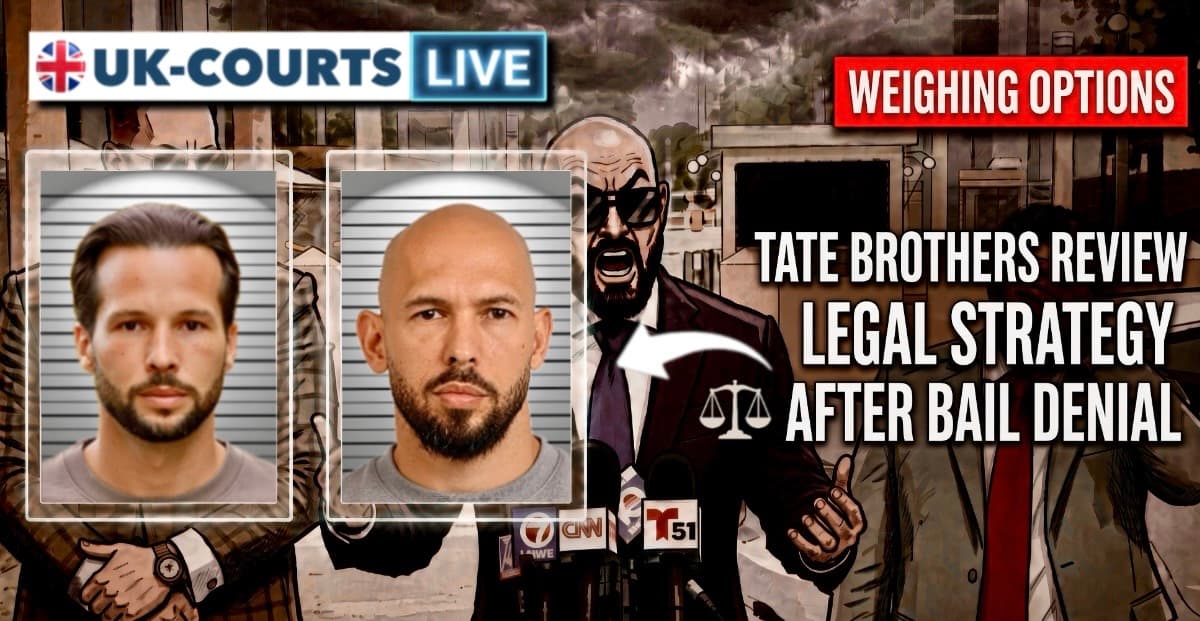
Tate Brothers Weigh Legal Options in US Following Federal Bail Rejection
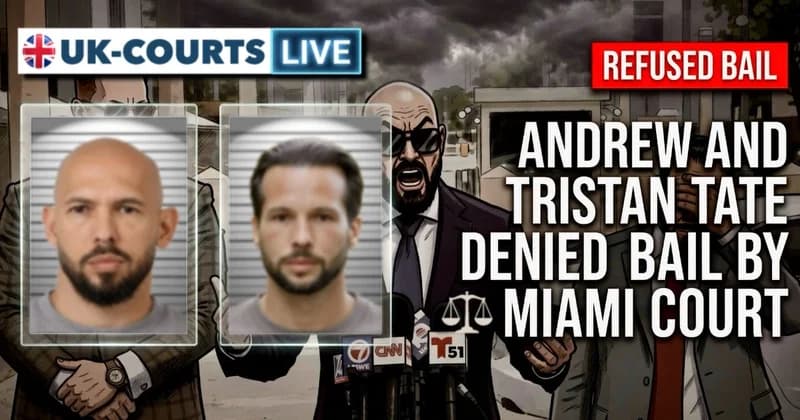
Andrew and Tristan Tate face prolonged US detention without credit toward UK sentences after being denied bail during ongoing extradition proceedings.

The reality check facing Andrew and Tristan Tate following the decision of the United States Magistrate Court in Miami to deny them pre-trial release was entirely predictable to anyone who understands the mechanics of international extradition law.
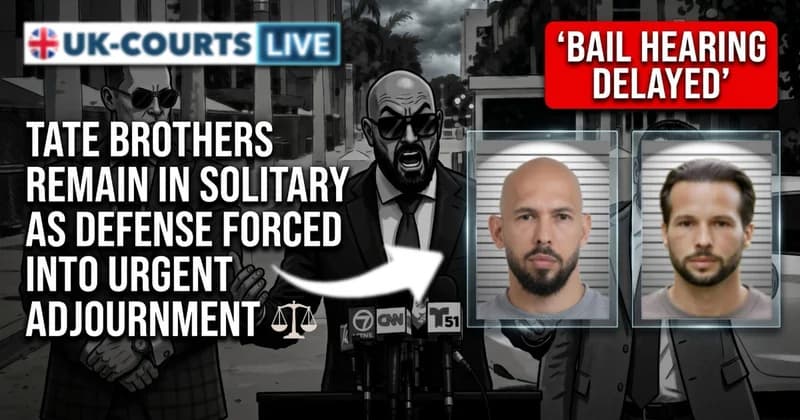
For weeks, legal representatives for the high-profile brothers have railed against the conditions of their confinement inside the federal detention facility while attempting to mount an aggressive defence against the extradition warrants issued on behalf of the United Kingdom.
Yet the latest murmurs emerging from their legal camp, suggesting that the defendants might simply grow tired of the American judicial slog and abandon their fight to face the music in England, highlight the fundamental absurdity of their initial strategy.
To drag out a multi-year extradition contest from the confines of a maximum-security holding unit, completely cut off from the continuous digital broadcasting that fuels their commercial enterprises, never made a shred of logical sense.
Pre-extradition detention in an American facility provides zero credit against any custodial sentence that might eventually be served following conviction in a British court, turning prolonged legal obstruction into an exercise in self-defeating isolation.
When your entire brand relies upon omnipresent visibility and commanding the digital room, staring down the barrel of years behind concrete walls while federal judges methodically dismantle your arguments tends to sharpen the mind.
The notion that fighting tooth and nail against a standard procedural treaty from a prison cell was ever a viable long-term plan ignores the unyielding nature of international law.
As we have maintained since the moment the handcuffs clicked shut in Florida, the legal architecture governing bilateral extraditions leaves very little room for theatrical defiance.
The choice facing the brothers was never a glamorous Hollywood standoff against sovereign governments, but rather a cold mathematical equation weighing the utility of endless legal delays against the grim reality of incarceration without bail.
If defence counsel is now floating the prospect of waving the white flag and heading across the Atlantic simply to escape the Florida federal remand centre, it demonstrates that the crushing weight of judicial reality has finally broken through the internet bluster.
One can only conclude that fighting it out in England was always the inevitable destination, and the detour through Miami has served merely as an expensive and uncomfortable lesson in the limits of digital bravado against statutory law.