Child Exploitation County Lines Leader Brian Asante Jailed For 13 Years
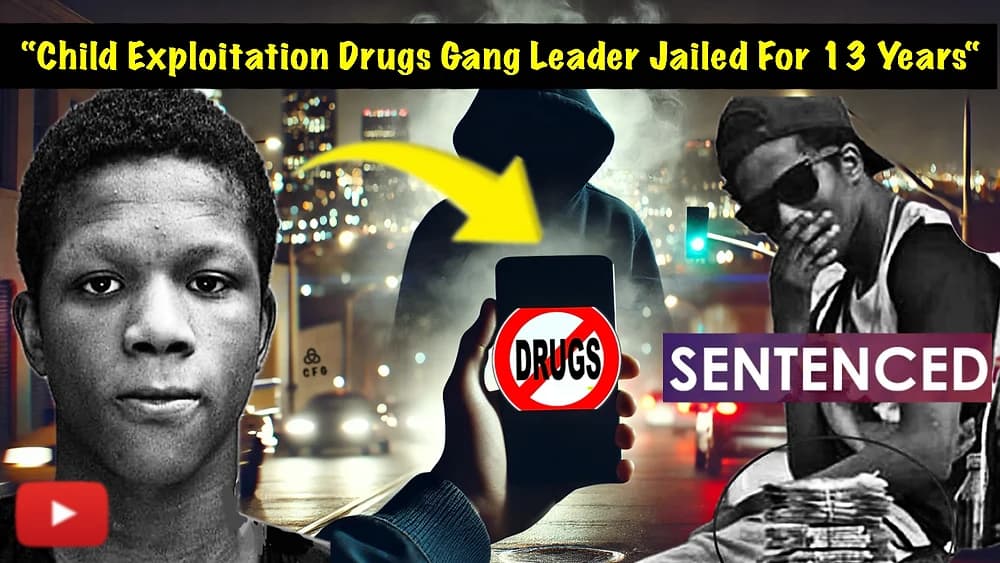
A Midlands drug gang leader who flaunted his wealth while running a major County Lines operation has been jailed for 13 years and four months.

A Midlands drug gang leader who flaunted his wealth while running a major County Lines operation has been jailed for 13 years and four months.
Brian Asante, 23, co-ordinated the supply of heroin and cocaine from addresses in Wolverhampton and Stafford, using children to deliver drugs across multiple counties. His empire—operating under the ‘AB Line’ and ‘Jay Line’—flooded drugs into Kettering, Corby, Peterborough, and Burton-upon-Trent.
Asante was caught after police cracked his phone network, tracking his movements through Automated Number Plate Recognition (ANPR) and uncovering messages on Snapchat, where he directed drug runners, including exploited teenagers. Images recovered from his devices showed him posing with bundles of cash—profits from his illegal trade.
In a landmark move, Asante has also been placed under a 160-month slavery and trafficking prevention order, the first secured by West Midlands Police’s County Lines Taskforce. The order imposes strict controls both in prison and after his release, barring him from contacting past victims or recruiting children into crime.
‘Shameful’ Exploitation of Children
The investigation led to the conviction of eight accomplices, including James Carroll, 46, from Northamptonshire, who was jailed for two years for child exploitation.
Others sentenced for conspiracy to supply Class A drugs included;
• Maurice Reid, 55, Burton-upon-Trent – 6 years 11 months
• Simon McTaggart, 38, Wolverhampton – 6 years 11 months
• Gulam Izdani, 22, Swindon – 5 years 3 months
• Dhillon Swarn, 20, Bloxwich – 3 years 9 months
• Emma Gill, 42, Wolverhampton – 3 years
Meghan Lawrence, 21, and Alicia Cox, 25, both received suspended sentences for their involvement in assisting the operation.
DS Gavin McGrath of the County Lines Taskforce said: “This was a significant criminal enterprise dismantled. Two of the sentences reflect the shameful use of children to run drugs, but our work to break these supply networks continues.”
Understanding Child Criminal Exploitation
As part of our campaign to improve citizens’ access to and understanding of UK criminal law, we explain the relevant legislation and case law surrounding issues highlighted in our articles.
This case serves as a stark reminder of the legal and moral consequences of Child Criminal Exploitation (CCE)—a growing issue in County Lines drug operations, where gangs manipulate and coerce children into transporting and selling drugs. The UK legal system treats this as a serious criminal offence under the Modern Slavery Act 2015, recognising that children forced into crime are victims of exploitation.
The Law on Child Criminal Exploitation
Under Section 2 of the Modern Slavery Act 2015, arranging or facilitating the exploitation of a child—including coercion into criminal activity—carries a maximum sentence of life imprisonment. Unlike cases involving adults, the law does not require proof that a child was forced or threatened; the mere act of recruiting or using a minor for criminal purposes is enough for conviction.
Additionally, courts can impose Slavery and Trafficking Prevention Orders (STPOs), as seen in this case, restricting an offender’s activities even after their prison sentence. These orders prevent known exploiters from contacting children, recruiting new victims, or engaging in activities linked to organised crime.
Sentencing and Legal Consequences
The penalties for those involved in CCE reflect the severity of the crime:
• Child exploitation for criminal activity – Up to life imprisonment under the Modern Slavery Act
• Conspiracy to supply Class A drugs – Maximum life imprisonment under the Misuse of Drugs Act 1971
• Child cruelty offences – Up to 10 years in prison under the Children and Young Persons Act 1933
Courts take child exploitation as an aggravating factor in drug-related offences, often leading to longer sentences. In this case, Asante’s 13-year prison term and 160-month prevention order highlight the judiciary’s firm stance on those who profit from using children in drug networks.
Legal Protections for Victims
Children caught up in County Lines operations may not be prosecuted if they have been coerced. Section 45 of the Modern Slavery Act 2015 provides a legal defence for victims of exploitation, meaning that young people forced into criminality can be protected rather than punished. The National Referral Mechanism (NRM) allows authorities to identify and support victims, offering them safeguarding and legal assistance.
The Importance of Public Awareness
CCE is a hidden crime, with victims often too afraid to speak out. Recognising the warning signs—such as sudden unexplained wealth, repeated absences from home, or association with older criminals—is crucial in tackling the problem. Anyone concerned about a child at risk of exploitation can report it anonymously via:
• Crimestoppers (0800 555 111)
• Local police (101 or 999 in an emergency)
• NSPCC (0808 800 5000)
This case underscores the devastating impact of County Lines gangs and the severe legal consequences for those who exploit children. The justice system is increasingly using tough sentences and prevention orders to dismantle these networks, ensuring that those responsible face the full weight of the law.
Jason King
Birmingham City-Desk
Twitter (X) @JasonKingNews