Court of Appeal Increases Vickrum Digwa Sentence to 25 Years Over Henry Nowak Murder
The Court of Appeal increases Vickrum Digwa's minimum sentence to 25 years for the murder of Southampton student Henry Nowak…

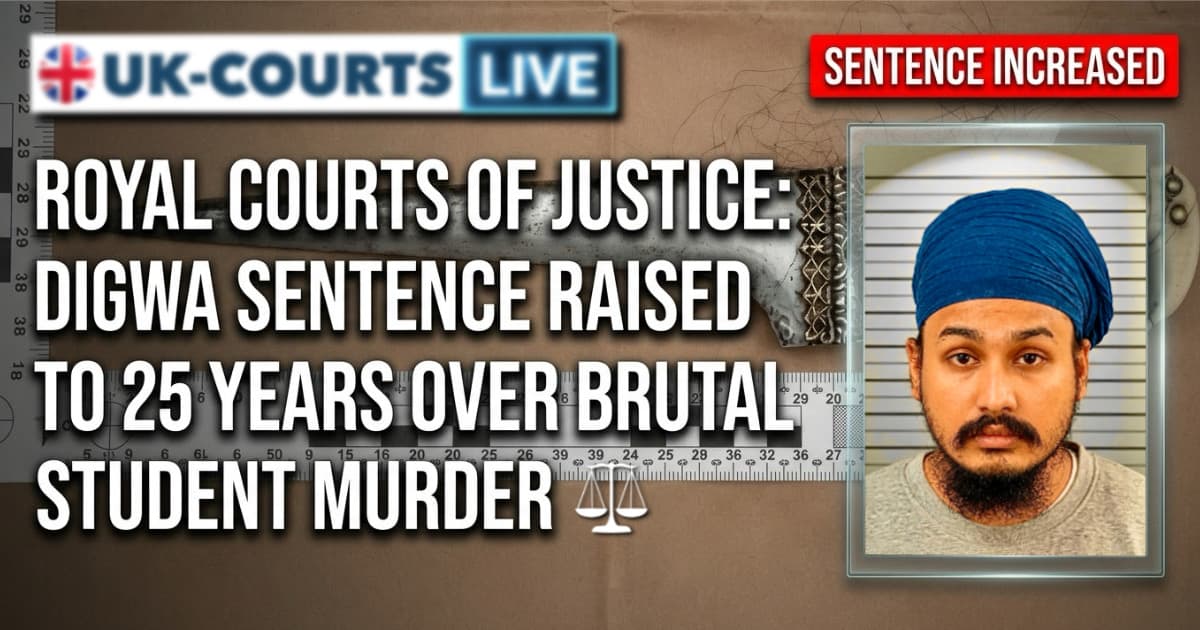
The Court of Appeal has increased the minimum prison term of Vickrum Digwa from 21 years to 25 years for the brutal murder of eighteen-year-old university student Henry Nowak, ruling that the original sentence was unduly lenient
Lady Chief Justice Baroness Carr delivered the definitive appellate judgment at the Royal Courts of Justice, concluding that the trial judge severely understated the extreme gravity of the offence, the terror inflicted upon the victim and the calculated cruelty of the killer's post-offence conduct.
Yet even as the senior judiciary moved to correct an inadequate prison term, the higher courts left unaddressed a foundational and deeply damaging error that has stained this case from its inception:
“The persistent institutional misidentification of the murder weapon as a sacred article of the Sikh faith.“
Henry Nowak was fatally stabbed on 3 December 2025 in the Portswood area of Southampton while walking home after a night out with university football teammates.
Digwa deployed a devastatingly lethal weapon against an unarmed and defenceless teenager, inflicting five separate target areas and three substantial wounds.
Following the attack, rather than rendering aid, Digwa degraded his dying victim by filming him on a mobile phone, systematically misled first responders, made a false allegation of racism against the dying student to secure his arrest, and procured his mother to conceal the bloodied weapon.
While the Attorney General successfully argued that these compounding aggravating factors rendered the initial twenty-one-year minimum term wholly inadequate, the legal establishment has continued to indulge a historical and forensic fiction regarding the blade itself.
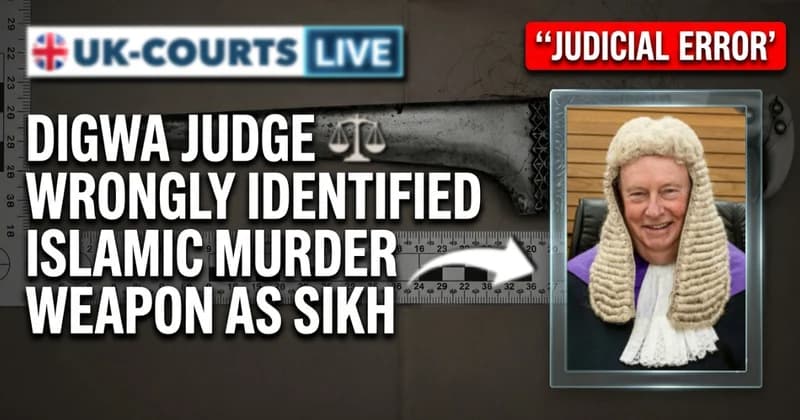
At trial, His Honour Judge William Mousley KC committed a catastrophic factual and legal error by explicitly labelling the murder weapon a large Sikh dagger and tying its carriage directly to the religious requirements of the Sikh faith. That assertion was entirely false.
Forensic examination of the weapon recovered from the scene reveals it to be a classic:
Islamic Origin armour piercing Pesh-Kabz martial dagger.
An Islamic Indo-Persian combat weapon originating in Safavid Persia and distributed widely across the Islamic Mughal Empire and the Khyber Pass region.
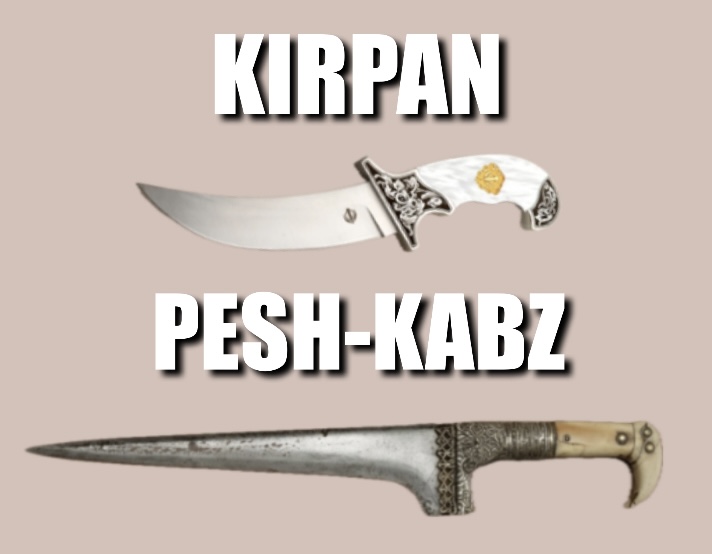
The physical exhibit bears an unmistakable anatomical design featuring a straight twenty-one-centimetre blade backed by a heavily reinforced T-section spine, engineered specifically to pierce heavy military chainmail and leather armour on historical battlefields.
It possesses zero linguistic roots in Punjabi, zero theological standing within the Five Ks of the Sikh faith, and carries a legacy diametrically opposed to the peaceful symbolism of the Kirpan.
The persistence of this judicial misdirection represents a profound failure of empirical accuracy within the criminal justice system.
By conflating a lethal armour-piercing Islamic military sidearm with a protected religious artifact, the court manufactured a dangerous legal narrative.
Judge Mousley KC compounded the error during sentencing remarks by broadcasting a fictional statutory rule regarding a nine-inch blade threshold, treating informal operational street guidance as black-letter law.
English statute contains no such blanket exemption based on arbitrary length measurements for religious items.
The law requires an objective, strict evidentiary test demonstrating that an approved religious object is carried exclusively for bona fide religious reasons.
Digwas Pesh-Kabs, certainly did not legally satisfy this requirement in any way, but the courts have still to officially recognise this fact.
That UK law does not grant legal immunity to carry a medieval combat dagger simply because an offender claims a cultural or religious association.
The societal fallout from this judicial sloppiness is severe. When senior judges substitute forensic reality for careless assumption in pursuit of community appeasement, they undermine public confidence in the administration of justice.
Ordinary citizens prosecuted relentlessly for possessing utility tools or pocketknives are left to look at judicial rulings that invent special protections for combat weapons, fueling legitimate public cynicism regarding uneven enforcement.
During the appeal proceedings, barrister Imran Khan KC argued on behalf of Digwa that the twenty-one-year minimum term was excessive and that sentencing judges should not cumulatively weight overlapping aggravating factors.
Representing the Attorney General, Jonathan Polnay KC successfully countered that the horrific totality of the offending, including the:
The abuse of statutory exemptions, the absence of defensive wounds, the appalling post-offence deception, and the deliberate degradation of a dying teenager, demanded a substantially heavier penalty.
Baroness Carr agreed, noting that the initial sentence failed to reflect the true horror of the crime.
Following the ruling, the family of Henry Nowak issued a moving statement expressing gratitude to the Attorney General for reviewing the case while emphasising that no judicial outcome can ever restore their son.
They noted that they have been handed an unappealable life sentence of grief. Yet the family and the wider public are left to contend with a judicial system that, while willing to adjust a sentence upwards by four years, remains stubbornly insulated from its own historical illiteracy.
Until the courts commit to rigorous factual precision regarding the forensic evidence before them, judicial pronouncements on bladed weapon offences will continue to fabricate law from the bench and fail the standards of truth required by the public.
Follow UK Courts Live
Every hearing as it happens, on the network you use.