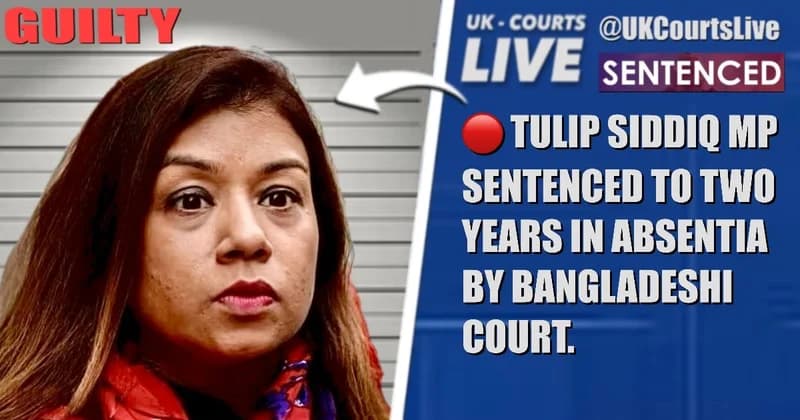
The Case of the Blurry Police Mugshot: Why Quality Matters
The technology exists. The evidence is in plain sight. So why do some official custody photographs still fail to meet the standard modern policing should already deliver?

We live in an age in which detectives can recover deleted messages from mobile phones, reconstruct a suspect’s movements from digital breadcrumbs, identify offenders from microscopic traces of DNA and deploy technology that would have seemed closer to science fiction than policing only a generation ago.
At precisely the same time, millions of people are carrying in their pocket a device capable of filming broadcast-quality 4K video, producing remarkably detailed portraits and capturing images of extraordinary clarity with little more effort than pressing a button.
Which makes one small corner of modern policing rather difficult to understand.
Here at our newsdesk, processing hundreds of police custody photographs every year, we have become increasingly baffled by the fact that while many are perfectly sharp, others remain noticeably softened and less distinct.
Why?
Not because good custody photographs are somehow impossible. Quite the opposite. We see excellent examples every week. Crisp. Clear. Entirely fit for purpose.
It is the softer examples that continue to puzzle us.
Looking at some of them, one begins to entertain increasingly unlikely explanations.
Has somebody quietly reinstated the faithful old Kodak Box Brownie?
Do certain custody suites possess a unique atmospheric phenomenon consisting entirely of a stubborn patch of thick fog hovering permanently between the suspect and the camera?
Or has somebody, somewhere, accidentally discovered the image-processing setting marked: “Reduce Facial Detail Until Further Notice.”
Whatever the explanation, the result is the same.
And it matters.
Custody photographs are not decorative additions to police press releases. They perform two important public functions.
The first is open justice.
Criminal convictions are public proceedings. Save for the relatively rare occasions when a court orders otherwise, the identity of convicted offenders is a matter of legitimate public record. A custody photograph becomes part of that public record. Justice is intended to be seen as well as done, and the record of who has committed serious crimes should be every bit as clear as the justice that produced it.
The second is public protection.
Whether police are asking the public to identify a suspect, locate an escaped prisoner or recognise a wanted offender, clarity is plainly preferable to obscurity. A sharper photograph is simply a more useful one.
The frustrating thing is that this does not appear to be one of those vast public policy questions requiring years of consultation, expensive technology or a wholesale redesign of British policing.
It appears to be a remarkably small problem.
Which is precisely why it ought to have been solved already.
Nobody is asking for cinematic lighting or portrait photography worthy of the National Portrait Gallery.
We are asking for something much more modest.
If millions of members of the public can produce a sharp digital portrait with the device already sitting in their pocket, every police force in Britain ought to be able to produce consistently sharp custody photographs.
We know it can be done.
We see it every week.
We simply think the public deserves that standard every time.
After all, if modern policing can identify an offender from a microscopic fragment of DNA, it surely ought to manage a consistently clear photograph of somebody already standing in front of the camera.