
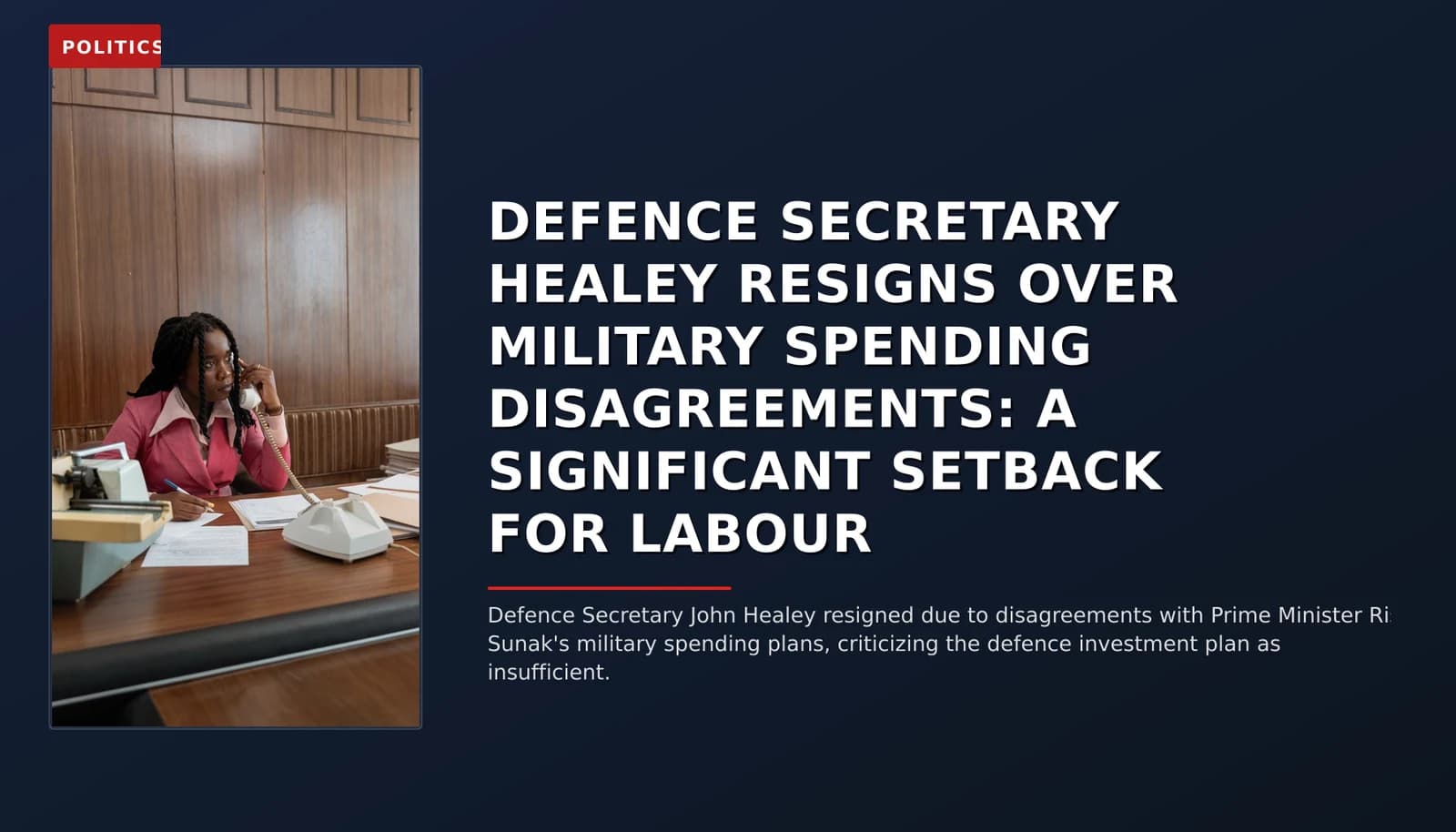
Defence Secretary Healey Resigns Over Military Spending Disagreements: A Significant Setback For Labour
John Healey's resignation as Defence Secretary over military spending disagreements marks a significant setback for Labour leader Keir Starmer, highlighting deepening party divisions.

John Healey's resignation as Defence Secretary highlights deepening divisions within Labour over military spending policies.
In a surprising move, John Healey, the UK's Defence Secretary, has tendered his resignation following disagreements with Prime Minister Rishi Sunak's military spending plans. This decision comes amid ongoing debates over the level of defence investment required to maintain national security. According to sources close to the government, Healey expressed strong reservations about the proposed budget, deeming it insufficient to address current and future threats.
The resignation is a significant blow to Labour leader Keir Starmer, who has been navigating a complex political landscape since assuming leadership of the party. Internal divisions within Labour have become increasingly apparent, with Healey's departure marking another challenge for Starmer as he seeks to unite the party ahead of potential elections. Observers suggest that this move could further strain relations between the Labour Party and the government.
In his resignation letter, Healey did not mince words, describing Sunak's defence investment plan as 'insufficient' and warning that underfunding could compromise Britain's safety. His critique underscored concerns about the adequacy of current military spending, a topic that has sparked heated debates across political lines. This marks a notable shift in Labour's stance, with Healey advocating for increased defence expenditure contrary to some within his party who argue for greater focus on domestic spending.
The timing of Healey's resignation is particularly significant, as it coincides with heightened tensions internationally and growing pressure on the UK government to demonstrate strong leadership. His departure adds another layer of complexity to an already challenging political environment. Analysts predict that this move could set a precedent for further departures from within Labour's ranks, potentially destabilising the party in the run-up to critical decisions.
Read more: Labour Party In Disarray: Dissent At The Top
Healey's decision has also drawn attention to the broader debate over defence priorities in the UK. Advocates for increased military spending argue that it is essential for deterring potential threats and maintaining regional stability. Conversely, critics contend that resources would be better allocated to address pressing domestic issues such as healthcare, education, and economic inequality. This tension reflects a deeper divide within both Labour and the Conservative Party regarding fiscal priorities.
As the political landscape continues to evolve, the implications of Healey's resignation extend beyond immediate party dynamics. It raises questions about the stability of the government and the ability of Labour to present a unified front in opposition. The situation is likely to be closely monitored by both domestic and international observers, as it may signal broader trends in UK politics.
Looking ahead, the Labour Party will need to address the fallout from Healey's resignation swiftly to minimise internal discord. Starmer's leadership will be tested as he works to reconcile differing views within his party and present a coherent stance on defence spending. The outcome of this internal struggle could shape the trajectory of Labour's prospects in upcoming elections and its approach to key policy areas.
Meanwhile, Prime Minister Sunak faces the challenge of navigating these political waters while managing a government that is already grappling with multiple crises. The departure of a high-profile minister like Healey adds to the pressure on Sunak to demonstrate effective leadership and unity within his own party. The interplay between Labour's internal dynamics and the Conservative government's policies will undoubtedly remain a focal point in the coming weeks.
Read more: Armed Forces Minister Al Carns Quilts Over Defence Spending Plan: The Impact On Uk Politics

More Stories
Labour Party In Disarray: Dissent At The Top
12 June 2026 at 02:352 min read
Read More
Armed Forces Minister Al Carns Quilts Over Defence Spending Plan: The Impact On Uk Politics
11 June 2026 at 20:512 min read
Read More
Keir Starmer Facing Multiple Resignations: Intricate Dynamics Within His Team
12 June 2026 at 02:242 min read
Read MoreComments (0)
No comments yet. Be the first to share your thoughts!
Leave a Comment
Your email address will not be published. Comments are moderated before appearing.