
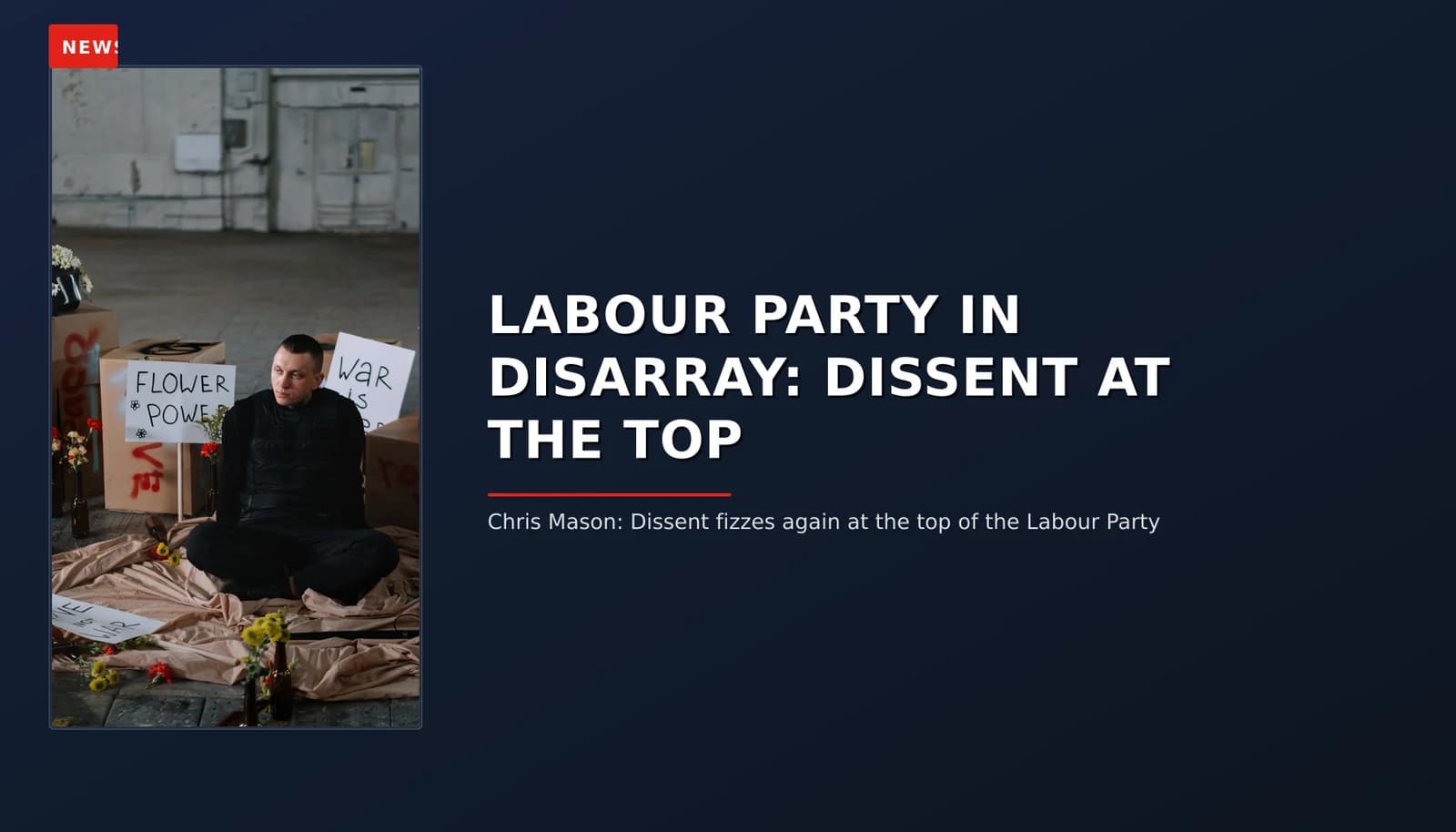
Labour Party In Disarray: Dissent At The Top
The Labour Party is facing internal dissent at its highest levels, with growing tensions among senior members over key policies and leadership strategies.

Dissent within the Labour Party's leadership is growing, with reports of internal conflicts as the party prepares for key decisions.
The Labour Party finds itself at a crossroads once again as tensions rise among its top brass. Recent reports suggest that senior members are increasingly vocal in their disagreements over key policy directions and leadership strategies. This marks a significant shift from the relative unity seen under previous leadership, raising questions about the party's ability to present a cohesive front ahead of critical decisions.
According to sources within Labour circles, these disagreements have been simmering for some time but have only recently come to light in public discussions. The BBC has reported on these internal divisions, highlighting concerns about the party's strategic direction and the potential impact on its electoral prospects. While exact details remain scarce due to limited source verification, the broader implications of such discord are becoming increasingly apparent.
Historically, internal dissent within major political parties can have far-reaching consequences, often leading to weakened public perception and challenges in governance. The Labour Party has faced similar issues in the past, notably during the leadership struggles of the 1980s and early 1990s. These periods of instability were marked by significant shifts in policy direction and leadership changes, which ultimately influenced the party's electoral success.
It is understood that key areas of contention include economic policy, climate change initiatives, and the approach to handling relations with other political parties. The BBC reports suggest that these issues have created a divide among senior figures, with some advocating for more centrist policies while others push for a return to traditional left-wing principles.
Read more: Keir Starmer Facing Multiple Resignations: Intricate Dynamics Within His Team
As the Labour Party continues to navigate these internal challenges, the focus remains on whether they can unify their ranks in time for upcoming parliamentary debates and potential elections. The ability of the party's leadership to manage these divisions will be crucial in determining their future success. Observers are closely monitoring developments, with expectations that further clarifications and statements from Labour officials will emerge soon.
In a developing story with limited source verification, it is essential to approach such reports with caution. While the BBC has provided initial coverage, independent confirmation of all details is still pending. This underscores the importance of verifying information through multiple reliable sources before drawing definitive conclusions about the state of Labour's leadership.
The implications of prolonged internal dissent could extend beyond immediate political outcomes. Public trust in the party's leadership may be affected, potentially influencing voter behaviour in future elections. Additionally, such divisions can set a precedent for similar issues within other political parties, highlighting the broader challenges of maintaining unity in a complex and evolving political landscape.

More Stories
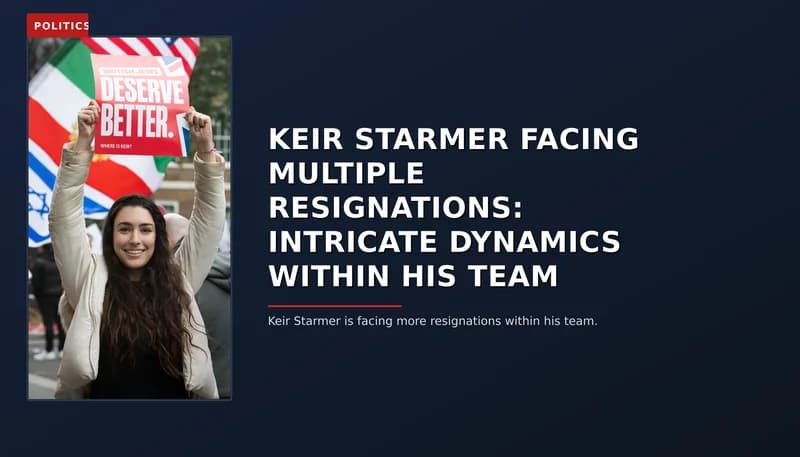
Keir Starmer Facing Multiple Resignations: Intricate Dynamics Within His Team
12 June 2026 at 02:242 min read
Read More
Defence Minister Resigns: A Shock In The Uk Government
12 June 2026 at 01:062 min read
Read More
Armed Forces Minister Quids After Healey Exit: Defence Funding Row Intensifies
11 June 2026 at 23:102 min read
Read MoreComments (0)
No comments yet. Be the first to share your thoughts!
Leave a Comment
Your email address will not be published. Comments are moderated before appearing.