
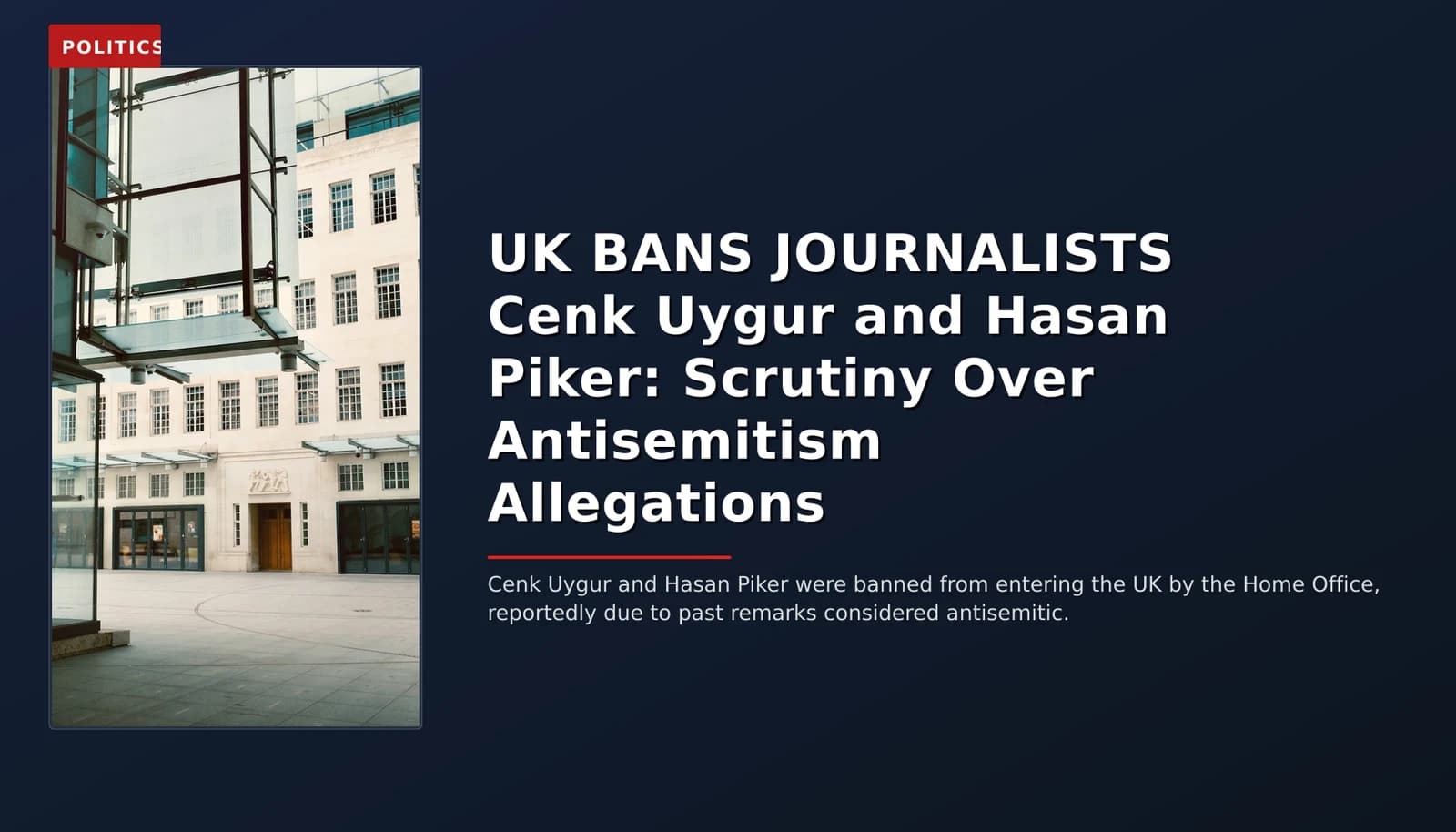
UK BANS JOURNALISTS Cenk Uygur and Hasan Piker: Scrutiny Over Antisemitism Allegations
The UK Home Office has banned US commentators Cenk Uygur and Hasan Piker from entering the country, citing past antisemitic remarks. The decision has sparked debates over free speech and immigration policies.

Two US commentators barred from entering the UK amid claims of antisemitic remarks, sparking debate over freedom of speech and immigration policies.
In a move that has sparked controversy and raised questions about free speech and immigration policy, the UK Home Office has banned Cenk Uygur and Hasan Piker from entering the country. The pair, known for their commentary on political and social issues, were turned away at Los Angeles International Airport (LAX) while attempting to board a flight to London. According to reports, the decision was made due to past remarks that were deemed antisemitic, though specific details about these comments have not been provided by authorities.
The Home Office cited their presence as 'not conducive to the public good' in a statement, though no further elaboration was given on what exactly constituted this threat. The decision has drawn criticism from free speech advocates who argue that such bans set a dangerous precedent for silencing controversial voices. Meanwhile, Uygur and Piker have denied any antisemitic intent or content in their past remarks, maintaining their innocence in the matter.
The case has reignited debates over the balance between immigration control and safeguarding against harmful speech. Critics argue that the lack of transparency in the Home Office's decision-making process undermines the principle of accountability, while supporters suggest that such measures are necessary to protect public order and national security. Legal experts have also raised concerns about the potential chilling effect on free expression, noting that similar bans could discourage individuals from engaging in public discourse for fear ofreprisal.
The controversy is reminiscent of past cases where controversial figures have been denied entry into the UK for their remarks, including instances involving both political and cultural figures. However, this particular case has drawn attention due to the high-profile nature of Uygur and Piker within US media circles. Their ban highlights broader tensions between the UK's immigration policies and its commitment to upholding free speech principles.
Read more: Top Cop Apologizes: Pub Incidents Under Scrutiny
Uygur and Piker have been fixtures in American journalism and commentary circuits for years, known for their provocative takes on a variety of topics. Their sudden exclusion from the UK has left many questioning whether this decision reflects a shift in the government's stance towards controversial figures or if it is an isolated incident. Observers are also wondering how this precedent might influence future cases involving similar allegations.
The Home Office's refusal to provide specific details about the remarks that led to the ban has further fuelled speculation and criticism. Advocacy groups have called for greater transparency in such decisions, arguing that without clear evidence or reasoning, it becomes difficult to assess the validity of the claims against Uygur and Piker. This lack of clarity also raises concerns about due process and the potential for arbitrary enforcement of immigration rules.
As the situation continues to unfold, both Uygur and Piker have expressed their determination to challenge the ban if necessary. Legal avenues are being explored, with their teams assessing whether the decision breaches any legal protections regarding free speech or fair treatment under UK law. Meanwhile, public opinion remains divided, with some supporting the Home Office's action as a necessary step to prevent harmful rhetoric, while others view it as an overreach of governmental power.
The broader implications of this case extend beyond the individuals involved. It touches on questions about how societies define and enforce acceptable speech, particularly in the context of immigration. The UK's approach could set a precedent for other nations grappling with similar challenges, influencing how they balance national security concerns with the principles of free expression.
Read more: Snp Demands Investigation Into Salmond-Mandelsohn Firm Meeting
In the coming days, attention will likely focus on whether Uygur and Piker will seek legal redress and what form that might take. Their case is expected to be closely watched by free speech advocates, legal professionals, and international observers who are interested in how these competing priorities are resolved in a democratic society.

More Stories
Top Cop Apologizes: Pub Incidents Under Scrutiny
4 June 2026 at 03:102 min read
Read More
Snp Demands Investigation Into Salmond-Mandelsohn Firm Meeting
4 June 2026 at 01:502 min read
Read More
Mp Sues Elon Musk's Xai Over Deepfake Bikini Image: A Precedent In Ai And Privacy
4 June 2026 at 00:272 min read
Read MoreComments (0)
No comments yet. Be the first to share your thoughts!
Leave a Comment
Your email address will not be published. Comments are moderated before appearing.