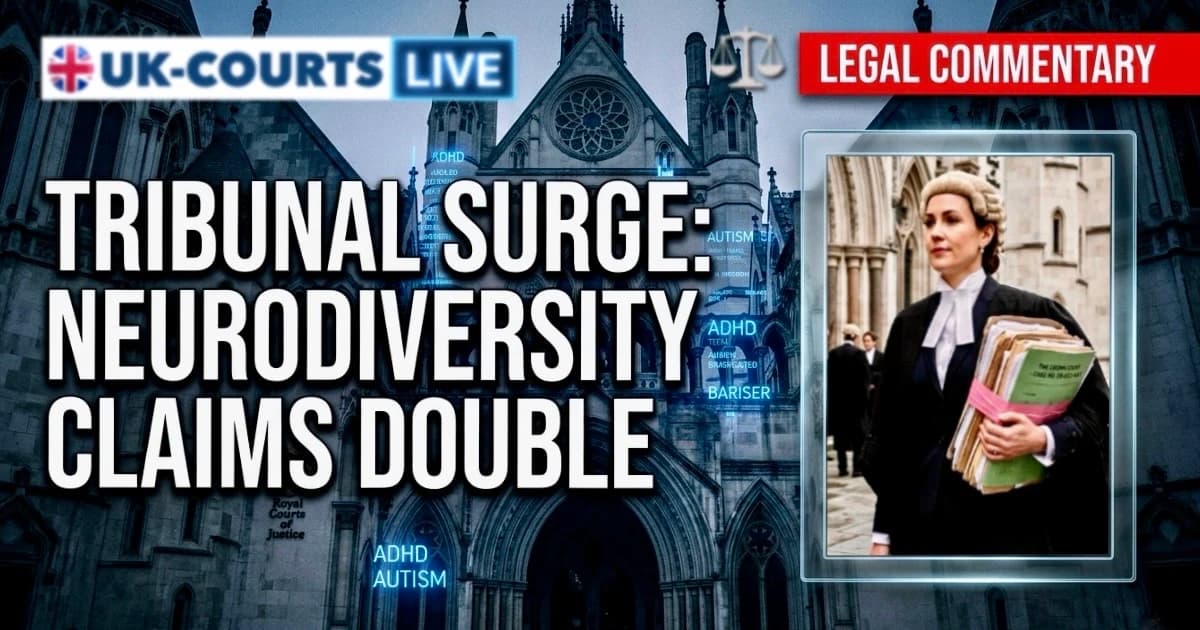
Record Surge in Neurodiversity Tribunal Claims as Cases Double
The number of employment tribunal claims citing autism and ADHD has increased by 95% since 2020, reaching a record high in the most recent judicial…

New data from the HM Courts & Tribunals Service has revealed a significant escalation in the volume of legal proceedings involving neurodivergent conditions in the United Kingdom.
The number of employment tribunal claims citing autism and ADHD has increased by 95% since 2020, reaching a record high in the most recent judicial reporting period.
Analysis of the figures shows that autism-related claims rose to 121 cases in 2025, while proceedings involving ADHD reached 118.
This trajectory represents a sharp departure from 2020 levels, where only six ADHD-related cases were recorded in the first half of that year.
Legal experts and senior practitioners indicate that the trend is driven by a combination of increased clinical diagnoses and a heightening of employee awareness regarding statutory rights.
The data suggests that a primary point of contention in these disputes remains the failure of employers to implement reasonable adjustments as mandated under the Equality Act 2010.
A substantial gap in workplace management has been identified, with reports indicating that 37% of managers have received no formal training on neurodiversity protocols.
The rise in litigation comes amid a shifting legislative landscape, including the introduction of the Employment Rights Act 2025.
Under this new framework, the limitation period for claimants to lodge a tribunal application has been extended from three months to six months.
This procedural change is expected to facilitate a further increase in the volume of claims by providing a broader window for legal recourse.
Law firms specializing in employment litigation have noted that the current surge reflects a "perfect storm" of improved diagnostic rates and more rigorous enforcement of disability discrimination protections.
The findings underscore a growing requirement for organizations to review recruitment and internal management practices to ensure compliance with evolving judicial expectations.
Failure to address these specific workplace requirements is increasingly resulting in protracted and costly legal challenges.
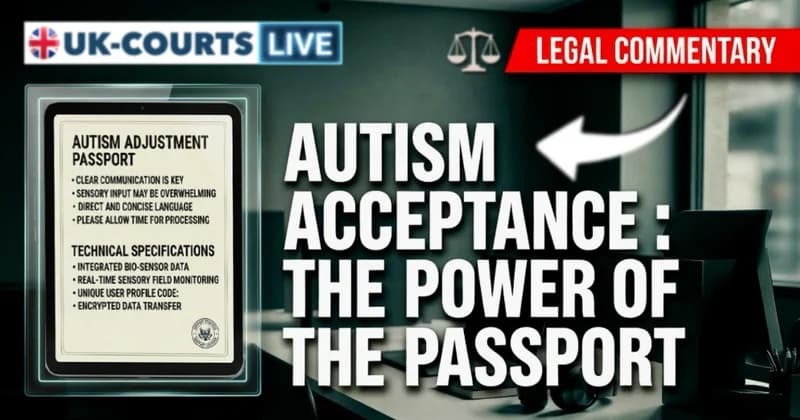
Legal commentators are now suggestinf that the recent surge in neuro-inclusion discourse and related employment cases is not merely a statistical anomaly, but a direct consequence of the "Visibility Revolution" sparked by the widespread implementation of the Workplace Adjustment Passport.
This shift has been driven largely by the high-level advocacy of Donna Lawson, Deputy Director of National Services at Ambitious about Autism, whose national strategy has moved the Passport from a niche HR suggestion to a central pillar of UK professional standards.
By providing a formal, clinical language for neurodivergent needs, Lawson’s championing of the Passport is effectively dismantling the "Masking Mandate" that once kept autistic professionals silent.
The latest six-month data period marks the highest volume of such neurodiversity-focused claims since records began.
Current trends suggest that neurodivergence will continue to be a central factor in the UK’s employment law landscape as the 2025 Act takes full effect.