Autism Passports: The New Legal Gold Standard for UK Firms
As we mark World Autism Acceptance Week (30 March – 6 April 2026) , the spotlight has fallen on a transformative administrative tool that is quietly…

THE GOLD STANDARD OF INCLUSION: WHY ADJUSTMENT PASSPORTS ARE THE FUTURE OF THE BRITISH WORKPLACE
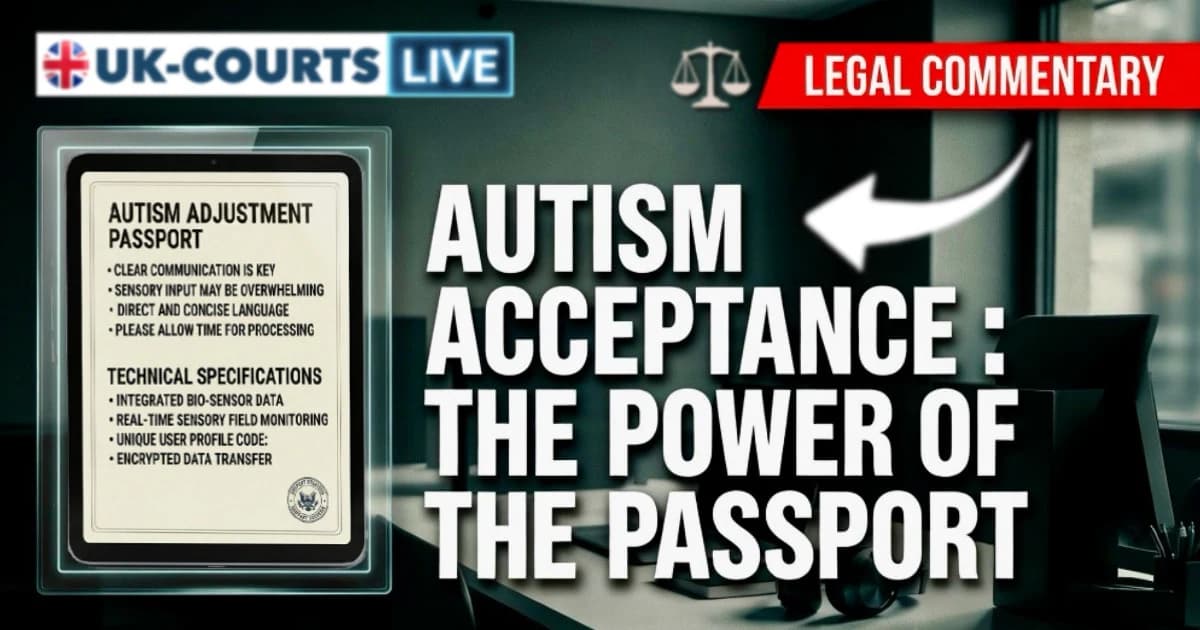
As we mark World Autism Acceptance Week (30 March – 6 April 2026), the spotlight has fallen on a transformative administrative tool that is quietly revolutionizing the relationship between neurodivergent employees and professionals and the modern workplace: the Workplace Adjustment Passport.
While often viewed through the lens of HR "best practice," the Passport is increasingly being recognized by legal experts as the definitive mechanism for meeting—and exceeding—the statutory requirements of the Equality Act 2010.
Leading this national charge is Ambitious about Autism, where the advocacy of figures like Donna Lawson their Deputy Director of National Services - has positioned the Passport not merely as a document, but as a "Gold Standard" for institutional integrity.
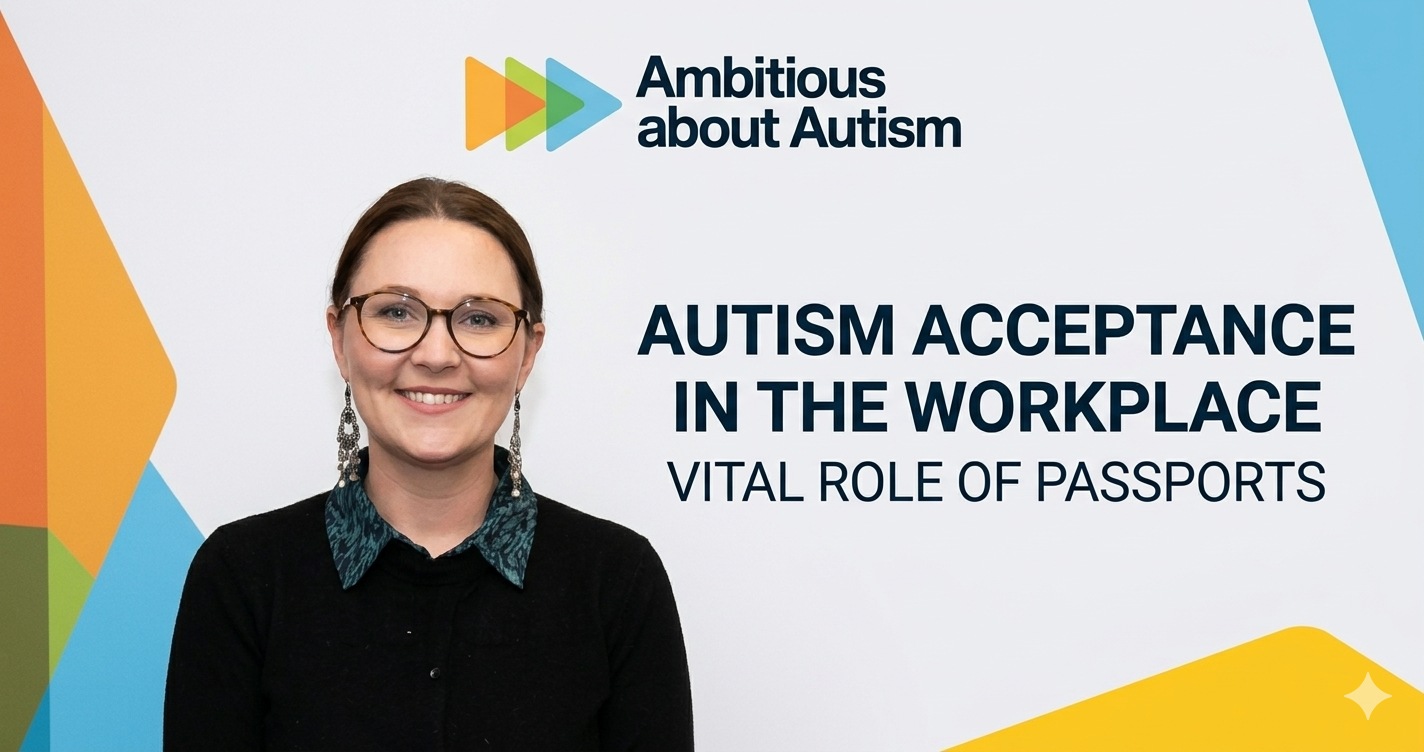
Donna Lawson - Deputy Director of National Services Ambitious & Autism
The Legal Weight: More Than a "Gentleman’s Agreement"
Under Section 20 of the Equality Act 2010, employers have a proactive and "anticipatory" duty to make reasonable adjustments. The Workplace Adjustment Passport serves as a formal, lived record of these adjustments.
Crucially, legal commentary suggests that once a Passport is signed and agreed upon by both management and the employee, it creates a robust evidentiary trail.
If an employer subsequently fails to uphold the adjustments recorded in the Passport, they risk being found in breach of their statutory duty. The Passport essentially "locks in" the employer’s knowledge of the disability, making it legally impossible for them to later claim they "did not know" support was required.
"The Passport is the bridge between a legal obligation and a functional reality. It moves the burden of proof from the employee to the process."
The "Billion-Pound" Endorsement: Who is Using Them?
It is a common misconception that Adjustment Passports are the preserve of charities. In reality, they have been adopted by the UK’s most high-profile institutions and "Blue Chip" businesses:
The Civil Serviced:
One of the earliest and most successful adopters, the Civil Service uses the Passport to ensure that as staff move between departments (e.g., from the DWP to the Treasury), their adjustments follow them without the need for stressful "re-negotiation."
Major UK Retailers & Banks:
Companies like Sainsbury’s, HSBC, and Microsoft UK have implemented versions of the Health and Disability Passport to foster neuro-inclusive cultures and retain specialist talent.
The Royal College of Occupational Therapists (RCOT):
As the leading professional body for Occupational Therapists, RCOT champions the Passport as a fundamental tool for "Occupational Justice." It aligns with our core professional standards, which dictate that the environment must be adjusted to allow for peak clinical performance of our practitioners. For RCOT, the Passport isn't just an HR form; it is a clinical safeguard.
The Health and Care Professions Council (HCPC):
As the statutory regulator for 15 health and care professions, we the HCPC fully recognises the Passport as a vital mechanism for practitioners to meet their "Standards of Conduct, Performance and Ethics."
By documenting communication needs and environmental barriers, the HCPC views the Passport as a proactive measure to prevent the professional misunderstandings that often lead to unnecessary "fitness to practise" inquiries.
The Royal College of Nursing (RCN) & TUC:
Both major unions and professional bodies now formally recommend the "Health Ability Passport" as a standard tool for clinical and professional staff.
The Necessity of Universal Messaging
A primary finding in recent workplace audits is that a Passport is virtually useless if held in a vacuum. For a Passport to function, it must be "MESSAGED" and respected by all staff members who interact with the holder.
Without universal internal communication, the neurodivergent employee and professional is often forced into "Structural Masking"—the exhaustive process of suppressing autistic traits to fit a neuro-typical model that hasn't been briefed on the agreed adjustments.
So if we are truly intent about being Ambitious about Autism in the workplace, then real Autism Acceptance requires the environment to change, not the employee.
Celebrating Autism Acceptance Week 2026
This week (ending 6 April) marks World Autism Acceptance Week, with World Autism Awareness Day having been celebrated yesterday, 2 April.
In 2026, the theme has shifted decisively from "Awareness" (simply knowing autism exists) to "Acceptance" (actively valuing autistic contributions). This year’s celebrations emphasize the "Autistic Employee and Professional"—acknowledging that the precision, factual clarity, and unique problem-solving skills of autistic individuals are vital assets to the UK economy.
Organizations like Ambitious about Autism and the Ambitious College network are at the forefront of this movement. By championing the Passport, they are not just providing a "crutch"; they are providing a platform for excellence.
Feature | Legal/Professional Benefit |
|---|---|
Anticipatory Duty | Triggers the Equality Act protections before friction occurs. |
Portability | Adjustments stay with the employee, regardless of manager changes. |
Direct Forewarning | Provides colleagues with a "User Manual" for neuro-inclusive communication. |
Statutory Defense | Acts as a primary evidence bundle in the event of a Grievance or Tribunal. |
The verdict is clear: The Workplace Adjustment Passport is the primary administrative tool for the 21st-century employer. To ignore its implementation is to ignore the law itself.