
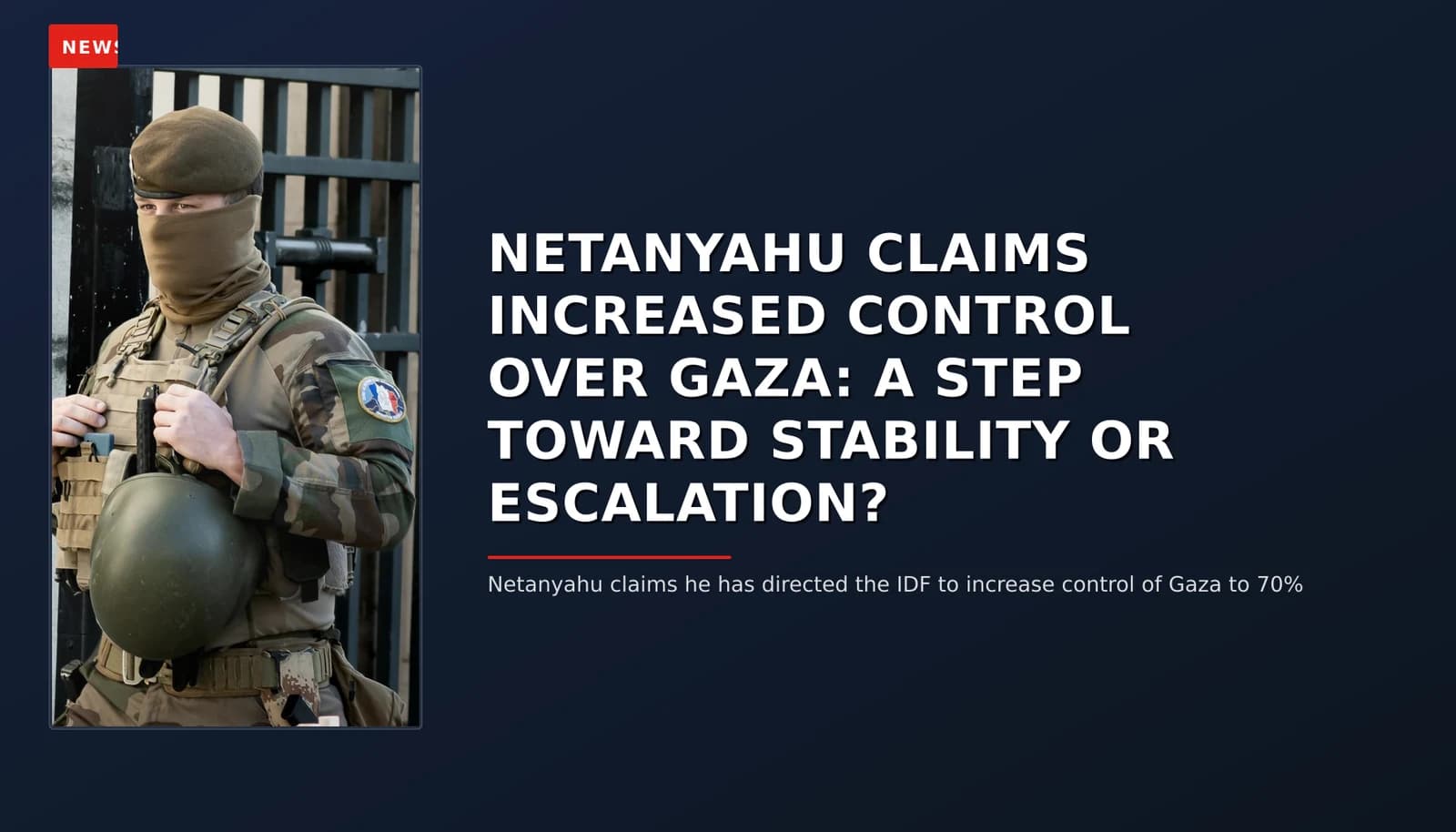
Netanyahu Claims Increased Control Over Gaza: A Step Toward Stability Or Escalation?
Netanyahu claims to have directed IDF to increase control over Gaza to 70%, sparking debates on security and regional stability.

Prime Minister Netanyahu asserts IDF directives to bolster control in Gaza, sparking debate on regional implications.
In a recent development that has drawn significant attention from international observers and regional stakeholders, Prime Minister Benjamin Netanyahu has reportedly directed the Israeli Defense Forces (IDF) to enhance their control over the Gaza Strip to approximately 70%. This move comes amidst ongoing tensions in the region and follows a series of escalatory actions between Israel and Hamas. The announcement was made public through various channels, including prominent Israeli media outlets such as YNet News and The Times of Israel, which cited direct directives from Netanyahu to the IDF regarding their operations in Gaza.
The directive to increase control over Gaza to 70% represents a notable shift in Israel's approach towards the territory. While exact details of what this increased control entails remain unclear, it is understood that such measures may include heightened military presence, stricter border controls, and possibly expanded surveillance or enforcement actions within Gaza's borders. This decision is viewed by some analysts as an attempt to assert greater influence over the region, potentially aimed at preventing further escalations with Hamas and other militant groups.
It is important to note that while Netanyahu has indeed given directives regarding IDF operations in Gaza, the specifics of these directives have not been fully detailed publicly. Sources indicate that the directives are part of a broader strategy to maintain stability along Israel's southern frontier. However, critics argue that such actions could inadvertently heighten tensions and lead to increased hostilities with Hamas, which currently controls Gaza.
The move has been met with mixed reactions from both domestic and international quarters. Within Israel, there is a faction supporting the hardline approach as necessary for national security, while others caution against potential overreach and escalation. Internationally, reactions have ranged from concern over possible violations of Palestinian rights to support for Israel's right to self-defense.
Read more: Heat Spikes Rising: Global Warning From Climate Change
Looking ahead, this development could have significant implications for the already fragile peace process in the region. Observers are closely monitoring whether these actions will lead to a de-escalation or further entrenchment of hostilities between Israel and Hamas. The IDF has yet to provide official statements regarding the specifics of their new directives, leaving much of the international community waiting for clarity.
The situation underscores the delicate balance required in managing relations with Gaza. While Netanyahu's announcement signals a proactive stance on security, it also raises questions about the broader strategy and its potential impact on regional stability.

More Stories


Comments (0)
No comments yet. Be the first to share your thoughts!
Leave a Comment
Your email address will not be published. Comments are moderated before appearing.