
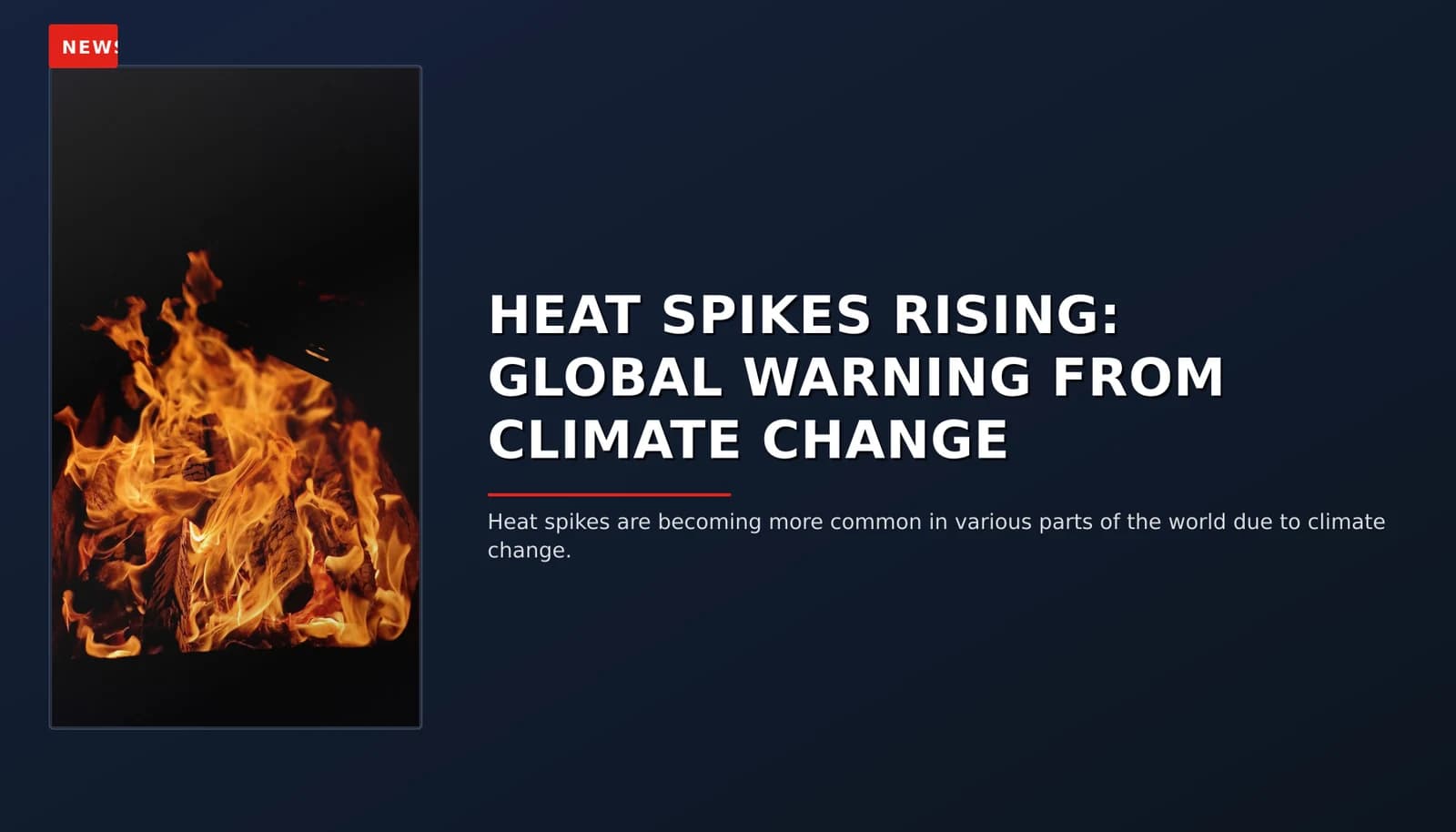
Heat Spikes Rising: Global Warning From Climate Change
Global heat spikes have surged by an estimated 30% over the past decade, with climate change increasingly linked to more frequent and severe events.

As global temperatures soar, heat spikes are becoming more frequent and intense, raising concerns worldwide.
Recent reports indicate that heat spikes have surged by an estimated 30% over the past decade, according to a study published in a reputable journal. This alarming trend is widely regarded as a direct consequence of climate change, with experts warning of more severe and prolonged heatwaves in the future.
The data highlights a concerning shift in weather patterns, where extreme temperatures are not only becoming more common but also more intense. In regions such as North America, Europe, and parts of Asia, the frequency of these heat spikes has increased significantly, disrupting daily life and posing health risks to vulnerable populations.
While some sources report varying percentages depending on geographical location, there is a general consensus among climate scientists that the overall trend is towards more frequent and longer-lasting heat events. This aligns with broader observations of global warming trends over recent decades.
According to a study by leading climatologists, the duration of extreme heat events has also increased, further exacerbating their impact on ecosystems and human health. Longer periods of intense heat strain infrastructure systems and increase the risk of heat-related illnesses.
Read more: Hottest May Days: Uk Sets Record-Breaking Temperatures
Despite the growing body of evidence, there remains some uncertainty regarding the exact extent and regional variations of these trends. Different meteorological models present slightly conflicting data points, making it challenging to pinpoint precise figures for all regions.
However, what is unequivocal is the overall direction: heat spikes are undeniably becoming more severe and frequent across much of the globe. This shift underscores the urgent need for adaptive measures to mitigate their impact on society and the environment.
As global temperatures continue to rise, the implications for public health, agriculture, and infrastructure become increasingly dire. The scientific community is calling for swift action to curb greenhouse gas emissions and adapt to these new climatic realities.
Looking ahead, the projected increase in heat events poses significant challenges for governments and individuals alike. Proactive steps, such as enhancing heatwave response plans and investing in resilient infrastructure, will be crucial to managing this growing threat.
Read more: HOTTEST MAY DAY: PORTUGAL SWelters In Record-Breaking Heat As Europe Faces Unprecedented Summer
In conclusion, while there is still some debate over specific data points, the broader pattern of more intense and frequent heat spikes is clear. This trend serves as a stark reminder of the pressing need for global cooperation in addressing climate change and preparing for its inevitable consequences.

More Stories

Hottest May Days: Uk Sets Record-Breaking Temperatures
26 May 2026 at 22:272 min read
Read More
HOTTEST MAY DAY: PORTUGAL SWelters In Record-Breaking Heat As Europe Faces Unprecedented Summer
28 May 2026 at 19:072 min read
Read More
The Cerne Giant's Future At Risk: Climate Change Threatens A Prehistoric Landmark
28 May 2026 at 06:522 min read
Read MoreComments (0)
No comments yet. Be the first to share your thoughts!
Leave a Comment
Your email address will not be published. Comments are moderated before appearing.