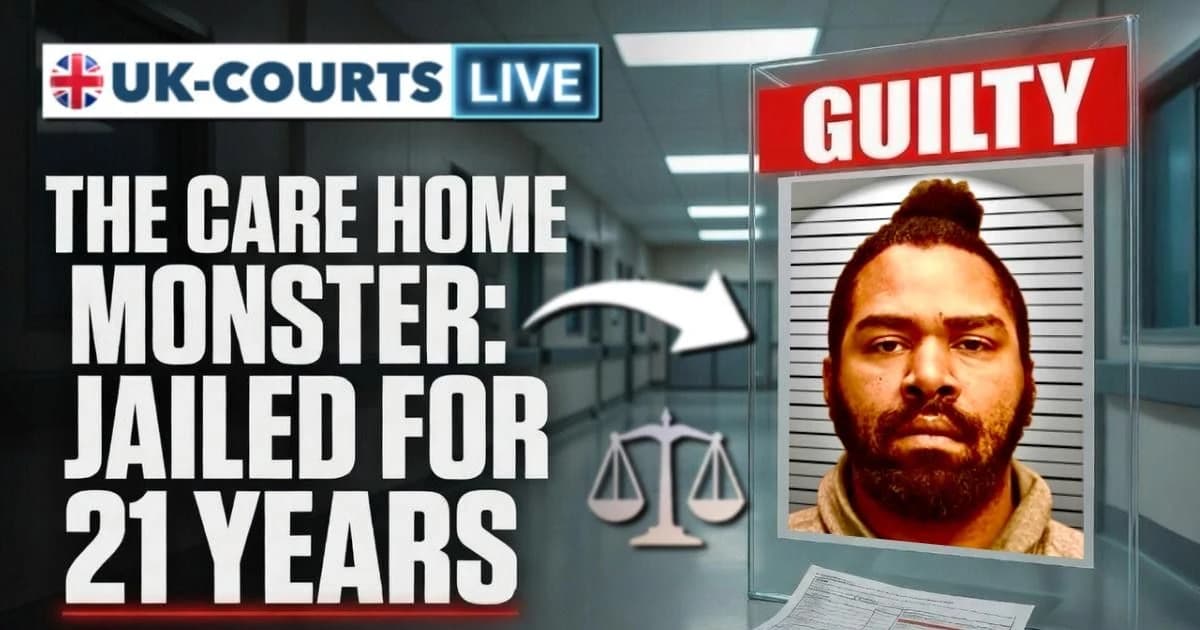
Care worker jailed for 21 years for raping elderly victims
Shocking betrayal in care: Monster care worker secretly filmed himself raping defenceless dementia sufferers in vile attacks – now caged for 21 years. A care assistant who filmed himself repeatedly raping elderly and vulnerable residents at a Lincolnshire care home has been sentenced to 21 years...

Shocking betrayal in care: Monster care worker secretly filmed himself raping defenceless dementia sufferers in vile attacks – now caged for 21 years. A care assistant who filmed himself repeatedly raping elderly and vulnerable residents at a Lincolnshire care home has been sentenced to 21 years in custody at Lincoln Crown Court.
Joshua Springer, 36, of Cornstall Buildings, Stamford, pleaded guilty to nine counts of rape and three counts of making indecent photographs of children following an investigation that uncovered attacks on three women in his care and a fourth victim in North Yorkshire.
The defendant, who also used the names Joshua Kearney and Joshua Kearney Springer, was designated a dangerous offender by the court and must serve an additional six years on extended licence upon his release.
The court heard that the police investigation began last summer after a colleague interrupted Springer during an assault at the Stamford facility. Following his initial arrest, Springer’s mother contacted authorities to report that her son had confessed to being a rapist during a FaceTime conversation in which he admitted he was "guilty" and feared a lengthy prison sentence.
Prosecutor Paul Raudnitz KC told the court that a subsequent forensic examination of the defendant’s mobile devices yielded video evidence of the attacks filmed by Springer himself, alongside a haul of more than 760 indecent images of children, some of which depicted infants.
During police interviews, the defendant admitted to the offences but claimed he did not know why he had committed them, later citing a decade-long addiction to marijuana and alcohol. DNA evidence further linked Springer to the crimes, contradicting his initial claim to officers that the allegations were a "misunderstanding."
The prosecution detailed how Springer had deliberately targeted victims who were particularly vulnerable due to their age and cognitive health, specifically those suffering from dementia.
In a victim impact statement read to the court, the partner of one victim described the lasting trauma of the offending, stating that the "horror" was something he would struggle with for the rest of his life. Defending counsel Anna Soubry acknowledged the gravity of the case and the defendant's status as a dangerous offender, but requested the court apply credit for his early guilty pleas.
She noted that Springer had been aware from the outset that a substantial custodial sentence was inevitable given the nature of his admissions to his mother and the police.
Passing sentence, Judge Simon Hirst described the defendant's actions as a "gross breach of trust" and emphasized that the act of filming the rapes constituted a further degree of degradation for the victims.
The judge noted that the victims' personal circumstances made them uniquely vulnerable to Springer’s predations.
In addition to the custodial term, Springer was ordered to sign the sex offenders register for life and was made the subject of a lifelong sexual harm prevention order.
Following the hearing, Detective Chief Inspector Jennifer Lovatt of the East Midlands Special Operations Unit confirmed that the investigation remains active.
She stated that while Springer has been sentenced for these "horrific crimes," the police believe there may be further victims who have not yet come forward.
The authorities have urged anyone with relevant information regarding Springer's conduct in care settings or elsewhere to contact Lincolnshire Police.