
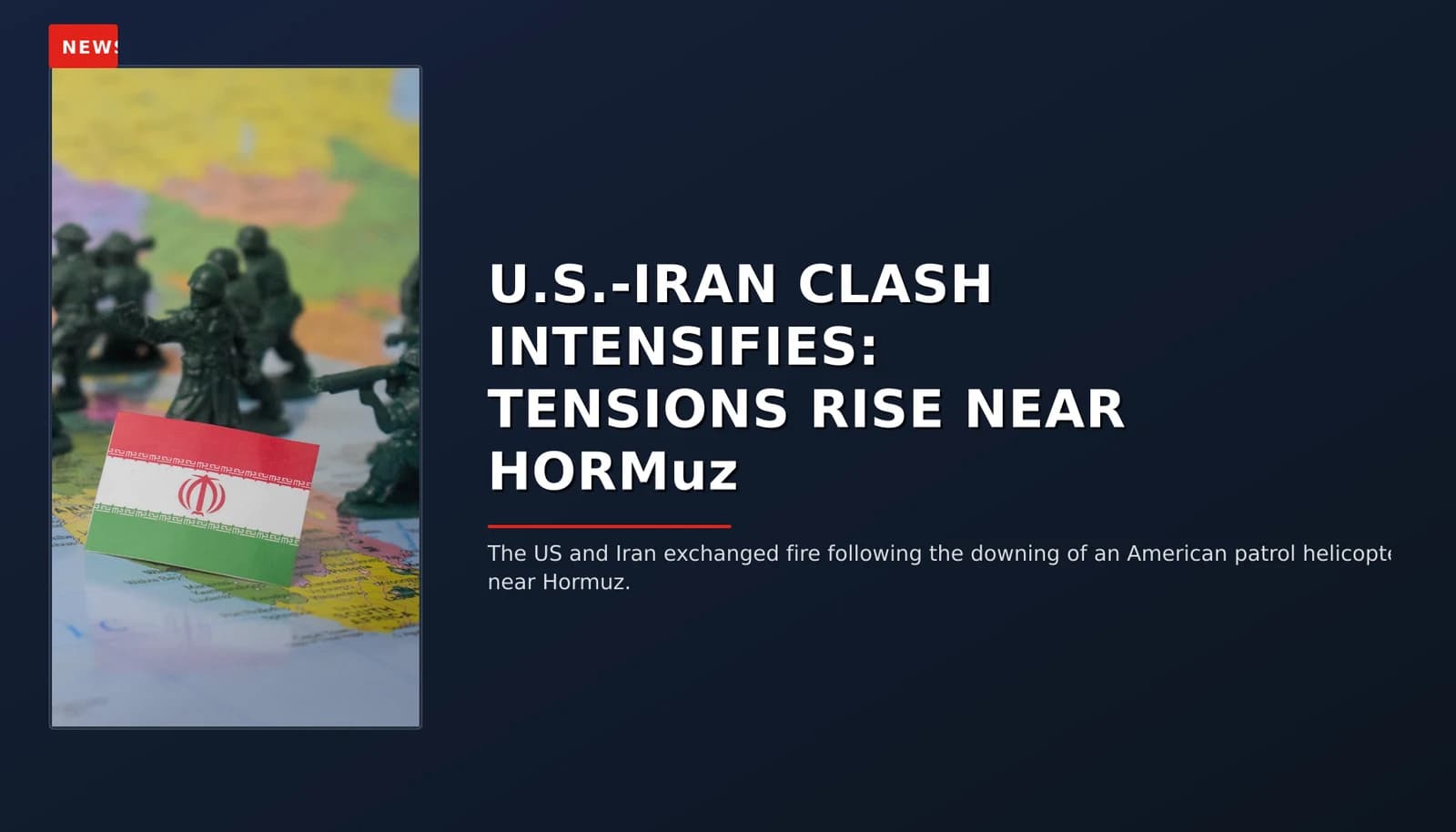
U.s.-Iran Clash Intensifies: Tensions Rise Near Hormuz
The US and Iran escalated tensions after an American patrol helicopter was downed near Hormuz, leading to military exchanges. The cause of the incident remains disputed, complicating international relations.

The US and Iran exchanged fire following the downing of an American patrol helicopter near Hormuz, escalating regional tensions.
In a significant escalation of tensions in the Persian Gulf region, US and Iranian forces have engaged in military confrontation after an American patrol helicopter was reportedly downed near Hormuz. Sources indicate that the incident occurred in international waters, sparking immediate concerns over potential legal implications for international relations.
The exact circumstances surrounding the downing remain unclear. While some reports suggest mechanical failure as a possible cause, others point to Iranian interference, raising questions about attribution and intent. This uncertainty underscores the volatile situation, where both sides are holding firm to their narratives without conclusive evidence.
According to Reuters and other international news agencies, the US military responded with fire following the incident. The response came swiftly, highlighting the potential for broader regional instability. Such actions often serve as catalysts for further escalations in already tense geopolitical environments.
Hormuz, a strategic strait vital for global oil trade, has long been a flashpoint between Iran and Western powers. Its control is crucial for both economic interests and military positioning, making any incident near the area highly sensitive.
Read more: U.S. MILITARY STRIKES IRAN: Tensions Escalate in Middle East
The incident echoes past confrontations, such as the 2019 attacks on tankers in the region and the Downing of an American drone earlier that year. These events have consistently demonstrated Iran's willingness to challenge US presence, while the US has shown determination to maintain its influence in the Gulf.
International observers are closely monitoring developments, wary of potential spillover into broader conflicts. The lack of clarity on who was responsible for the helicopter's downing adds another layer of complexity to an already intricate situation.
Diplomatic channels remain open but appear strained. Both nations have reiterated their commitment to de-escalation, yet actions on the ground suggest otherwise. This dichotomy between rhetoric and reality is a recurring theme in US-Iran relations.
As investigations continue, the focus shifts to whether this incident will lead to renewed sanctions or diplomatic efforts. The outcome could significantly impact regional security architecture and global energy markets.
Read more: Iran's Missile Strikes And Eriksen's Legal Hell: A Day Of Dramatic Developments
Public reaction in both countries has been subdued but cautious. In the US, there is a growing call for clearer communication with allies, while Iran's state media portrays the incident as a defensive move against foreign aggression.
The situation near Hormuz serves as a stark reminder of the delicate balance of power in the Middle East. With neither side willing to back down, the region remains on a precipice, poised for further developments that could alter its geopolitical landscape.

More Stories
U.S. MILITARY STRIKES IRAN: Tensions Escalate in Middle East
26 May 2026 at 05:402 min read
Read More
Iran's Missile Strikes And Eriksen's Legal Hell: A Day Of Dramatic Developments
8 June 2026 at 06:322 min read
Read More
Asia Tech Stocks Dive: Markets Correct After Record Rally And Middle East Tensions
8 June 2026 at 04:542 min read
Read MoreComments (0)
No comments yet. Be the first to share your thoughts!
Leave a Comment
Your email address will not be published. Comments are moderated before appearing.