
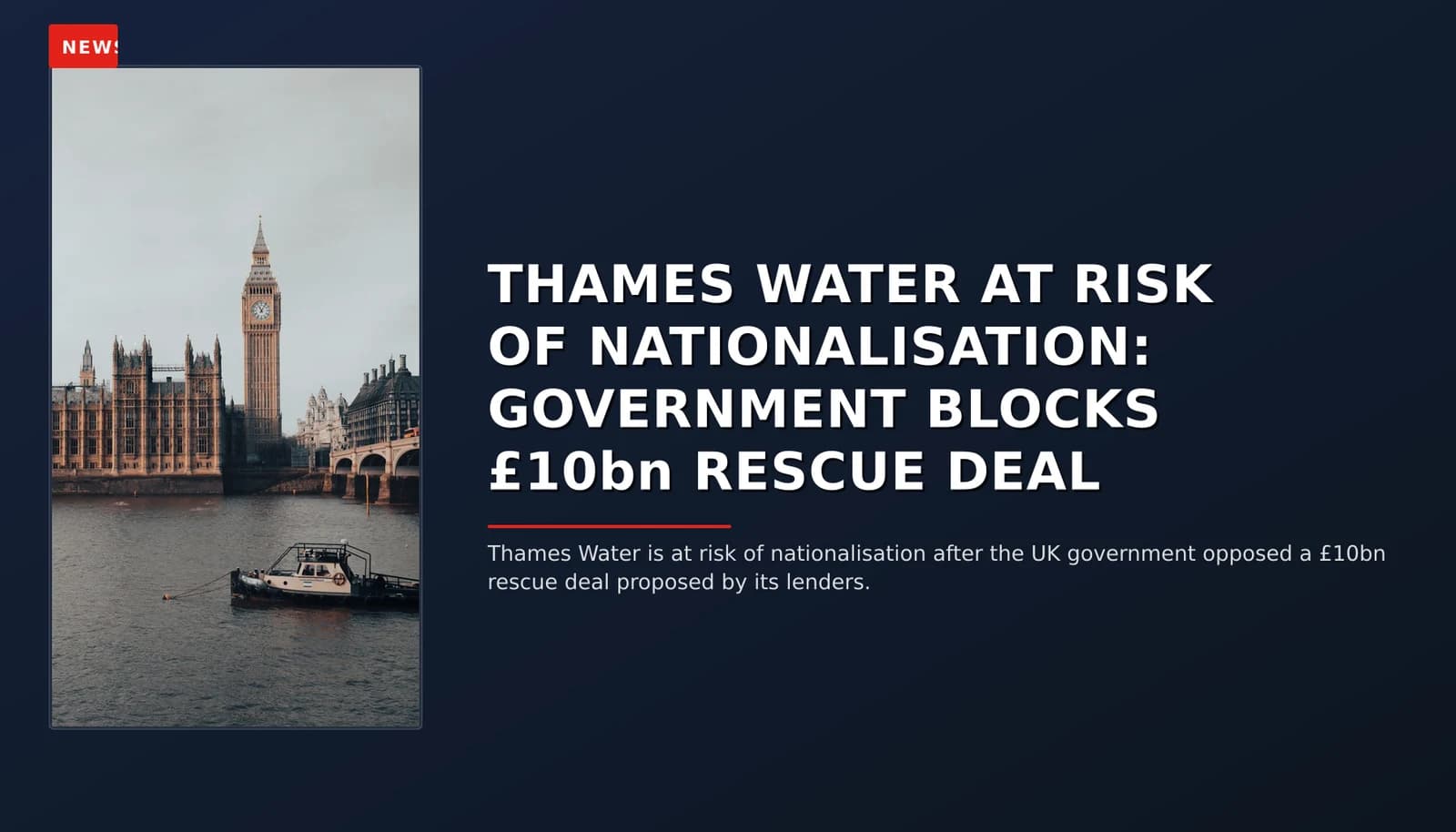
Thames Water At Risk Of Nationalisation: Government Blocks £10bn Rescue Deal
The UK government has opposed a £10 billion rescue deal for Thames Water, raising the spectre of nationalisation and sparking debates over public vs private management of essential services.
The UK government has opposed a major financial rescue package for Thames Water, potentially leading to nationalisation.
In a significant development, the UK government has raised objections to a proposed £10 billion rescue deal aimed at securing the future of Thames Water. This controversial package, which includes writing off £9.4 billion of existing debt and injecting fresh capital of £3 billion, was negotiated by the utility firm's lenders. The decision by the government to oppose this intervention comes despite concerns about the company's financial stability and its ability to meet regulatory obligations.
Thames Water, a vital provider of water services to millions in London and the Thames Valley, has faced mounting challenges in recent years. Issues ranging from rising operational costs to increasing demands for investment in infrastructure have strained the company's finances. Ofwat, the water industry regulator, has expressed growing worries about Thames Water's long-term viability, which could have knock-on effects on service quality and customer bills.
According to sources within the government, the proposed rescue deal was deemed insufficient to address the深层次 financial and operational issues plaguing Thames Water. Critics argue that the failure to approve this package may pave the way for nationalisation, a move that would mark a significant shift in the management of essential public services. Environment Secretary Emma Reynolds has been at the forefront of this opposition, citing concerns over the potential impact on water tariffs and service delivery.
The situation has drawn parallels with recent interventions in other struggling UK utilities, where government involvement was seen as a last resort to prevent systemic collapse. However, nationalising Thames Water would represent a major policy shift, given its status as one of the largest publicly traded water companies in the world. Analysts suggest that this move could set a precedent for future utility sector rescues, potentially influencing investor confidence in similar enterprises.
Read more: Britain's Balancing Act: Warfare Versus Welfare
As the debate over Thames Water's future intensifies, stakeholders are calling for a more comprehensive approach to resolving the crisis. Ofwat has urged all parties to engage in constructive dialogue to ensure a sustainable solution that balances the interests of customers, employees, and investors. Meanwhile, Thames Water itself has reaffirmed its commitment to maintaining service standards despite the financial challenges it faces.
The outcome of this standoff will have far-reaching implications for the UK's utility sector and beyond. If nationalisation proceeds, it could signal a broader trend of state intervention in key industries deemed critical to public welfare. Conversely, failure to reach a resolution could lead to further instability in water services, impacting millions of households and businesses reliant on Thames Water.
With the government's stance hardening against the rescue deal, the path forward remains uncertain. Environment Secretary Emma Reynolds has emphasized the need for a 'credible long-term strategy' to address Thames Water's challenges, rather than short-term fixes that do not tackle the root causes of its financial difficulties. As public consultations and further discussions continue, all eyes are on whether a compromise can be reached before the situation escalates further.
In the meantime, customers of Thames Water are likely to feel the direct effects of this impasse through potential increases in water bills or service disruptions. Advocacy groups have called for greater transparency from both the government and Thames Water regarding the steps being taken to safeguard their interests. The unfolding drama underscores the delicate balance between market forces and public intervention in managing essential services.
Read more: Historic Ai Investment: Uk Government Unveils £1.1 Billion Fund For Next-Generation Chip Technology
As the situation develops, it is clear that the stakes are high for all parties involved. The outcome will not only determine the future of Thames Water but also set a precedent for how similar crises in other sectors are managed under this government. With nationalisation looming as a possible outcome, the implications for the utility industry and beyond could be profound.

More Stories
Britain's Balancing Act: Warfare Versus Welfare
16 June 2026 at 06:342 min read
Read More
Historic Ai Investment: Uk Government Unveils £1.1 Billion Fund For Next-Generation Chip Technology
16 June 2026 at 04:482 min read
Read More
The Uk's Future With The Eu: Timothy Garton Ash Urges Understanding Before Rejoining
16 June 2026 at 02:552 min read
Read MoreComments (0)
No comments yet. Be the first to share your thoughts!
Leave a Comment
Your email address will not be published. Comments are moderated before appearing.