
Farage Unveils Plans to Criminalize 'Fixer' Lawyers in Asylum Fraud Crackdown
Reform UK has announced a hardline policy proposal to imprison lawyers who facilitate fraudulent asylum claims, specifically targeting those who assist illegal migrants in fabricating sexuality-based applications.

In a move designed to dismantle what the party describes as the "illegal migration industrial complex," Nigel Farage revealed plans to introduce a new criminal offence of "strict liability" for legal professionals.
Under the proposed framework, lawyers found coaching clients to deceive the Home Office would face up to two years in prison. Crucially, the "strict liability" status means prosecutors would not be required to prove the lawyer acted with specific intent to defraud, but rather that the facilitation of a false claim occurred under their watch.
The 'Strict Liability' Framework
The proposed legislation seeks to align immigration law with the high-stakes regulatory environment of the financial sector. Mr. Farage argued that just as accountants face criminal charges for enabling tax evasion or bribery—regardless of their stated intent—immigration lawyers should be held to an identical standard of professional accountability.
Read more: Cannabis is the culprit: The deadly weed psychosis link
The Reform UK leader further warned that such lawyers are not merely participating in a procedural breach but are potentially jeopardizing national security by allowing unvetted individuals to remain in the country under false pretences.
The 'Industrial Complex' and Legal Aid Reform
The policy announcement follows a high-profile BBC investigation which exposed law firms demanding thousands of pounds to "coach" asylum seekers. The footage appeared to show advisers instructing clients on how to falsely present as homosexual or fabricate domestic abuse claims to bypass immigration controls.
Zia Yusuf, Reform UK’s home affairs spokesman, described the findings as "absolutely disgusting," noting that false domestic abuse allegations "ruin somebody else's life in the process." Mr. Yusuf pledged that a Reform government would:
Read more: Midnight veto: The burnham precedent & the High Court horizon
Abolish Legal Aid for anyone who enters the UK illegally or overstays their visa.
Target 'Fixer Networks': Redirecting investigative resources toward the "shadow industry" that supports fraudulent claims.
Financial Scrutiny: Highlighting that £135 million in taxpayer funds has been allocated to such legal cases over the last six years.
Cross-Party Reactions and Government Response
Read more: Narcissistic fragmentation: The right’s suicide by purity
The revelations have sent shockwaves through Westminster, prompting rare moments of alignment across the political divide regarding the conduct of "rogue" lawyers, while opinions differ sharply on the legislative solution.
Downing Street: The Prime Minister’s official spokesman confirmed that any migrant caught lying would see their claim cancelled and be placed on a "one-way flight out of Britain."
The Home Office: Home Secretary Shabana Mahmood condemned the exploitation of protections meant for genuine refugees, stating that "sham lawyers" will face the "full force of the law."
The Conservatives: Shadow Home Secretary Chris Philp described the current system as "rotten" and demanded a complete legislative overhaul.
Labour Backbenchers: MP Jo White (Bassetlaw), a member of the Commons Home Affairs Committee, called for penalties to be "a lot tougher" to break up the "fixer networks" operating in plain sight.
As the debate moves toward the Commons, the focus remains on whether "strict liability" is a legally viable or proportional response to professional misconduct, or if existing SRA (Solicitors Regulation Authority) powers are sufficient to handle the fallout from the findings.
LEGAL ANALYSIS: THE CASE FOR PROFESSIONAL ACCOUNTABILITY IN ASYLUM LAW
The proposed reforms regarding the criminalization of "fixer" lawyers represent a robust and logically sound evolution of the "duty to the court"—a principle that is currently being undermined by a minority of practitioners.
From a legal standpoint, the introduction of a "strict liability" offence for facilitating fraudulent asylum claims addresses a critical loophole where the burden of proving mens rea (criminal intent) often allows sophisticated "coaching" networks to evade justice.
1. The Precedent for Strict Liability in Professional Practice
The assertion that legal professionals should be held to a "strict liability" standard is not without significant precedent in English law. We see this mechanical application of justice in regulatory and public welfare offences, where the "grave social evil" (as defined in Gammon (Hong Kong) Ltd v Attorney General of Hong Kong [1985]) justifies the removal of the requirement for intent.
By categorizing the facilitation of fraudulent asylum claims as a strict liability offence, the law would mirror the Bribery Act 2010 (Section 7) and the Criminal Finances Act 2017. Under these statutes, professional entities are held criminally liable for the "failure to prevent" misconduct.
Farage’s proposal correctly identifies that the integrity of the border is a matter of national security, and therefore the standard of care expected from a solicitor should be as high—if not higher—than that expected of a tax accountant.
2. Closing the Regulatory Gap: SRA vs. The Criminal Court
Current disciplinary measures under the SRA Principles (2019) often prove to be an insufficient deterrent. While Principle 2 (Act in a way that upholds public trust and confidence) and Code 1.4 (You do not mislead the court) theoretically govern this area, the sanctions—typically fines or strike-offs—are frequently viewed as a "cost of doing business" for lucrative fixer networks.
Applying a two-year custodial sentence creates an economic and personal deterrent that regulatory rebukes cannot match. It reinforces the "Paramount Duty to the Court" over the duty to the client, a hierarchy that is essential for the functioning of the adversarial system.
3. Protecting the Sanctity of the Equality Act 2010
A vital, yet often overlooked, legal positive of this crackdown is the protection of genuine claimants. When the asylum system is clogged with fabricated sexuality claims, it dilutes the protections intended for those truly fleeing persecution under Section 13 (Direct Discrimination) and related international human rights treaties.
By removing the "noise" of fraudulent claims through aggressive legal deterrence, the state can more effectively discharge its duty to those in legitimate need.
4. The "Illegal Migration Industrial Complex" as a Market Failure
The proposed abolition of Legal Aid for illegal entrants is a pragmatic response to what is effectively a market failure. Taxpayer-funded litigation should, by definition, serve the public interest. When legal aid is utilized to facilitate claims that are later proven to be based on "coached" falsehoods, it constitutes a misappropriation of public funds.
Conclusion
Reform UK’s plan is a common-sense realignment of legal ethics. It demands that lawyers return to their role as officers of the court rather than conduits for deception.
By implementing a strict liability standard, the government would finally hold the legal profession to the same standard of "due diligence" that is expected of every other sector dealing with matters of state importance.
Legal Note: All proposals would have course require end UK to leave the European Convention on Human Rights (ECHR), which of course is the number 1 prior of Nigel Farage and the Refrom party even if sceptics say otherwise.
Ultimately, the proposal to hold the legal profession to a strict liability standard is about the restoration of public trust in a justice system that has, for too long, allowed a shadow industry to flourish under the guise of "zealous advocacy." For the vast majority of practitioners who uphold the highest ethical standards, these measures are not a threat, but a long-overdue cleansing of the ranks.
The era of the "nudge and a wink" in the consultation room must come to an end. When the law is treated as a series of loopholes to be exploited rather than a framework to be respected, the entire structure of our adversarial system begins to fray.
By moving the goalposts from "did you mean to lie?" to "did you facilitate a lie?", Reform UK is signaling that the privilege of the wig and gown carries a weight of responsibility that can no longer be ignored.
As we move into 2026, the message to the "fixer networks" and the self-styled "asylum entrepreneurs" is clear: the clock has run out. The law is finally catching up with the practitioners who have commodified deception.
By removing the financial and procedural incentives for fraud, we aren't just protecting our borders; we are protecting the sanctity of the legal profession itself.
The British public is no longer interested in the "nuance" of professional negligence—they are demanding unvarnished accountability. It is time to close the briefcase on the era of the "fixer" and return to a world where being an Officer of the Court actually means something.

More Stories

Cannabis is the culprit: The deadly weed psychosis link
14 February 2026 at 17:013 min read
Read More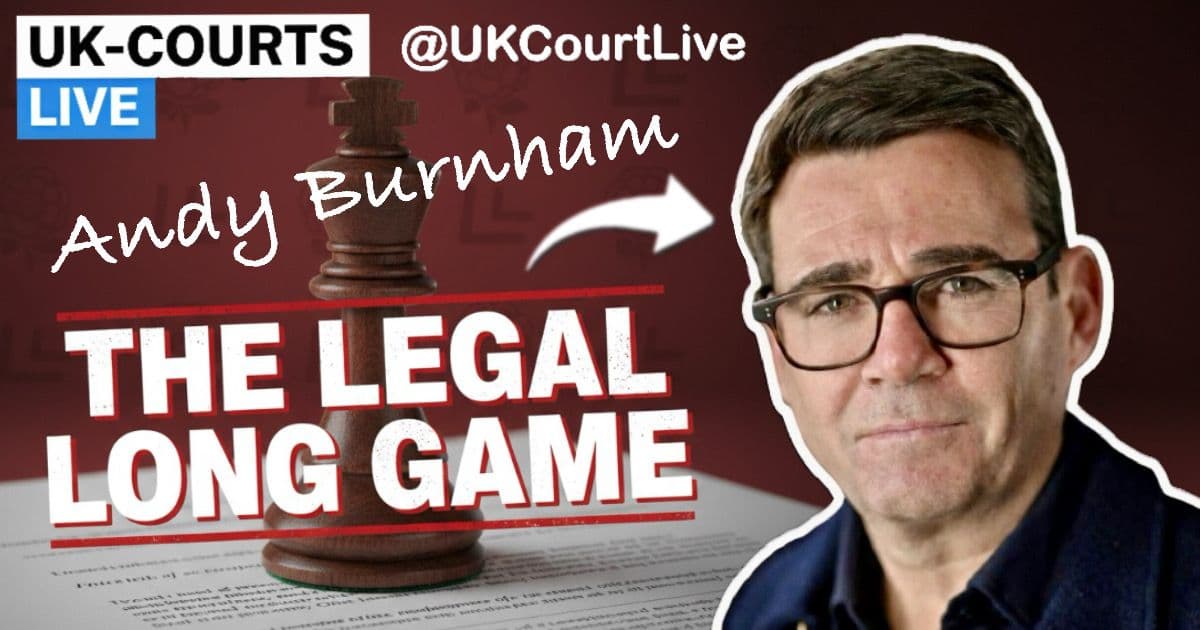
Midnight veto: The burnham precedent & the High Court horizon
27 January 2026 at 09:013 min read
Read More
Narcissistic fragmentation: The right’s suicide by purity
25 January 2026 at 16:453 min read
Read MoreComments (0)
No comments yet. Be the first to share your thoughts!
Leave a Comment
Your email address will not be published. Comments are moderated before appearing.