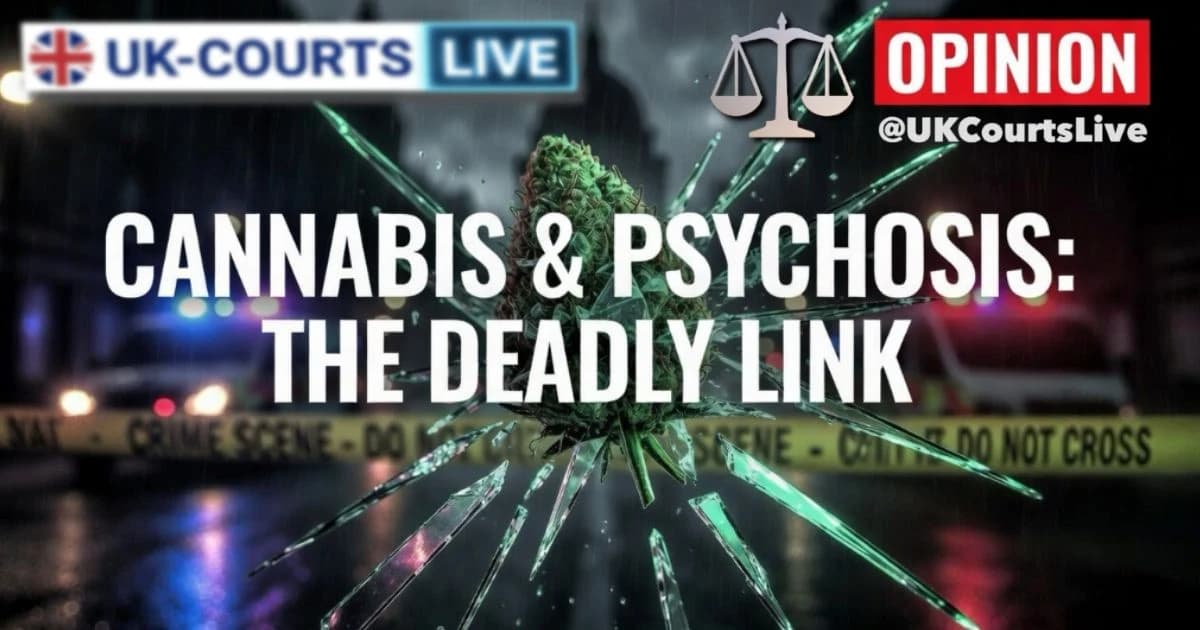
Cannabis is the culprit: The deadly weed psychosis link
The forensic link between high-potency cannabis consumption and the I catastrophic failure of community-based mental health treatment is no longer a matter of clinical debate but a primary factor in the rising toll of avoidable homicides. Recent data from the National Confidential Inquiry into...

The forensic link between high-potency cannabis consumption and the I catastrophic failure of community-based mental health treatment is no longer a matter of clinical debate but a primary factor in the rising toll of avoidable homicides.
Recent data from the National Confidential Inquiry into Suicide and Safety in Mental Health indicates that roughly ninety-four per cent of killings committed by patients with schizophrenia involve individuals who were non-adherent with medication and were also continuing the misuse of cannabis, in direct contradiction of the release terms of their mental health orders.
This correlation highlights a lethal deficit in the current enforcement of Section 37/41 restricted hospital orders and Community Treatment Orders where abstinence from cannabis is a mandated condition of a patient’s ongoing freedom.
The scientific consensus established by the Institute of Psychiatry at King’s College London confirms that cannabis acts as a direct chemical trigger for the dopamine dysregulation that defines a psychotic break.
For a person with a diagnosis of paranoid schizophrenia, the introduction and pronged use of cannabis is not merely a lifestyle choice but a clinical sabotage of their antipsychotic medication which effectively removes the biological safety net preventing violent relapse.
Despite the legislative intent of the Mental Health Act 2025 to tighten risk management, the rollout has been criticised for failing to provide the forensic tools necessary to monitor high-risk patients in the community.
The independent investigation into the Nottingham attacks published in early 2025 identified systemic hesitation in utilizing the Secretary of State’s power of recall even when patients were known to be disengaging from services and using cannabis.
If mandatory hair follicle testing were integrated as a standard, non-negotiable condition of every discharge order, the detection of cannabis usage would be transformed from unreliable self-reporting to forensic certainty.
Unlike urinalysis which can be manipulated by short-term abstinence, segmented hair strand testing provides a three-month chronological record of a patient’s cannabis usage history and their actual intake of prescribed antipsychotics.
Recent clinical research studies have now clearly proven that at least fifteen to twenty lives could have been saved in the last year alone had the authorities enforced an immediate recall policy at the first detection of continued cannabis usage.
The failure to enforce these conditions has created an enforcement gap where patients on a conditional discharge are essentially permitted to breach the legal terms of their release until a crisis occurs.
The legal reality for the schizophrenic patient is distinct from the general population as the diagnosis constitutes a permanent biological threshold that now precludes even the casual use of any canabis whatsoever, as the public safety risks are now way to high and patients who are now diagnosed with schizophrenia have to now just take this as a compliance they have to accept without question, as the majority do.
Just to caveat this, it goes without saying that, while the majority of citizens may use cannabis without experiencing a severe psychiatric reaction, the schizophrenic patient is effectively sentenced to a lifetime of total abstinence on the grounds of public safety.
Schizophrenia remains a highly treatable condition when clinical compliance and total abstinence of cannabis is fully maintained and for the vast majority of patients it is not a barrier to a normal life provided the red line of cannabis usage is never crossed.
The current scandal lies in a care system that treats drug-related breaches with clinical leniency rather than the immediate legal recall required to prevent the next avoidable tragedy.