
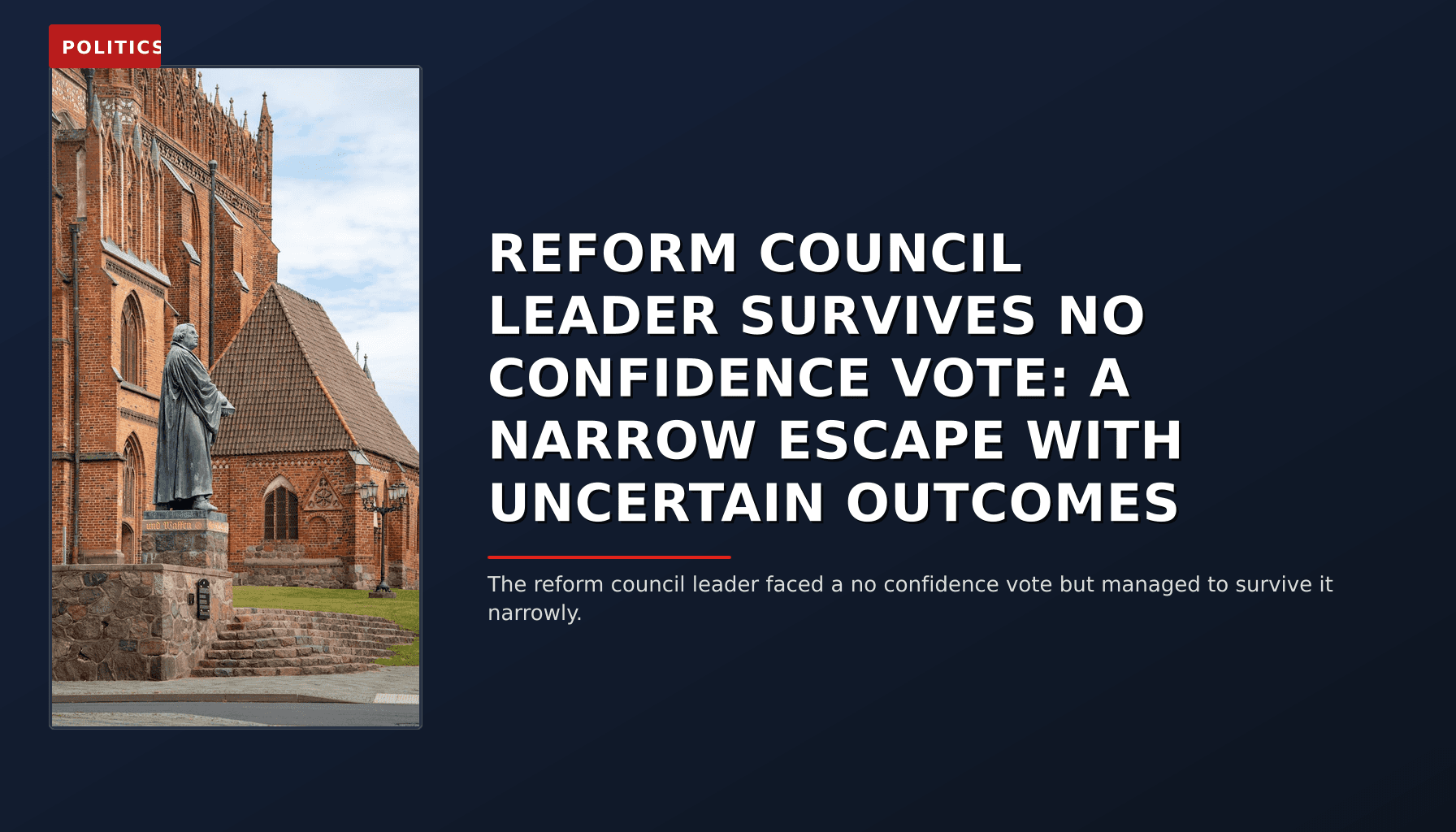
REFORM COUNCIL LEADER SURVIVES NO CONFIDENCE VOTE: A NARROW ESCAPE WITH UNCERTAIN OUTCOMES
The Reform Council leader narrowly survived a no-confidence vote, with details of the outcome and voting process remaining unclear. This development raises questions about the council's future direction.

The Reform Council leader barely avoided being ousted in a no-confidence vote, with the outcome leaving many questions unanswered.
In a significant political development, the leader of the Reform Council faced a no-confidence vote, marking a pivotal moment in their tenure. According to sources, the vote was narrowly survived by the leader, who received minimal support during this critical test of authority. This move underscores the ongoing tensions within the council and highlights the fragility of the current leadership structure.
While it is understood that the reform council leader managed to hold onto their position, details surrounding the voting process and its outcome remain shrouded in uncertainty. Reports vary on whether additional support was mustered for the leader or if the vote count was conducted transparently. This lack of clarity has sparked speculation about the internal dynamics at play within the Reform Council.
The Reform Council, known for its efforts to drive legislative changes, has been a focal point of political scrutiny in recent months. Observers are now closely monitoring whether this no-confidence vote signals the beginning of broader challenges to the leader's authority or if it represents an isolated incident. The council’s internal proceedings have raised sub judice concerns, complicating efforts to ascertain the full implications of this decision.
Analysts suggest that the survival of the Reform Council leader in this no-confidence vote could be a turning point in their career, potentially reinforcing their position or, conversely, leading to calls for further reforms within the council. The outcome has left stakeholders and supporters alike questioning the future direction of the Reform Council’s agenda.
As the dust settles on this development, attention now turns to whether the Reform Council will take any formal steps to address the concerns that led to the no-confidence vote. With limited available sources and a reluctance to delve into sub judice matters, the full story remains elusive. It is clear, however, that the council faces significant challenges as it navigates this uncertain political landscape.
More Stories

REVEALED: ENERGY BILL REFORMS SCRAPPING VAT AND GREEN LEVIES
17 March 2026 at 12:562 min read
Read More
ASSISTED DYING LAWS UNDER REVIEW: POTENTIAL REFORMS ACROSS BRITAIN
17 March 2026 at 10:562 min read
Read More
UK PRIME MINISTER DISTANCES BRITAIN FROM EU's IRAN WARSHIP PLAN: A BREAK WITH ALLIES?
17 March 2026 at 09:342 min read
Read More
Comments (0)
No comments yet. Be the first to share your thoughts!
Leave a Comment
Your email address will not be published. Comments are moderated before appearing.