
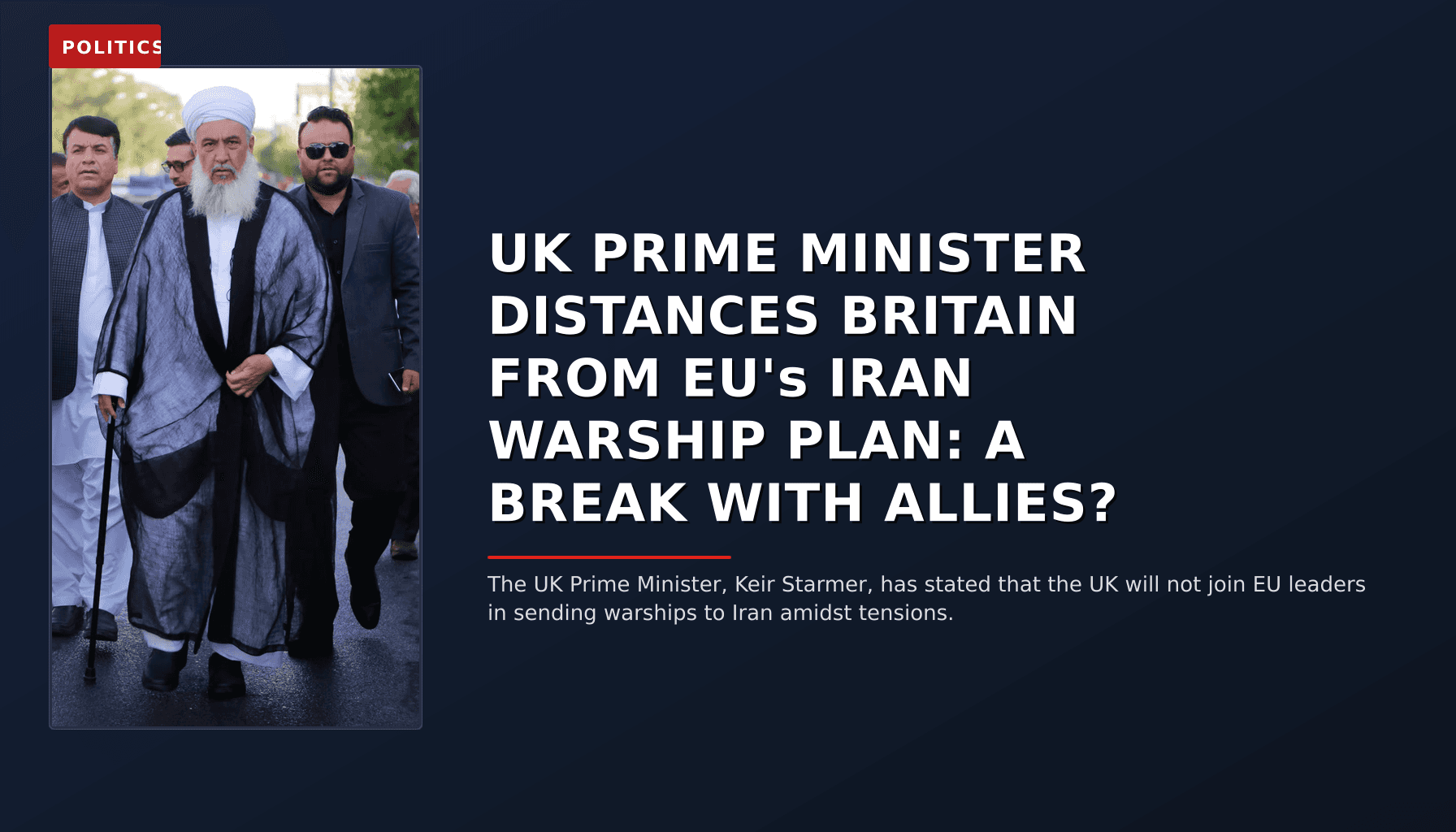
UK PRIME MINISTER DISTANCES BRITAIN FROM EU's IRAN WARSHIP PLAN: A BREAK WITH ALLIES?
Keir Starmer has decided against joining EU leaders in deploying warships near Iran, signaling a potential shift in UK foreign policy.

Keir Starmer has opted not to join EU leaders in deploying warships near Iran, signaling a shift in UK foreign policy.
The UK Prime Minister, Keir Starmer, has made it clear that Britain will not follow the lead of European Union leaders by sending warships to the region surrounding Iran. This decision comes amidst heightened tensions between Iran and several Western countries, including the United States and Israel. According to sources from Sky Media and BBC News, Starmer's announcement reflects a strategic divergence from key allies in the EU.
This move has raised eyebrows among political analysts, as it marks a notable shift in the UK's approach to regional security. Traditionally, the UK has aligned closely with its European counterparts on matters of foreign policy and defense. However, Starmer's decision suggests a more cautious stance, possibly influenced by economic considerations or diplomatic priorities.
The statement was made following reports that EU leaders were considering a naval deployment in response to escalating tensions in the Strait of Hormuz. Iran has repeatedly warned against such actions, deeming them provocative and destabilizing for the region. Starmer's opting out could signal an effort to avoid direct confrontation with Iran while maintaining trade relations.
The decision also comes at a time when the UK is navigating its post-Brexit relationship with both the EU and Iran. Critics argue that this stance may weaken British influence in the region, while proponents suggest it demonstrates independence from Brussels' policies.
In his remarks, Starmer emphasized the importance of diplomacy over military confrontation. He underscored the need for dialogue to de-escalate tensions and avoid potential conflicts. This approach aligns with recent calls from international bodies for a peaceful resolution to the ongoing disputes.
The UK's decision has left EU leaders somewhat perplexed. Some have interpreted it as an attempt by Starmer to chart a separate course on foreign policy, potentially challenging the transatlantic consensus. Others view it as a pragmatic response to domestic priorities or economic interests.
As tensions in the region continue to simmer, all eyes are on how the UK will navigate its diplomatic relations with Iran and its European partners. The implications of Starmer's decision could extend beyond immediate security concerns, affecting trade agreements and regional stability efforts.
More Stories
DONALD TRUMP CRITICIZES UK'S BREXIT HANDLING AND KEIR STARMER'S LEADERSHIP
17 March 2026 at 07:532 min read
Read More
ED MILIBAND'S ENERGY COST PLANS UNVEILED: LABOUR'S STRATEGY TO COMBAT RISING BILLS
17 March 2026 at 06:062 min read
Read More
PRIVATE HEALTHCARE RISE: CONCERNS OVER A TWO-TIER NHS SYSTEM
17 March 2026 at 04:422 min read
Read More
Comments (0)
No comments yet. Be the first to share your thoughts!
Leave a Comment
Your email address will not be published. Comments are moderated before appearing.