
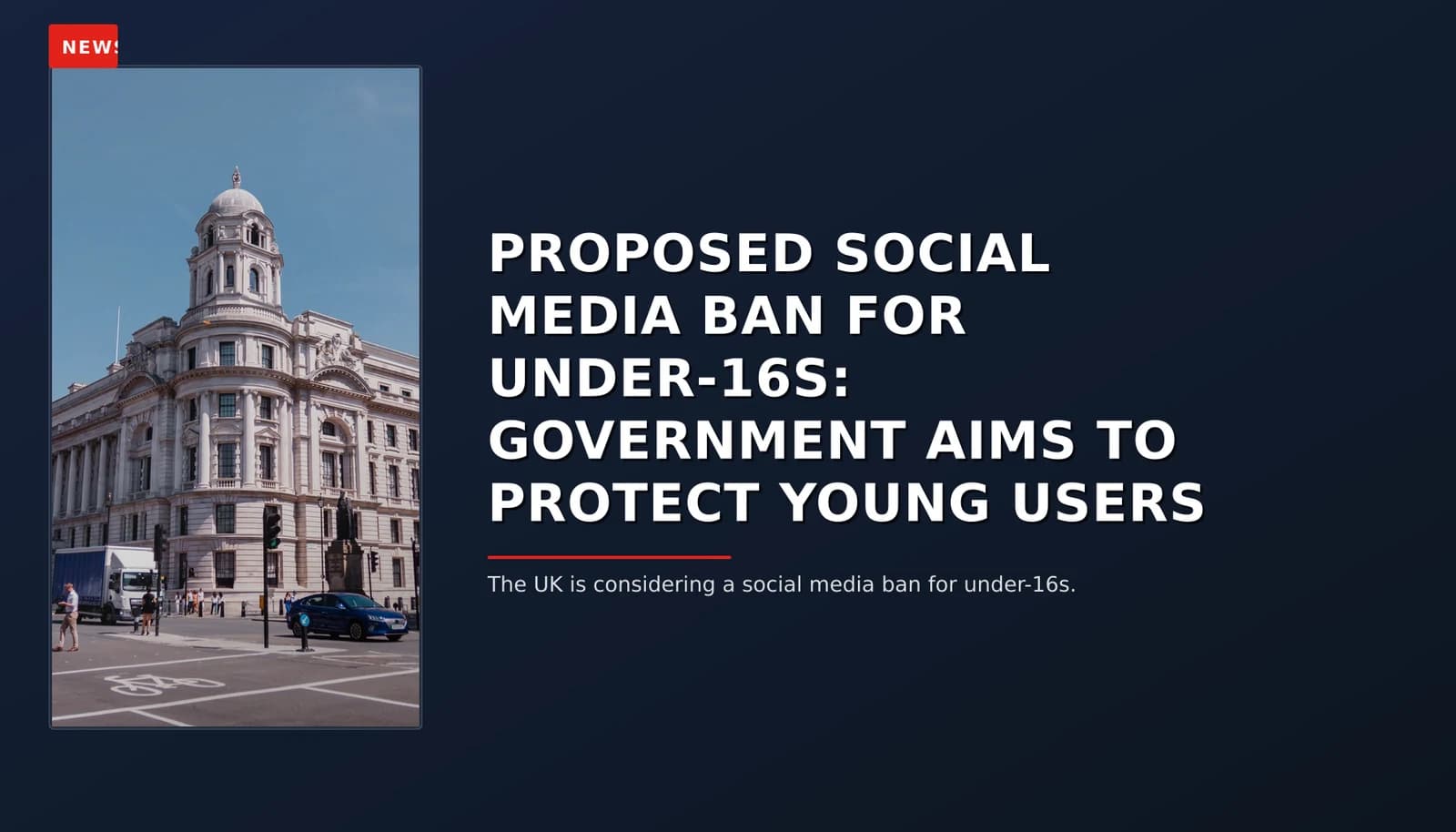
Proposed Social Media Ban For Under-16s: Government Aims To Protect Young Users
The UK government is considering a ban on social media use by under-16s to protect children from online harms, with stricter age restrictions on platforms potentially being introduced.

The UK government is considering imposing stricter age restrictions on social media platforms to prevent under-16s from accessing them.
In a move aimed at safeguarding young internet users, the UK government is reportedly contemplating a ban that would prohibit individuals under the age of 16 from using social media. This proposed measure seeks to address growing concerns about the potential harms associated with early exposure to online platforms. According to recent reports, this initiative is part of broader efforts to enhance child protection in the digital sphere.
The plan, which is still under discussion, would introduce stricter age restrictions on various social media platforms, making it more challenging for underage users to access these sites. The UK government has indicated that such measures could include requiring parental consent or implementing robust verification systems to ensure compliance with age limits. These steps are seen as crucial in mitigating risks such as cyberbullying, inappropriate content, and other online threats.
While the exact details of the proposed ban remain unclear, sources suggest that the initiative is gaining traction within government circles. Some reports have highlighted the potential inclusion of all major social media platforms, while others indicate that the restrictions might be applied selectively depending on the platform's policies and risk levels. This uncertainty underscores the complexity of regulating such diverse and dynamic online spaces.
The discussions surrounding this ban are part of a larger trend in the UK towards stricter internet governance to protect minors. Over the past few years, there have been several legislative efforts aimed at curbing underage access to harmful content and ensuring safer digital environments for young people. These include enhanced reporting mechanisms for online abuse and increased penalties for platforms that fail to adequately safeguard their youngest users.
Read more: New Social Media Ban Targets Under-16s: Uk Leapfrogs Australia In Regulating Youth Access
Critics of the proposed ban argue that it could inadvertently limit children's access to educational resources and lawful social interactions available through these platforms. They suggest that instead of a outright ban, a more nuanced approach might involve improved moderation tools and age-appropriate content filtering systems. Advocates for the ban, however, emphasize the importance of prioritizing child safety in an increasingly connected world.
As the debate continues, key questions remain unanswered: How will the ban be enforced? What role will parents play in this new regulatory framework? And what exceptions or exemptions might be granted to accommodate legitimate uses of social media by under-16s? These issues are likely to shape the final form of any legislation that emerges from current discussions.
The UK government has yet to provide a definitive timeline for when and how these restrictions will be implemented. However, given the ongoing dialogue and the support it has garnered from various quarters, it seems increasingly probable that some form of social media regulation targeting under-16s will be introduced in the near future. As this story evolves, VPNews will continue to provide comprehensive coverage of the developments.

More Stories
New Social Media Ban Targets Under-16s: Uk Leapfrogs Australia In Regulating Youth Access
14 June 2026 at 16:252 min read
Read More
Kemi Badenoch Calls For Labour To Cut Welfare And Boost Defence
15 June 2026 at 08:052 min read
Read More
Nigel Farage Proposes Controversial Ban on Foreign Nationals in Social Housing: Reform UK's Plan Sparks Backlash
15 June 2026 at 06:312 min read
Read MoreComments (0)
No comments yet. Be the first to share your thoughts!
Leave a Comment
Your email address will not be published. Comments are moderated before appearing.