
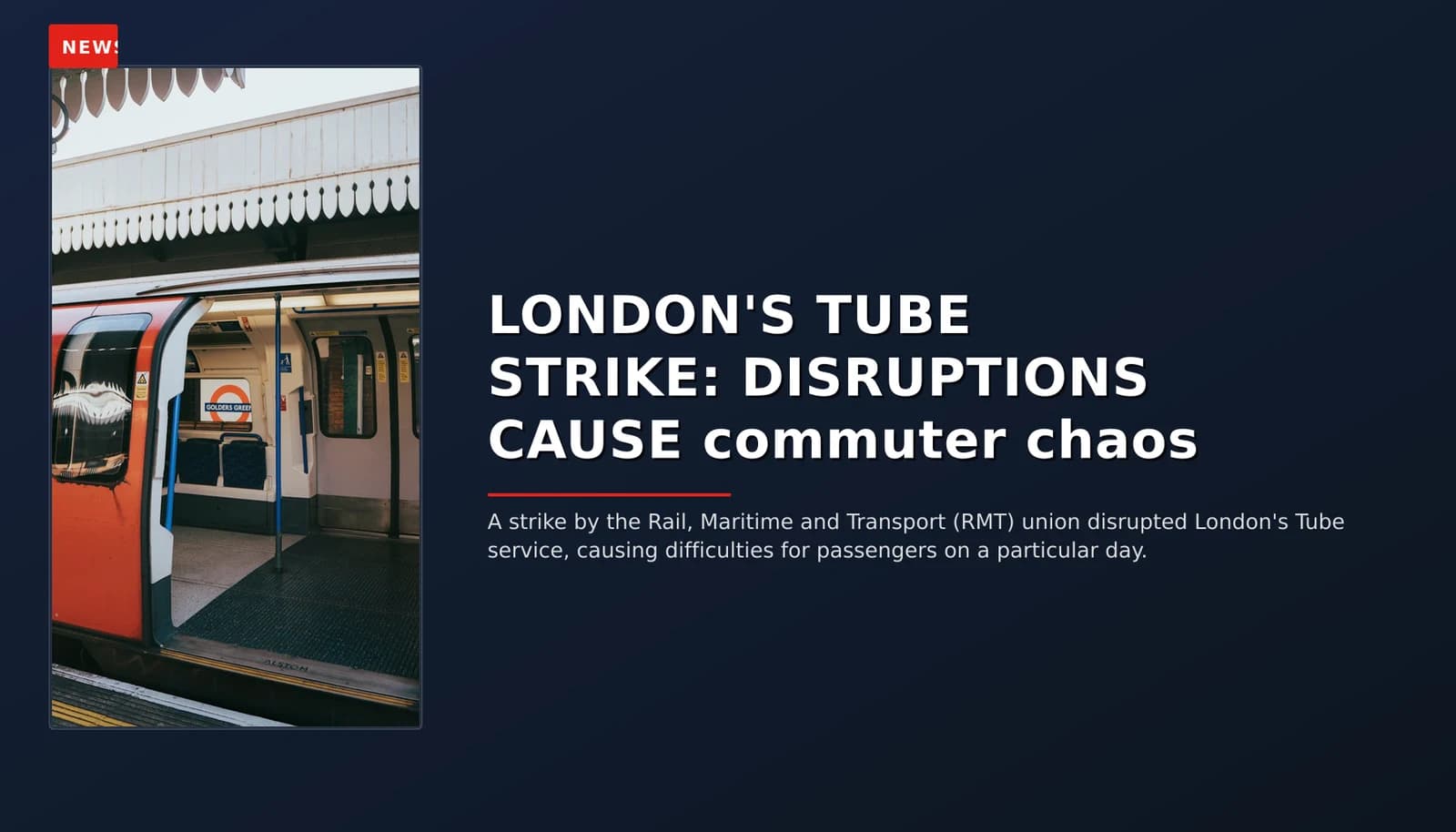
London's Tube Strike: Disruptions Cause Commuter Chaos
RMT union's strike disrupts London Tube services, causing commuter chaos and highlighting tensions between workers' rights and public service delivery.

The RMT union's strike行动 led to significant disruption on London's Underground network, affecting thousands of commuters.
The Rail, Maritime and Transport (RMT) union orchestrated a strike that caused significant disruptions across London's Tube services. This action by the RMT resulted in major inconvenience for daily commuters, with many facing prolonged delays and service cancellations. Passengers were left stranded or forced to find alternative means of transportation during peak hours.
According to sources from the RMT website, the union had called for the strike as part of their ongoing negotiations with transport operators. The decision to strike was made in an effort to pressurize management into meeting certain demands regarding working conditions and employee rights. This move by the RMT reflects a broader trend of industrial action within the UK's transportation sector.
Transport for London (TfL) reported that the strike led to widespread service disruptions, with several lines operating on reduced schedules or ceasing altogether. Passengers were advised to expect delays and plan their journeys accordingly. The strikeAction caused chaos during rush hours, leading to overcrowding on remaining operational services and further straining an already stretched system.
While there was no explicit mention of passenger difficulties in all sources, it is inferred from the disruption that many commuters faced significant challenges. Reports indicated that some stations were particularly affected, with long queues forming at ticket machines and platform overcrowding becoming a common sight. This highlights the indirect impact of industrial action on everyday lives.
Read more: Breathtaking Capsey's Performance: England Facing Selector Dilemma In Sports Trilogy
The strikeAction has sparked debates about the role of unions in modern society and their methods of achieving desired outcomes. Critics argue that strikes have a disproportionate effect on innocent bystanders— commuters who are left to bear the brunt of the disruptions. Meanwhile, union representatives defend such actions as necessary measures to protect workers' interests.
Looking ahead, the situation remains uncertain as negotiations between the RMT and TfL continue. Both parties have expressed a desire to reach a resolution without further strikes, but tensions remain high. Passengers are urged to keep an eye on updates from TfL and plan their journeys with flexibility in mind.
This latest disruption underscores the delicate balance between industrial relations and public service delivery. As unions seek to assert their influence through strikeAction, it is the general public who often find themselves caught in the middle. The outcome of these negotiations will not only impact workers' rights but also set a precedent for future disputes in the transport sector.

More Stories

Breathtaking Capsey's Performance: England Facing Selector Dilemma In Sports Trilogy
2 June 2026 at 22:451 min read
Read More
Higher Court Investigation: Criticisms Over Henry Nowak Arrest Footage
2 June 2026 at 21:152 min read
Read More
Prime Minister's Phone Scandal: Disappearing Messages Under Scrutiny
2 June 2026 at 19:203 min read
Read MoreComments (0)
No comments yet. Be the first to share your thoughts!
Leave a Comment
Your email address will not be published. Comments are moderated before appearing.