
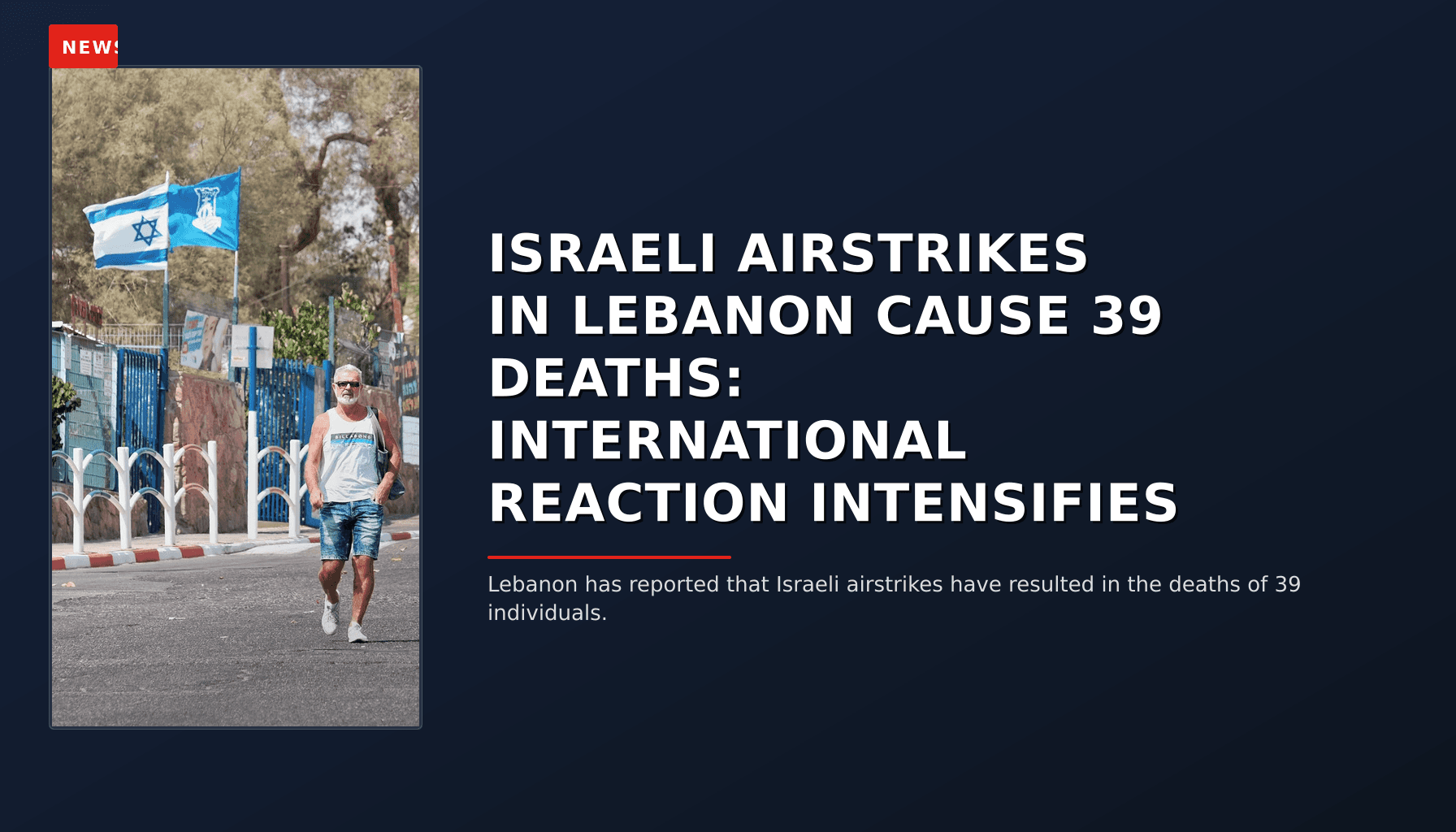
ISRAELI AIRSTRIKES IN LEBANON CAUSE 39 DEATHS: INTERNATIONAL REACTION INTENSIFIES
Lebanon reports at least 39 killed in Israeli airstrikes, with international condemnation mounting. The exact number of casualties is disputed.

Lebanon reports 39 killed in Israeli airstrikes, with international condemnation mounting over the weekend.
As tensions between Lebanon and Israel continue to escalate, fresh reports have emerged detailing the devastating impact of recent Israeli airstrikes on Lebanese territory. According to verified sources, including multiple international news outlets, these strikes have resulted in the tragic loss of at least 39 lives. While some details remain under investigation, the scale of the casualties underscores the severity of the conflict.
The exact number of casualties is a point of contention, with varying reports suggesting figures ranging from 39 to higher numbers. This discrepancy highlights the challenges in accurately assessing the situation amid ongoing hostilities. The Lebanese government has issued statements condemning the airstrikes as acts of aggression, while Israel maintains that its military actions are aimed at self-defense against Hezbollah militants.
In a statement released yesterday, the Israeli Defense Forces (IDF) justified their strikes as necessary measures to counter Hezbollah's suspected involvement in cross-border attacks. However, this justification has been met with skepticism from international observers and neighboring countries. The IDF's operations have drawn widespread criticism on social media platforms, where users from across the globe have expressed solidarity with Lebanon.
The conflict between Israel and Lebanon is not new, with decades of animosity rooted in territorial disputes and ideological differences. Hezbollah, a Shi'a Islamist group designated as a terrorist organization by several countries, has long been a focal point of tension. The group's influence in Lebanese politics and its control over certain regions complicate efforts to achieve peace.
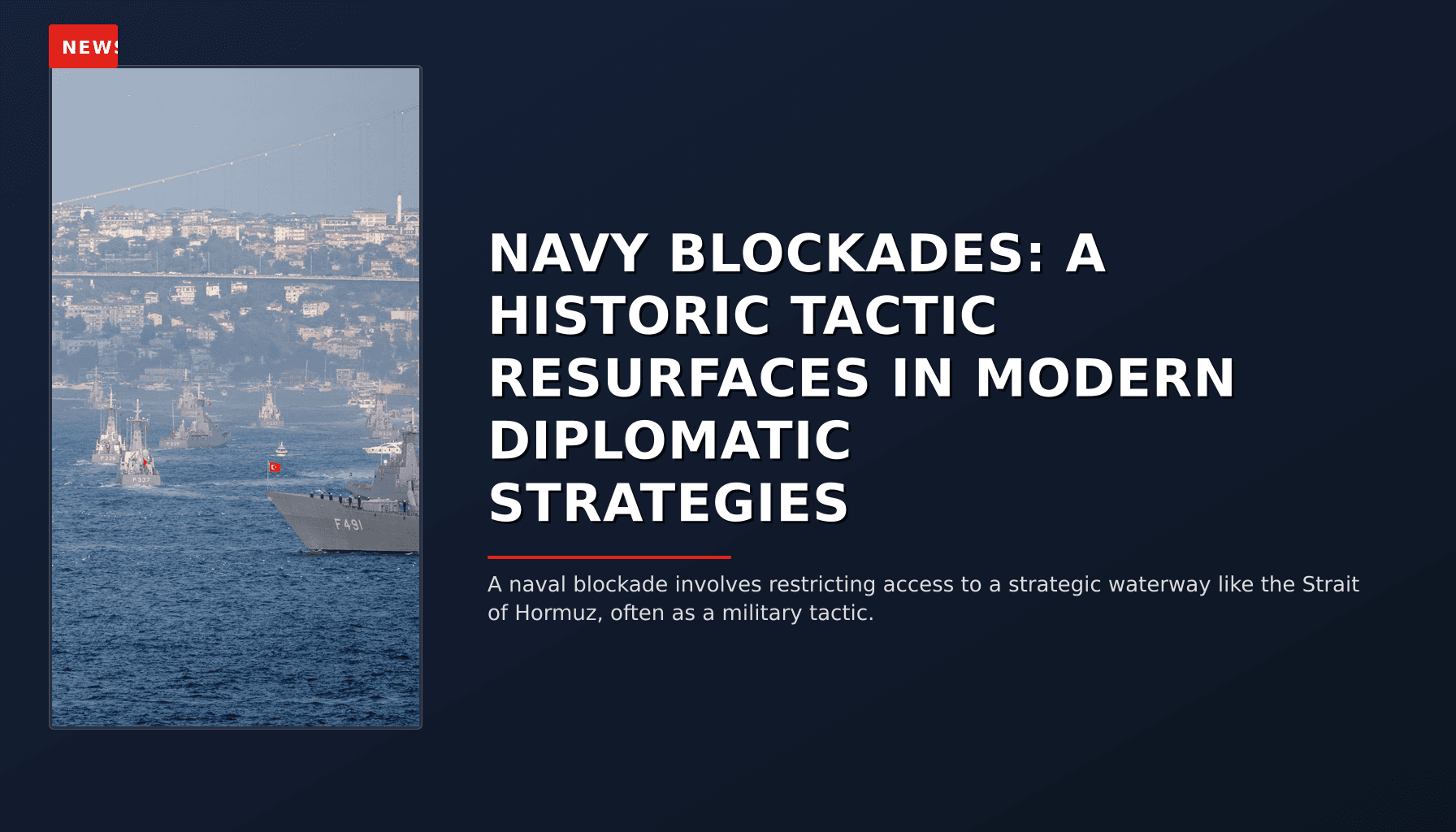
Read more: Navy Blockades: A Historic Tactic Resurfaces In Modern Diplomatic Strategies
International leaders have called for restraint, with the United Nations urging both sides to avoid further escalation. Diplomatic channels are reportedly active, though progress remains uncertain. Meanwhile, humanitarian concerns grow as access to basic necessities becomes increasingly difficult for those affected by the airstrikes.
The reported casualties come amidst a broader pattern of violence that has marked the region in recent months. Security analysts suggest that such incidents often lead to cycles of retaliatory attacks, further destabilizing an already fragile area. The impact on local populations is severe, with civilians bearing the brunt of military actions.

More Stories

Comments (0)
No comments yet. Be the first to share your thoughts!
Leave a Comment
Your email address will not be published. Comments are moderated before appearing.