
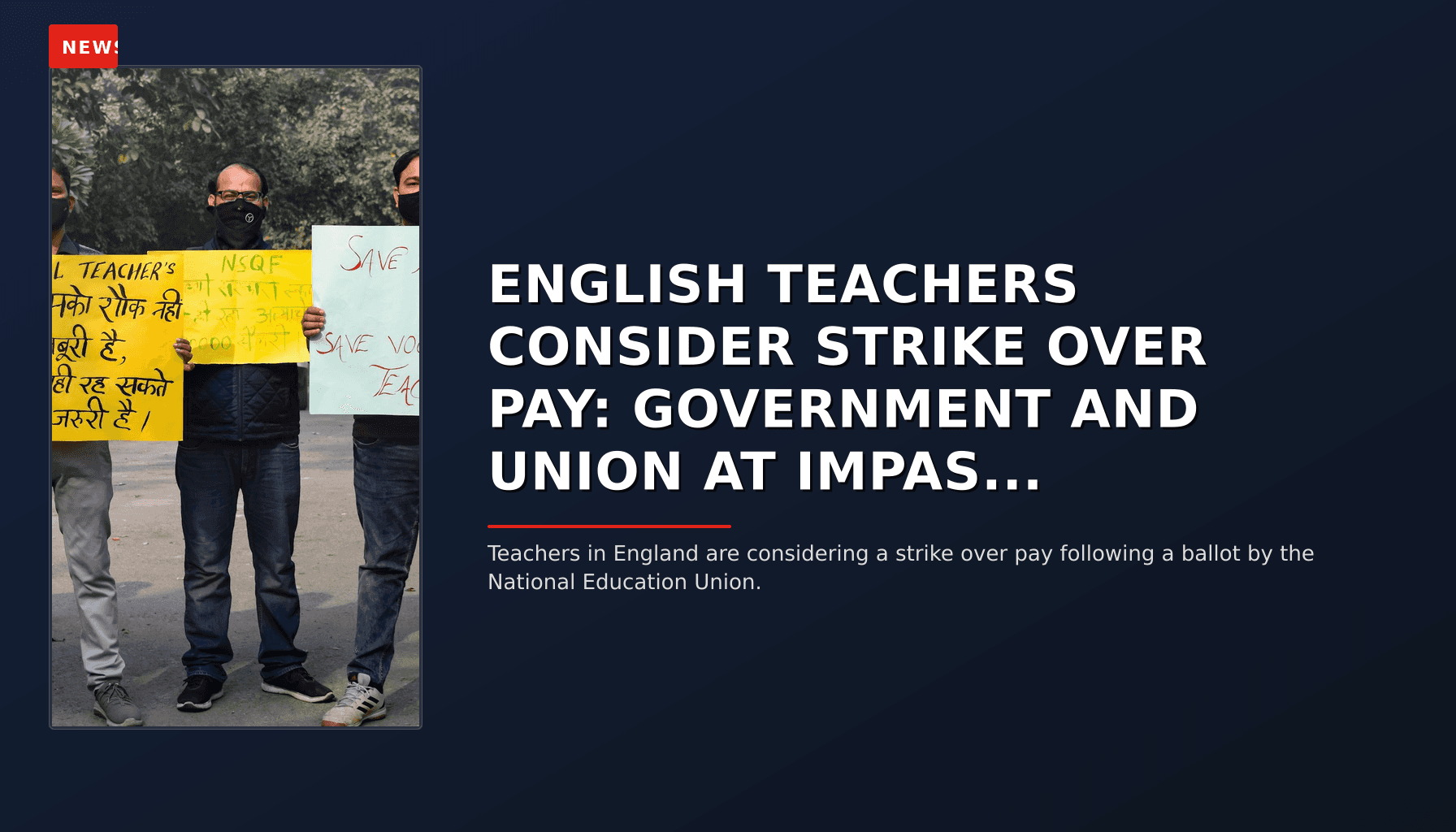
ENGLISH TEACHERS CONSIDER STRIKE OVER PAY: GOVERNMENT AND UNION AT IMPAS...
Teachers in England are considering a strike over pay following a ballot by the National Education Union, with both sides deadlocked in negotiations.

Teachers in England are on the brink of strike action over pay disputes, with the NEU ballots showing overwhelming support for industrial action.
Teachers across England are weighing a potential strike as the National Education Union (NEU) prepares to ballot its members on whether to proceed with industrial action over pay. This development comes amidst ongoing negotiations between the union and the government, which have so far failed to reach a satisfactory agreement for teachers. The Department for Education (DfE) has proposed a 6.5% pay increase spread over three years, but the NEU deems this offer insufficient, arguing it does not address the broader issues of recruitment and retention in the education sector.
The dispute gained momentum after an informal ballot conducted by the NEU revealed that a staggering 90.5% of its members supported potential strikes over pay. This high level of support underscores the growing frustration among teachers who feel undervalued and overburdened by increasing workloads and the pressures of addressing staffing shortages. The NEU has previously taken strike action eight days in the first half of 2023, leading to school closures, but these actions were suspended following an earlier government offer that ultimately proved unsatisfactory.
The union’s stance is firmly opposed by the DfE, which expressed disappointment at what it perceives as an unwillingness to engage constructively. The DfE warns that any strike action could have significant negative impacts on children, parents, and the wider education system. Meanwhile, the NEU maintains its position, describing the government’s offer as 'an insult' to teachers and highlighting the critical nature of the recruitment and retention crisis currently gripping the education sector.
Historically, teacher pay disputes in England have been a contentious issue, often leading to prolonged negotiations and, at times, strikes. The current situation is reminiscent of previous standoffs, such as those in 2019 and 2020, where similar disputes over pay and working conditions led to significant disruptions in the education system. However, the present dispute appears particularly acute due to the combination of high inflation rates and the ongoing challenges posed by the COVID-19 pandemic, which have exacerbated existing pressures on the workforce.
Read more: UK LOCAL ELECTIONS 2026: SIGNIFICANT OUTCOMES AND IMPLICATIONS
The government’s proposal includes a 5.5% rise for teachers in 2024 and a further 4% increase in 2025, with higher pay increments in the latter two years to allow schools time to adjust their budgets. Despite these measures, the NEU remains steadfast in its opposition, arguing that the offers do not go far enough in addressing the systemic issues within the education sector. The union has also raised concerns about potential redundancies and increased workloads, which it believes will further destabilize an already strained system.
The outcome of the formal ballot is expected to determine whether strike action will proceed. If the NEU membership votes in favor, England could face widespread disruptions to schools as teachers prepare to take industrial action. Both sides have emphasized their commitment to resolving the dispute through dialogue, but tensions remain high as the deadline for the ballot approaches. Parents and students are likely to feel the direct consequences of any strike action, with potential delays in education and additional administrative challenges for schools.
Beyond the immediate pay dispute, this standoff highlights deeper issues within the education sector, including chronic staffing shortages and rising workloads. Teachers have reported feeling increasingly pressured to meet government targets while managing larger class sizes and limited resources. The NEU has been vocal in advocating for systemic changes to address these challenges, urging the government to take more comprehensive steps to support the teaching profession.
As the situation unfolds, all parties involved are calling for calm and constructive engagement. However, the current impasse suggests that finding a resolution may be challenging. The DfE has reiterated its commitment to working with the union to find a compromise, but the NEU’s recent statements indicate a hardening of positions. For now, the focus remains on the ballot results, which could set the tone for future negotiations and the stability of the education system in England.
Read more: BRITISH PUBS IN CRISIS: NEARLY TWO CLOSURES A DAY IN 2026
The broader implications of this dispute extend beyond the teaching profession. The outcome could influence similar negotiations in other public sectors, setting a precedent for how pay disputes are handled in the UK. Additionally, any prolonged disruption to schools would have far-reaching consequences for students’ education and the overall functionality of the education system.

More Stories
UK LOCAL ELECTIONS 2026: SIGNIFICANT OUTCOMES AND IMPLICATIONS
9 May 2026 at 16:482 min read
Read More
BRITISH PUBS IN CRISIS: NEARLY TWO CLOSURES A DAY IN 2026
5 May 2026 at 04:062 min read
Read More
Uk Government Proposes Electricity Price Changes To Promote Clean Energy
21 April 2026 at 02:322 min read
Read MoreComments (0)
No comments yet. Be the first to share your thoughts!
Leave a Comment
Your email address will not be published. Comments are moderated before appearing.