
Invade Private Chats: Leaked Messages Spark Controversy In British Politics
Simon Jenkins raises concerns over privacy breaches involving leaked WhatsApp messages and emails from government officials, questioning their impact on effective governance.
Simon Jenkins argues that the release of private WhatsApp messages and emails from government officials, including Peter Mandelson, undermines effective governance by discouraging open communication.
In a recent article for The Guardian, Simon Jenkins has sparked a heated debate over the implications of privacy breaches in British politics. He highlights how leaked WhatsApp messages and emails involving prominent figures such as Peter Mandelson have significantly influenced political dynamics, raising questions about the boundaries of public scrutiny and governmental confidentiality.
Jenkins' piece centers around the controversial release of Mandelson's communications, which were obtained as part of an inquiry into his dismissal. These leaks reveal intimate conversations that officials typically keep private, casting doubt on whether such revelations serve the public interest or merely fuel unnecessary scandal.
The columnist asserts that the principle underlying the disclosure of these messages is fundamentally flawed. He argues that government officials should be entitled to privacy in their communications, asserting that without confidentiality, they may hesitate to engage in frank and honest discussions essential for effective governance.
Adding to the controversy, Prime Minister Keir Starmer's use of WhatsApp with an auto-delete feature has been ridiculed in public circles. Jenkins suggests that this approach not only reflects poorly on the PM but also underscores a broader issue: the lack of clear guidelines regarding digital communication in government.
Read more: Dowing Street Criticizes Matt Vance Post: Contentious Online Discussion Erodes Public Trust
Critics and supporters alike are divided on the matter. Some argue that transparency is crucial for accountability, while others contend that excessive exposure breaches the necessary trust between officials and the public they serve.
The fallout from these leaks could have long-term repercussions. If officials become reluctant to share genuine opinions due to fear of their words being misinterpreted or weaponized, the quality of governance may suffer. This concern is particularly pertinent in high-stakes situations such as inquiries into major events like the Covid-19 pandemic, which have already cost纳税人 £200 million.
Jenkins further questions the utility of such extensive and expensive investigations, suggesting that they may be counterproductive if they lead to a chilling effect on open dialogue among policymakers. He emphasizes the need for a balanced approach that respects both public accountability and the privacy required for effective decision-making.
In light of these developments, the broader implications for British politics are significant. The erosion of confidentiality could set a dangerous precedent, potentially discouraging future officials from speaking freely and honestly in the execution of their duties.
Read more: Burnham Pledges To Review Nic Increase And Cut Business Rates For Pubs
As the debate continues to unfold, it remains unclear how this issue will be resolved. What is certain, however, is that the balance between transparency and privacy will remain a contentious topic in the ongoing evolution of British governance.

More Stories
Dowing Street Criticizes Matt Vance Post: Contentious Online Discussion Erodes Public Trust
6 June 2026 at 03:381 min read
Read More
Burnham Pledges To Review Nic Increase And Cut Business Rates For Pubs
6 June 2026 at 02:532 min read
Read More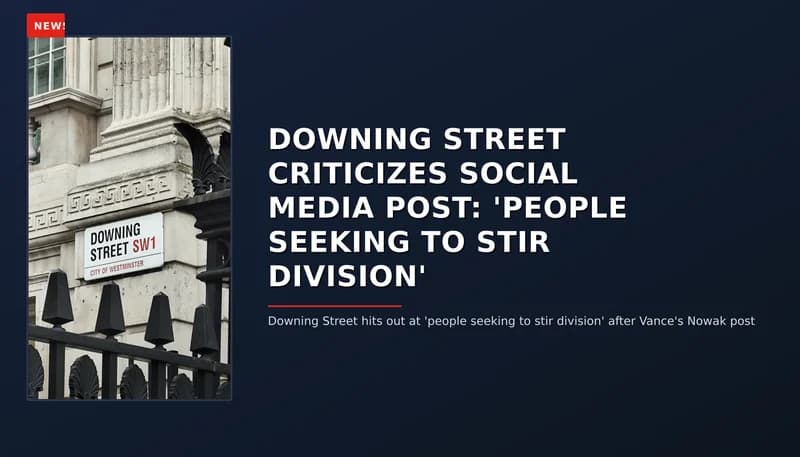
Downing Street Criticizes Social Media Post: 'people Seeking To Stir Division'
5 June 2026 at 22:091 min read
Read MoreComments (0)
No comments yet. Be the first to share your thoughts!
Leave a Comment
Your email address will not be published. Comments are moderated before appearing.