
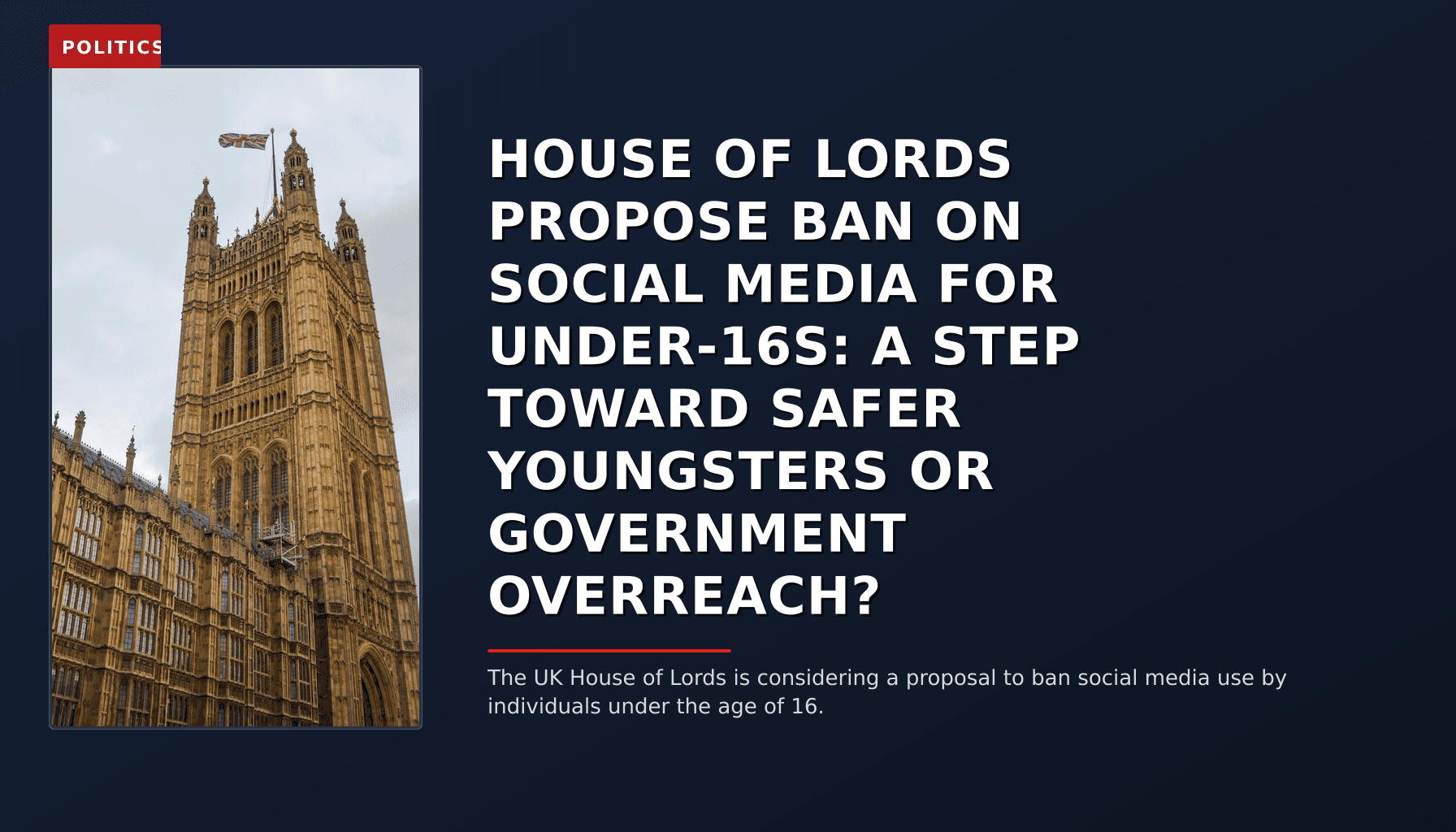
HOUSE OF LORDS PROPOSE BAN ON SOCIAL MEDIA FOR UNDER-16S: A STEP TOWARD SAFER YOUNGSTERS OR GOVERNMENT OVERREACH?
The UK House of Lords is considering a ban on social media for under-16s, with proponents citing safety concerns and opponents arguing it infringes on freedoms.

The UK House of Lords is considering a ban on social media for users under the age of 16, sparking debate over safety versus privacy rights.
The UK House of Lords is currently evaluating a proposal that would prohibit individuals under the age of 16 from accessing social media platforms. This move comes as part of ongoing efforts to address concerns about the impact of social media on young people, including issues related to mental health and online safety. According to recent reports, peers in the House of Lords are pushing for this ban, citing studies that highlight the negative effects of excessive screen time on developing minds.
The proposal has drawn significant attention, with supporters arguing that limiting access could help mitigate risks such as cyberbullying, addiction, and exposure to inappropriate content. Advocates believe that restricting social media use for younger audiences might encourage healthier habits and reduce the pressure faced by adolescents in a hyper-connected world. However, opponents, including the UK government, counter that such measures may infringe on personal freedoms and could inadvertently drive young users to less regulated platforms.
It is understood that the UK government has expressed strong opposition to this proposed ban. According to official sources, they argue that a blanket prohibition is both impractical and potentially harmful. The government's stance appears to align with broader concerns about censorship and the importance of digital literacy in preparing young individuals for the modern world. Critics suggest that instead of outright bans, a more balanced approach focusing on education and parental guidance might be more effective in addressing the issues at hand.
The debate over social media regulation has been ongoing for several years, with various stakeholders presenting differing viewpoints. Some experts believe that increased regulation could help create a safer digital environment, while others warn against the potential suppression of free expression and innovation. This particular proposal by the House of Lords is part of a larger conversation about how to protect young users without stifling their access to information and social connections.
Public opinion on this matter remains divided. Surveys indicate that a significant portion of parents support stricter controls, while others worry about the unintended consequences of such measures. Advocacy groups have also weighed in, with some praising the initiative as a necessary step to safeguard children, and others cautioning against what they perceive as an overreach by authorities.
Looking ahead, it remains uncertain whether this proposal will gain enough traction to become law. The House of Lords will need to carefully consider the evidence presented by both sides and assess the potential impacts of such a ban on individuals, families, and society at large. If passed, this could set a precedent for other nations considering similar restrictions on young people's digital activities.
The outcome of this debate will have far-reaching implications for how children interact with technology in the UK and beyond. As lawmakers grapple with the complexities of modern connectivity, finding the right balance between protection and freedom continues to be a significant challenge.
More Stories
FORMER CHIEF OF STAFF PHONE THEFT RAISES QUESTIONS: MESSAGES FROM PM AND SENIOR FIGURES STILL ACCESSIBLE
26 March 2026 at 05:133 min read
Read More
MINISTERIAL RED TAPE CUTS: AIMS TO ACCELERATE DECISION-MAKING PROCESSES
26 March 2026 at 04:342 min read
Read More
UK POLITICS: SOCIAL MEDIA PLATFORMS FACE NEW LEGAL CHALLENGES IN THE US
26 March 2026 at 03:493 min read
Read More
Comments (0)
No comments yet. Be the first to share your thoughts!
Leave a Comment
Your email address will not be published. Comments are moderated before appearing.