
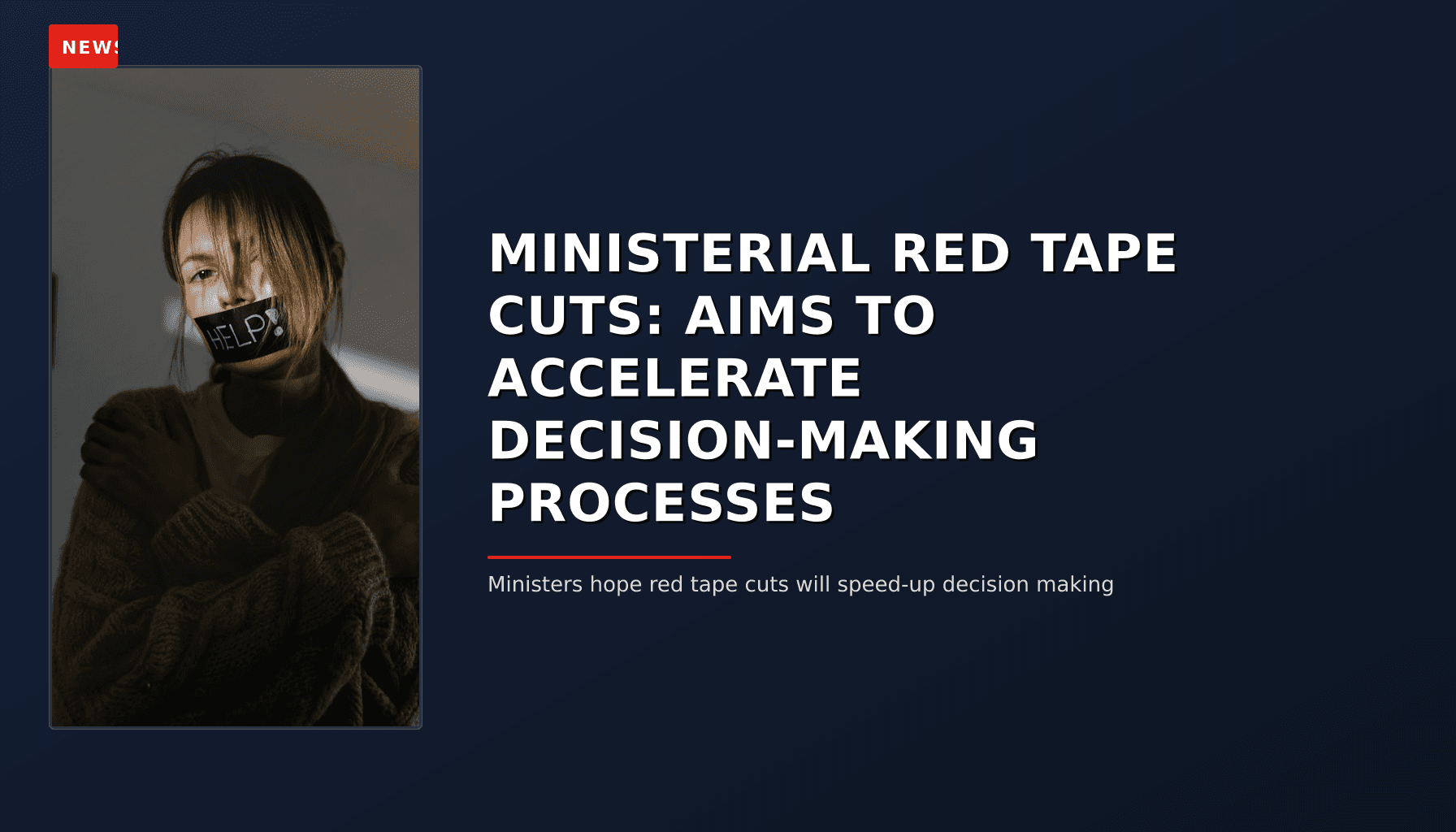
MINISTERIAL RED TAPE CUTS: AIMS TO ACCELERATE DECISION-MAKING PROCESSES
The UK government is proposing significant red tape cuts to accelerate decision-making processes, aiming to streamline bureaucratic hurdles and enhance efficiency across various sectors.

Ministers propose new measures to reduce bureaucratic hurdles, aiming to streamline decision-making processes.
The UK government is advancing plans to cut through red tape in a bid to accelerate decision-making processes. This move comes as part of broader efforts to enhance efficiency and responsiveness across various sectors. The proposed changes are expected to simplify regulatory frameworks, thereby reducing delays that have long hindered progress in key areas.
According to recent reports, the initiative is particularly focused on streamlining approvals for business operations and public projects. By eliminating redundant bureaucratic steps, ministers aim to foster a more dynamic and competitive economic environment. This approach reflects a shift towards a more deregulated market, aligning with current economic policies aimed at stimulating growth.
The proposed red tape cuts are part of a larger strategy to modernize governance structures. Critics argue that while reducing bureaucracy can enhance efficiency, there is a risk of overlooking essential safeguards that protect public interests. However, proponents maintain that such measures will ultimately lead to more effective and timely decision-making without compromising on quality or safety standards.
Public reaction to these plans has been mixed. Some businesses have expressed optimism, anticipating faster approvals and reduced administrative burdens. Conversely, others have raised concerns about potential oversights in critical areas such as environmental protection and worker safety. This balance between efficiency and regulation remains a contentious issue in ongoing debates.
Ministers are hopeful that these changes will not only speed up decision-making but also encourage innovation and investment across the UK. They argue that a more agile regulatory environment is crucial for maintaining international competitiveness. As the details of the new measures continue to emerge, stakeholders are closely monitoring their potential impact on various sectors.
The implementation of these red tape cuts is expected to unfold over the coming months, with specific timelines and guidelines yet to be finalized. The government has emphasized the importance of stakeholder engagement in shaping these reforms, ensuring that they meet both practical and regulatory needs. As the process progresses, its success will likely hinge on careful navigation of competing interests and priorities.
In conclusion, while the proposed red tape cuts present an opportunity to enhance decision-making efficiency, their long-term implications remain to be seen. The government's approach must balance the need for streamlined processes with the preservation of essential safeguards. As this story evolves, VPNews will continue to provide comprehensive coverage, ensuring that readers are well-informed on all developments.
More Stories

UK POLITICS: SOCIAL MEDIA PLATFORMS FACE NEW LEGAL CHALLENGES IN THE US
26 March 2026 at 03:493 min read
Read More
HOUSE OF LORDS BACK BAN ON SOCIAL MEDIA FOR UNDER-16S: AUSTERITY MEASURES AND AUSTRALIAN INFLUENCE
26 March 2026 at 01:313 min read
Read More
LABOUR'S ENERGY-CRISIS FAILINGS: THE RISE OF POLITICAL ALTERNATIVES
26 March 2026 at 00:253 min read
Read More
Comments (0)
No comments yet. Be the first to share your thoughts!
Leave a Comment
Your email address will not be published. Comments are moderated before appearing.