
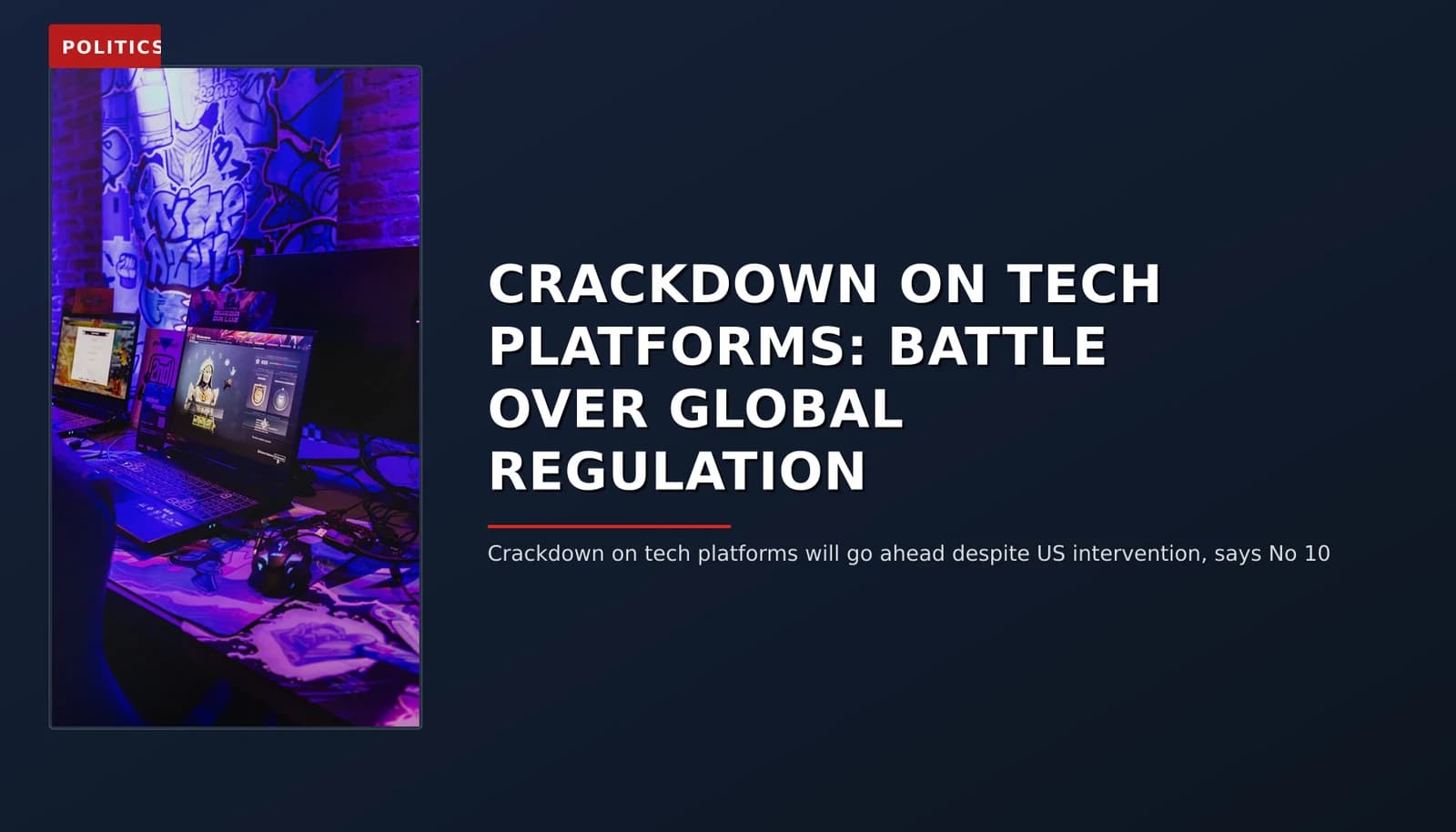
Crackdown On Tech Platforms: Battle Over Global Regulation
The UK government is set to proceed with a crackdown on major tech platforms despite US intervention. This decision highlights the ongoing tensions between domestic policy and international trade considerations.

The UK government reaffirms its plan to regulate major tech platforms despite US opposition.
The UK government has confirmed that it will proceed with a significant crackdown on major technology platforms, despite strong intervention from the United States. This decision comes amid ongoing concerns about data privacy, monopolistic practices, and the influence of these companies over public discourse. The announcement was made by a spokesperson for No 10 Downing Street, who emphasized the importance of protecting British consumers and ensuring fair competition in the digital market.
According to reports from The Guardian, the UK's approach to regulating tech giants like Google, Meta, and Amazon has drawn criticism from American officials. These companies have been instrumental in shaping global internet policies, and any restrictions imposed by a non-American jurisdiction could set a precedent for other nations to follow suit. This move is seen as a potential escalation in an already tense transatlantic trade relationship.
The proposed regulations aim to address issues such as algorithmic bias, data protection, and the removal of illegal content. Critics argue that these measures could stifle innovation and harm small businesses reliant on tech platforms for their operations. Proponents, however, maintain that they are necessary to prevent exploitation and ensure a level playing field for all market participants.
The UK government's stance reflects a broader shift in global attitudes toward Big Tech. Increasingly, nations are looking to impose stricter controls over these corporations, which have amassed unprecedented power in recent years. This trend is particularly evident in the EU, where the Digital Services Act and other regulatory frameworks are being developed to curb tech monopolies.
Read more: Antti-Immigration Protesters Spark Unrest In Belfast: Bin And Vehicle Fires Follow Knife Attack
Despite US opposition, the UK appears determined to press ahead with its plans. A spokesperson stated that 'the interests of British citizens must come first,' highlighting the government's commitment to safeguarding public welfare over international trade considerations. This decision underscores the growing influence of domestic policies in an increasingly interconnected world.
The outcome of this regulatory battle could have far-reaching implications for the tech industry and international relations. If successful, the UK's model may serve as a template for other countries seeking to assert greater control over digital platforms. Conversely, it could also spark retaliatory measures from the US, further complicating an already complex geopolitical landscape.
More Stories

Antti-Immigration Protesters Spark Unrest In Belfast: Bin And Vehicle Fires Follow Knife Attack
10 June 2026 at 01:152 min read
Read More
Kemi Badenoch Proposes Equality Act Reform: Aims To Win Back Former Supporters
9 June 2026 at 23:313 min read
Read More
Tensions In Belfast: Politicians Move To Calm After Social Media Furor
9 June 2026 at 20:112 min read
Read MoreComments (0)
No comments yet. Be the first to share your thoughts!
Leave a Comment
Your email address will not be published. Comments are moderated before appearing.