
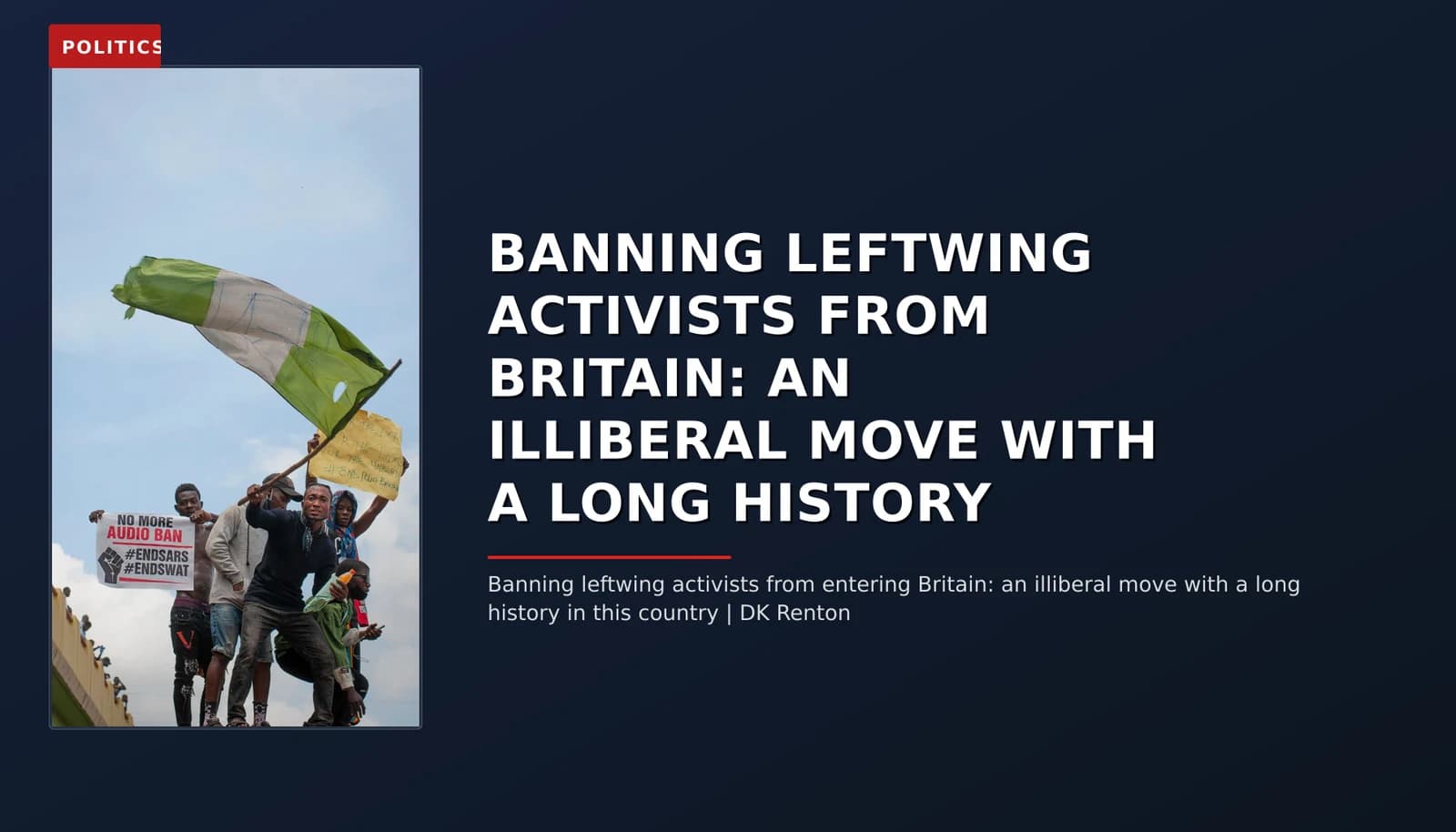
Banning Leftwing Activists From Britain: An Illiberal Move With A Long History
The UK government's decision to ban leftwing activists from entering the country has sparked debates over civil liberties and echoes past restrictive immigration policies.

The UK government's decision to block leftwing activists from entering the country raises concerns about civil liberties and echoes past restrictive immigration policies.
It has been reported that the Home Secretary has recently made a controversial move by barring several leftwing activists from entering Britain. This decision has sparked significant debate among legal experts, human rights groups, and members of the public regarding its implications for free speech and civil liberties. While the exact details of who has been banned and under what grounds remain unclear, it is understood that this action follows a series of similar incidents in recent months.
The move to restrict entry based on political affiliations raises questions about the government's commitment to upholding liberal democratic values. Critics argue that such measures risk setting a dangerous precedent, potentially leading to broader restrictions on political expression and activism. Defenders of the policy, however, maintain that it is necessary to protect national security and prevent activities that could destabilise British society.
Historically, the UK has had a mixed record when it comes to welcoming political dissidents and activists. From the banning of figures like Trotsky in the 1930s to more recent cases involving controversial speakers, there have been instances where political grounds have influenced immigration decisions. These past actions suggest that the current policy is part of a longer tradition rather than an isolated incident.
Legal experts are divided on whether such bans comply with international human rights standards, particularly in terms of freedom of expression and the right to assemble. Some argue that preventing individuals from entering based solely on their political views violates fundamental principles enshrined in British law and international treaties. Others contend that national security must take precedence, even if it means limiting certain civil liberties.
Public reaction has been mixed as well. While some sections of society have expressed support for the government's actions, viewing them as necessary to protect against extremism, others have condemned the move as an attack on democratic values and free speech. Social media platforms have seen a surge in discussions about the balance between security and liberty, with many calling for transparency from authorities regarding the criteria used for these bans.
As the controversy continues to unfold, it is crucial to consider the broader implications of such policies. If left unchecked, they could erode the UK's reputation as a bastion of tolerance and open debate. Furthermore, there are concerns that similar measures may be applied in the future to target other groups or individuals based on their political beliefs, leading to a chilling effect on activism.
The Home Secretary has yet to provide a detailed explanation for these bans, leaving many questions unanswered. It remains to be seen whether this decision will withstand legal scrutiny and public backlash. For now, the debate over the limits of free speech and national security in the UK is sure to continue, with significant implications for the country's democratic traditions.

More Stories
Uk Government Releases Updated Migration Statistics: Insights Into Net Migration, Visa Data, And Asylum Application
5 June 2026 at 00:292 min read
Read More
Labour In Crisis: Internal Discord And Leadership Dilemmas
4 June 2026 at 22:392 min read
Read More
Burnham Expresses Interest In Labour Leadership: A Significant Move In The Political Landscape
4 June 2026 at 22:192 min read
Read MoreComments (0)
No comments yet. Be the first to share your thoughts!
Leave a Comment
Your email address will not be published. Comments are moderated before appearing.