Whole Life Prison Tariffs: A Fate Worse Than Death?
Whole Life Prison Tariffs: A Fate Worse Than Death? The True Cost of Whole Life Tariffs: Justice, Punishment, and the Question of ChoiceThe True Cost of Whole Life Tariffs: Justice, Punishment, and the Question of Choice By Jason KingBy Jason King Kyle Clifford will never leave prison.Kyle Clifford...

Whole Life Prison Tariffs: A Fate Worse Than Death?
The True Cost of Whole Life Tariffs: Justice, Punishment, and the Question of ChoiceThe True Cost of Whole Life Tariffs: Justice, Punishment, and the Question of Choice
By Jason KingBy Jason King
Kyle Clifford will never leave prison.Kyle Clifford will never leave prison.The 26-year-oldcrossbow killercrossbow killer, who brutally murdered his ex-girlfriendLouise HuntLouise Hunt, her motherCarolCarol, and her sisterHannahHannah, was sentenced to awhole life tariffwhole life tariff—themost severe punishment available under UK lawmost severe punishment available under UK law.
For many, this is justice. The public has little sympathy for those who commit such monstrous crimes, and there remains significant support for even harsher measures, including thereinstatement of the death penaltyreinstatement of the death penalty. But withcapital punishmentcapital punishmentno longer an option, awhole life tariffwhole life tariffis themaximum sentence available in the UKmaximum sentence available in the UK.
There is, however, a lingering assumption thatlife imprisonmentlife imprisonmentis a lesser punishment—that alife behind barslife behind barsis somehow more merciful than thedeath penaltydeath penalty. But is that really true? When we strip away the clichés and examine the reality ofwhole life imprisonmentwhole life imprisonment, it becomes clear that it is not a question of leniency—it is a question of whether society fully comprehends thepunishment it has chosenpunishment it has chosen.
What a Whole Life Tariff Really MeansWhat a Whole Life Tariff Really Means
Unlike standardlife sentenceslife sentences, which offer the possibility of parole after a minimum term,whole life tariffs are absolutewhole life tariffs are absolute. There is no release, no review, no second chance. The prisoner willdie behind barsdie behind bars.
For those servingwhole life orderswhole life orders,prison lifeprison lifeis not the mix ofsocial interactionssocial interactions,jobsjobs, andrehabilitative programsrehabilitative programsthat many imagine. Theworst offendersworst offenders, especially those withhigh-profile crimeshigh-profile crimes, are often held innear-total isolationnear-total isolation.
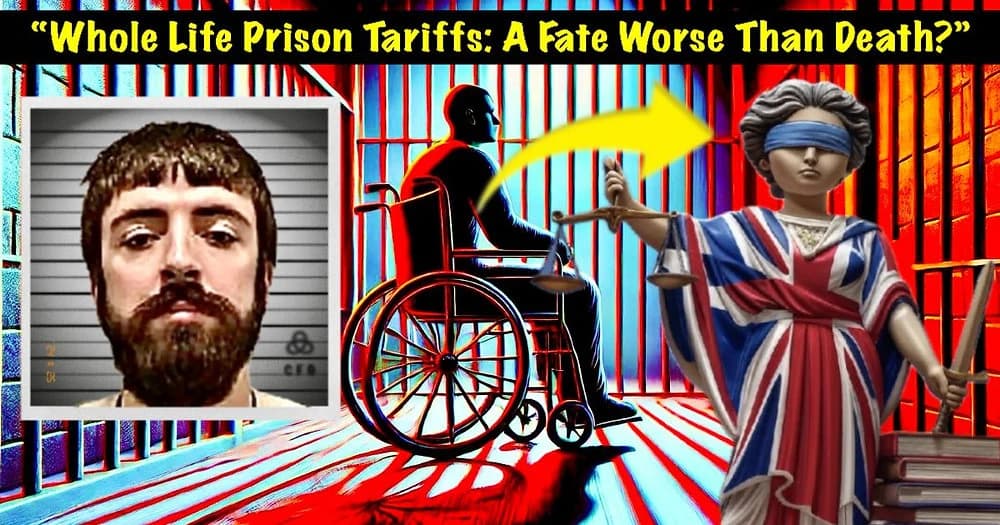
Triple-murderer Kyle CliffordTriple-murderer Kyle Clifford, now in awheelchairwheelchairafter injuring himself in afailed suicide attemptfailed suicide attempt, will, for his own safety, likelynever be allowed into the general prison populationnever be allowed into the general prison population.
In practical terms, this means:
•23 hours a day in a small, windowless cell23 hours a day in a small, windowless cell
•No prison job, no access to educational programsNo prison job, no access to educational programs
•Meals passed through a hatch—no communal diningMeals passed through a hatch—no communal dining
•One hour of outdoor exercise in a small, cage-like penOne hour of outdoor exercise in a small, cage-like pen
•Minimal interaction with other inmates or prison staffMinimal interaction with other inmates or prison staff
This is not a temporary arrangement—it is theirreality for lifereality for life. TheEuropean Court of Human Rights (ECHR)European Court of Human Rights (ECHR)has previously ruled that prolongedsolitary confinementsolitary confinementcan amount totorturetorture, yet forwhole life prisonerswhole life prisoners, it is thestatus quostatus quo.
It is worth asking whether those who call for thedeath penaltydeath penaltytruly understand thealternative they are advocating againstalternative they are advocating against. Awhole life tariffwhole life tariffis not“softer” justice“softer” justice. It is, in some ways,a fate even harsher than deatha fate even harsher than death—one that stretches overdecades in a slow, relentless erosion of the human spiritdecades in a slow, relentless erosion of the human spirit.
A Life Without PurposeA Life Without Purpose
Most people measure their lives by milestones—education, career progression, relationships, family, and experienceseducation, career progression, relationships, family, and experiences. Awhole life tariffwhole life tariffstrips all of that away.
Kyle Clifford is 26.Kyle Clifford is 26.If he had led an ordinary life, he might have expected another50 or 60 years of opportunities50 or 60 years of opportunities. Instead, every one of those years will be spent inprisonprison, withno possibility of changeno possibility of change.
Unlike prisoners withfixed-term sentencesfixed-term sentences, he hasno external reason to improve himselfno external reason to improve himself—no incentive to study, work, or develop skills. There is noparole boardparole boardto impress, noeventual reintegrationeventual reintegrationto prepare for.Time becomes meaninglessTime becomes meaningless.
There is also thephysical tollphysical toll. Clifford’s own actions have ensured that hispunishment is even more severepunishment is even more severe. Afterkilling his victimskilling his victims, he attempted totake his own lifetake his own lifebyshooting himself with his crossbowshooting himself with his crossbow. He survived but was leftparalysed and wheelchair-boundparalysed and wheelchair-bound. This means he now faces not just alife sentencelife sentencebut alifetime of imprisonment combined with disabilitylifetime of imprisonment combined with disability—a reality that willonly become more punishing with ageonly become more punishing with age.
The Financial Burden of Whole Life ImprisonmentThe Financial Burden of Whole Life Imprisonment
There is also thequestion of costquestion of cost. Whilejusticejusticeshould not be dictated byfinancial concernsfinancial concerns, the reality is thathousing a whole life prisonerhousing a whole life prisonerisextraordinarily expensiveextraordinarily expensive.
Theaverage cost of holding a standard prisoneraverage cost of holding a standard prisonerin aUK high-security facilityUK high-security facilityis around£60,000 per year£60,000 per year. Forwhole life prisonerswhole life prisoners, the figure is oftenhigher due to additional security measureshigher due to additional security measures.
InClifford’s caseClifford’s case, hisparalysisparalysismeans he will requirelifelong medical carelifelong medical care,specially adapted cellsspecially adapted cells, andassistance for basic daily tasksassistance for basic daily tasks. This willadd significantlyadd significantlyto thetaxpayer’s burdentaxpayer’s burden, amounting tomillions of pounds over his lifetimemillions of pounds over his lifetime.
There isno suggestionno suggestionthat he should bereleasedreleased—hiscrimes were abhorrentcrimes were abhorrent, and society has decided that he shouldnever walk freenever walk free. But it is aquestion worth consideringquestion worth considering: at what point does thepractical realitypractical realityof awhole life sentencewhole life sentencebecomemore than just a form of punishmentmore than just a form of punishment?
The Question of ChoiceThe Question of Choice
One aspect of thisdebatedebateremainslargely unspokenlargely unspoken: thequestion of whether those serving whole life tariffs should have the option to end their own livesquestion of whether those serving whole life tariffs should have the option to end their own lives.
Theprison systemprison systemtakesstrong safeguarding measuresstrong safeguarding measurestoprevent suicideprevent suicide, even for those who express aclear, reasoned desire to dieclear, reasoned desire to die. The guiding principle is thatall life is valuableall life is valuableand must bepreservedpreserved.
Yet in thewider legal landscapewider legal landscape, society’s stance on this isshiftingshifting. TheUK is currently moving toward legalising assisted dyingUK is currently moving toward legalising assisted dyingfor those withterminal illnessesterminal illnesses. If it is accepted thatindividuals suffering from incurable conditionsindividuals suffering from incurable conditionsshould have theright to choose death over prolonged sufferingright to choose death over prolonged suffering, should thesame right extend to those serving irreversible life sentencessame right extend to those serving irreversible life sentences?
Whole Life Tariffs vs. the Death PenaltyWhole Life Tariffs vs. the Death Penalty
Many still argue that theUK should reinstate capital punishmentUK should reinstate capital punishmentfor theworst offendersworst offenders. Supporters say it wouldprovide justice, deter crime, and eliminate the financial burdenprovide justice, deter crime, and eliminate the financial burdenoflifelong imprisonmentlifelong imprisonment. Opponents counter thatexecutionexecutionisinhumane and irreversibleinhumane and irreversible.
But what if thegreater inhumanitygreater inhumanitylies inprolonged confinementprolonged confinement?
Notorious killers likeIan BradyIan BradyandPeter SutcliffePeter Sutcliffespentdecades in prisondecades in prison, pleading for theright to dieright to dierather than endureendless isolationendless isolation.BradyBrady, in particular, spentyears in legal battlesyears in legal battlestrying torefuse food and medical treatmentrefuse food and medical treatment, arguing that hiscontinued existence was itself a form of crueltycontinued existence was itself a form of cruelty.
Awhole life tariffwhole life tariffis, in many ways, aslow-motion death sentenceslow-motion death sentence. Theonly difference is the methodonly difference is the method. Instead of alethal injectionlethal injection, theprisoner dies inch by inch, year by yearprisoner dies inch by inch, year by year, theirworld shrinking to the size of a cellworld shrinking to the size of a cell.
A New ConversationA New Conversation
None of this is to suggest thatKyle CliffordKyle Cliffordor others like himdeserve sympathydeserve sympathy. Hiscrimes were unspeakablecrimes were unspeakable, and no punishment can everundo the horror he inflictedundo the horror he inflicted.
Butjusticejusticeis not just aboutretributionretribution—it is about ensuring that thesystem we upholdsystem we upholdisrational, consistent, and aligned with our values as a societyrational, consistent, and aligned with our values as a society.
As thedebate over assisted dying progressesdebate over assisted dying progresses, it may be time to ask whetherthis option should be extended to those serving whole life sentencesthis option should be extended to those serving whole life sentences. It would not be aquestion of state executionquestion of state execution, but ofindividual choiceindividual choice. If aprisoner sentenced to 50 or 60 years in isolationprisoner sentenced to 50 or 60 years in isolationwishes to take thesame option offered to the terminally illsame option offered to the terminally ill, should they beallowed to do soallowed to do so?
It is anuncomfortable questionuncomfortable question, but one thatwill not go awaywill not go away. Ifsociety insists on whole life tariffs as the ultimate punishmentsociety insists on whole life tariffs as the ultimate punishment, it must alsoconfront the realities of what that actually meansconfront the realities of what that actually means—forjustice, for the prisoner, and for the system that sustains itjustice, for the prisoner, and for the system that sustains it.
Jason KingJason King
Birmingham City-DeskBirmingham City-Desk
Twitter (X) @JasonKingNewsTwitter (X) @JasonKingNews