
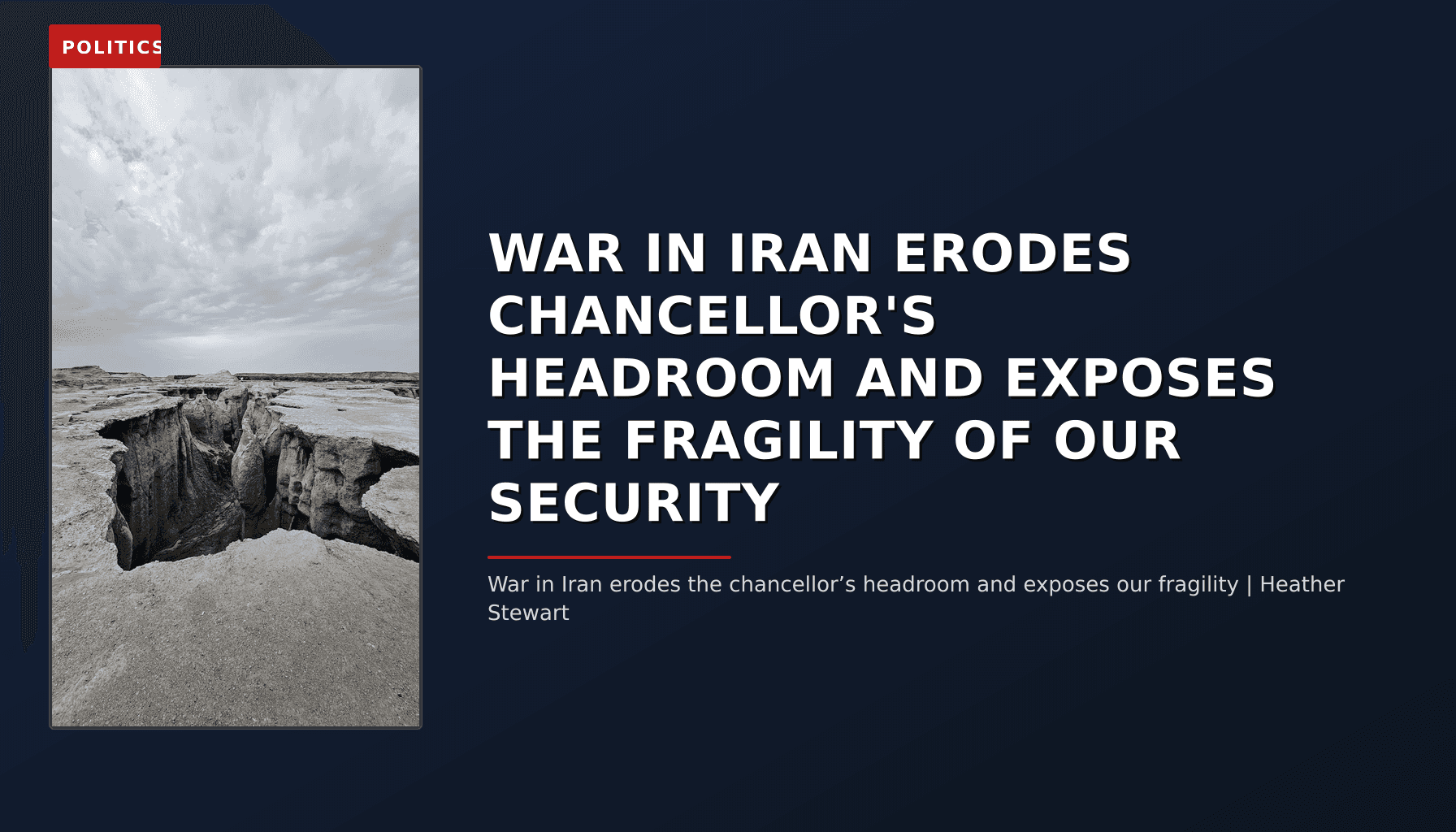
WAR IN IRAN ERODES CHANCELLOR'S HEADROOM AND EXPOSES THE FRAGILITY OF OUR SECURITY
The conflict in Iran threatens to undermine the UK's political stability and expose vulnerabilities in its security framework. As tensions rise, concerns grow about the impact on global trade and economic stability.

The conflict in Iran casts doubt on the UK's ability to maintain stability and exposes vulnerabilities in our national security framework.
As tensions escalate between Iran and neighbouring nations, concerns are growing about the potential impact on global security and economic stability. The conflict has already led to heightened regional instability, which could have far-reaching consequences for international relations and trade routes that the UK relies upon. With limited source verification available at this stage, it is clear that the situation remains fluid and unpredictable.
The UK government's ability to navigate this crisis is under close scrutiny. The Chancellor, facing internal and external pressures, may find their political headroom significantly reduced as they grapple with both domestic economic challenges and international security concerns. It is understood that the government is monitoring developments closely but has yet to outline a comprehensive strategy in response to the escalating conflict.
The situation underscores the fragility of global security architecture and raises questions about the UK's preparedness for such crises. Sources indicate that the UK's intelligence community is assessing potential threats, including the possibility of retaliatory actions against British interests. This comes at a time when the country is already grappling with other pressing issues, such as domestic terrorism and economic inflation.
With full details still emerging, it is crucial to approach this situation with caution. Independent verification of claims remains challenging due to the rapidly evolving nature of the conflict. However, what is clear is that the UK's position in international affairs could be significantly affected by the outcome of these hostilities.
The implications for global energy markets are particularly concerning. The UK, as a major importer and exporter of oil and gas, stands to face disruptions in supply chains and increased costs if the conflict escalates further. This could exacerbate already high inflation rates and strain public finances, potentially limiting the Chancellor's ability to implement necessary economic reforms.
Public reaction to these developments is mixed. Some are calling for a stronger international response to the conflict, while others advocate for a more measured approach to avoid further escalation. The UK government is under increasing pressure to balance its diplomatic efforts with domestic priorities, a delicate task that could define its foreign policy agenda in the coming months.
Looking ahead, the outcome of this conflict will have significant implications for the UK's security and economic stability. The government must act swiftly to mitigate potential risks and ensure that its response is both effective and aligned with international law. As the situation continues to unfold, it is essential that all parties involved work towards a resolution that prioritises peace and stability.
More Stories
UK GOVERNMENT MAY NEED TO REGULATE SOCIAL MEDIA ADDICTION: Keir Starmer Signals Potential Action Against Tech Giants
29 March 2026 at 10:222 min read
Read More
MINISTER RESIGNS OVER LABOUR TOGETHER CLAIMS: A Developing Storm in UK Politics
29 March 2026 at 09:532 min read
Read More
NIGEL FARAGE'S ADVISER CALLS FOR WHEAT PRICES TO DOUBLE: A Developing Story with Limited Source Verification
29 March 2026 at 08:053 min read
Read More
Comments (0)
No comments yet. Be the first to share your thoughts!
Leave a Comment
Your email address will not be published. Comments are moderated before appearing.