
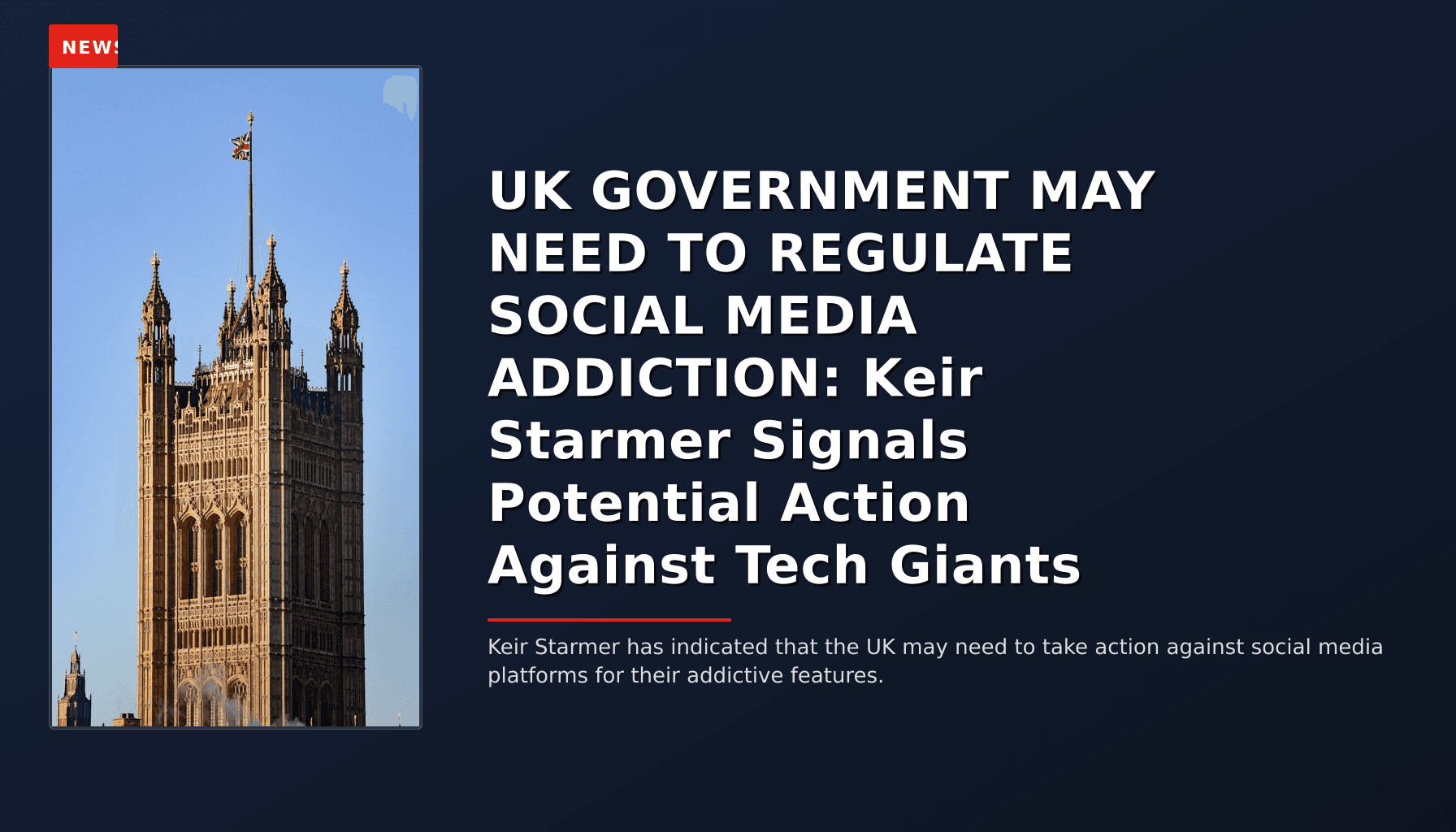
UK GOVERNMENT MAY NEED TO REGULATE SOCIAL MEDIA ADDICTION: Keir Starmer Signals Potential Action Against Tech Giants
Keir Starmer suggests UK government intervention in social media platforms' addictive features, potentially leading to significant regulatory changes.

Keir Starmer has hinted at UK government intervention to tackle the addictive features of social media platforms, potentially leading to significant changes in how tech giants operate.
In a recent statement, Labour's Shadow Attorney General, Keir Starmer, has suggested that the UK government may need to take action against social media platforms for their allegedly addictive features. This move comes amid growing concerns about the impact of these platforms on mental health and societal behavior. Starmer's remarks mark a significant shift in the political landscape, as they imply a potential regulatory framework to hold tech companies accountable.
The call for government intervention follows mounting evidence that social media algorithms are designed to keep users engaged for longer periods, often at the expense of their well-being. According to sources, Starmer has pointed to the need for legislation similar to that proposed in other jurisdictions, such as California's recent data privacy laws. These measures aim to protect users from manipulative practices employed by tech corporations.
While the exact nature and scope of these potential actions remain unclear, Starmer's statement has sparked a heated debate among policymakers, industry leaders, and the general public. Some argue that stricter regulations are necessary to prevent further harm, while others warn of the potential economic impact on tech companies if such measures are enforced. The UK Government has yet to provide an official response, but insiders suggest that discussions are already underway.
The push for regulation is part of a broader international trend, with several countries exploring similar legislative approaches. France and Germany have already implemented stricter data protection laws, setting precedents for other nations to follow. Starmer's comments align with these global efforts, indicating a growing consensus on the need to address the ethical challenges posed by modern technology.
Critics of such measures worry about the potential legal implications for tech companies if regulations are enforced. Legal experts predict that any new legislation could lead to lengthy court battles and significant financial penalties for non-compliance. Additionally, there are concerns about how these rules would be enforced across different jurisdictions, given the global nature of social media platforms.
Public opinion appears split on the issue, with some supporting stronger government oversight and others advocating for a more self-regulatory approach by the tech industry. Surveys indicate that a majority of users are aware of the addictive tendencies of social media but remain uncertain about the effectiveness of potential regulations in addressing the problem.
As the debate continues, Starmer's remarks have set the stage for what could be a pivotal moment in UK internet governance. The outcome of these discussions will not only shape the future of social media in the country but also influence global policies on digital ethics and responsibility. For now, all eyes are on the UK Government to determine how they will respond to this growing challenge.
More Stories
NEW POLICY AND MILITARY DEPLOYMENT: UK GOVERNMENT'S MOVE TO REGULATE SOCIAL MEDIA AND STRENGTHEN DEFENCE
29 March 2026 at 05:302 min read
Read More
MINISTER RESIGNS OVER LABOUR TOGETHER CLAIMS: A Developing Storm in UK Politics
29 March 2026 at 09:532 min read
Read More
NIGEL FARAGE'S ADVISER CALLS FOR WHEAT PRICES TO DOUBLE: A Developing Story with Limited Source Verification
29 March 2026 at 08:053 min read
Read More
Comments (0)
No comments yet. Be the first to share your thoughts!
Leave a Comment
Your email address will not be published. Comments are moderated before appearing.