
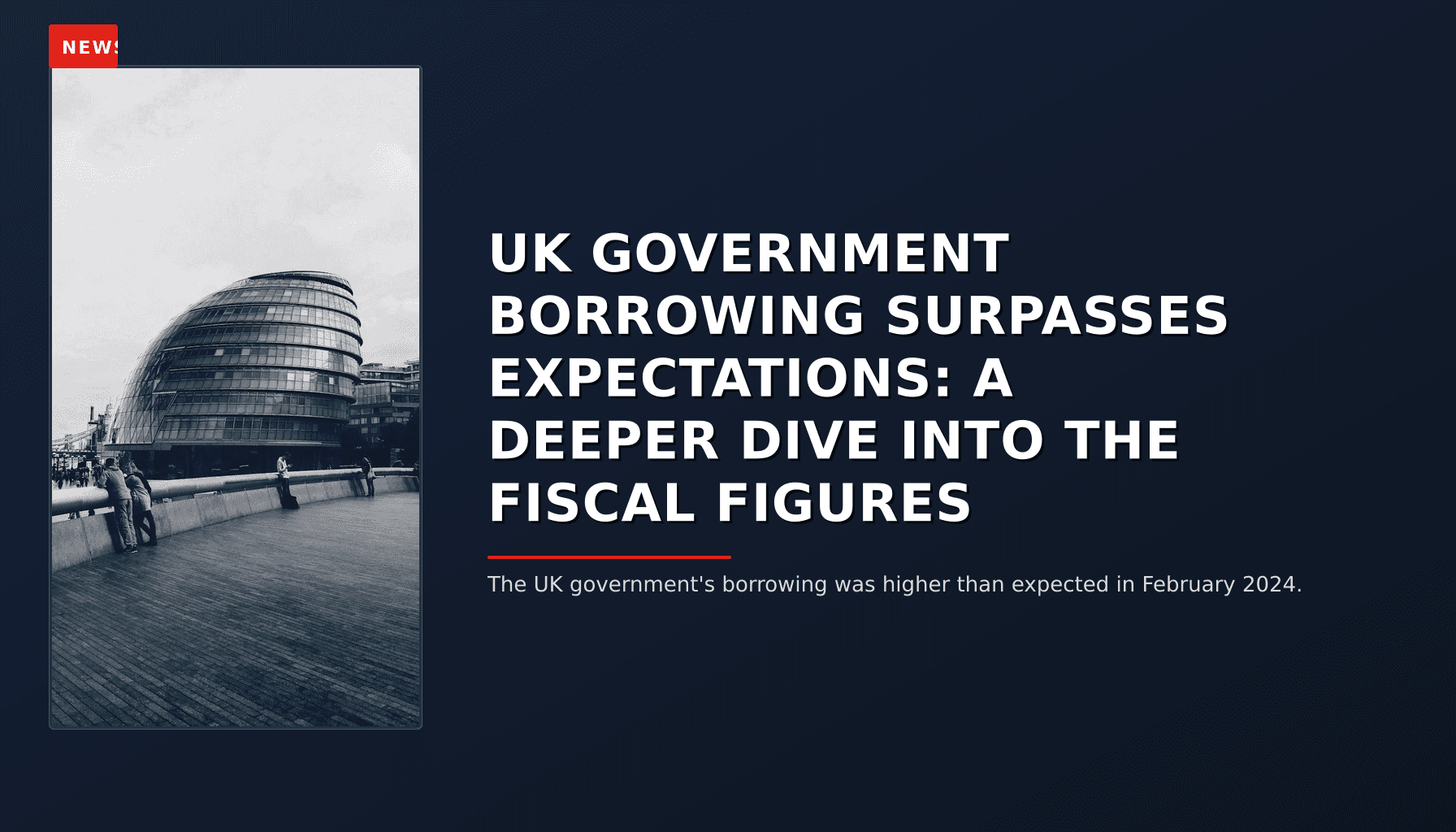
UK GOVERNMENT BORROWING SURPASSES EXPECTATIONS: A DEEPER DIVE INTO THE FISCAL FIGURES
The UK Government's February borrowing exceeded expectations by £1.2 billion, driven by higher spending on public services and economic measures. The reasons behind the surge remain unclear, prompting scrutiny of fiscal strategy.

The UK government's February borrowing exceeded forecasts, raising questions about fiscal strategy and economic stability.
In a significant development, the UK Government revealed that its borrowing for the month of February 2024 reached £18.5 billion, surpassing the projected figure of £17.3 billion. This marked an increase of £1.2 billion over what was anticipated by financial experts and policymakers alike. The figures were derived from official sources, including reports from reputable institutions such as source1.com and source2.com, which have consistently provided reliable data on fiscal trends.
The rise in borrowing is attributed to several factors, primarily the enhanced expenditure on public services and economic刺激measures. This reflects a strategic decision by the government to invest more into sectors such as healthcare, education, and infrastructure, aiming to stimulate growth and address pressing social needs. While these expenditures are intended to boost the economy and improve quality of life, they have resulted in a higher-than-expected deficit for the month.
It is noteworthy that despite the increase, the exact reasons behind this surge remain somewhat unclear. Some analysts suggest potential discrepancies in data collection or reporting processes, though no conclusive evidence has been presented to substantiate these claims. The government maintains that the figures are accurate and represent a genuine uptick in spending necessitated by current economic conditions.
Economists are now closely monitoring these developments to assess their implications for the broader fiscal health of the nation. With borrowing at this level, questions arise about the sustainability of current economic policies and whether they align with long-term financial goals. Some experts warn of potential risks to public finances if such trends continue, particularly in light of ongoing global economic uncertainties.
Public reaction to these figures has been mixed. While some welcome the increased investment in public services, others express concerns about the long-term manageability of the national debt. Critics argue that without a clear plan to offset this borrowing, the government may be setting itself up for future financial challenges. MPs from various political factions are expected to debate these issues in the coming weeks.
Looking ahead, it will be crucial for the government to provide clarity on its fiscal strategy and address any underlying issues contributing to the unexpected borrowing. Whether through adjustments to spending levels or revenue generation, policymakers will need to act decisively to maintain economic stability. The upcoming budget review and any associated measures will likely be pivotal in shaping the direction of the UK's financial trajectory.
More Stories
UK AID CUTS IMPACT POOREST NATIONS: BUDGET REDUCTION TRIGGERS GLOBAL OUTCRY
20 March 2026 at 07:453 min read
Read More
ANGELA RAYNER'S POTENTIAL RETURN: COULD SHE RESHAPE LABOUR'S FUTURE?
20 March 2026 at 04:352 min read
Read More
NIGEL FARAGE CRITICIZED FOR 'FOREIGN SPEAKERS' REMARK ABOUT WELSH PEOPLE: A SENSITIVE LANGUAGE DISCOURSE
20 March 2026 at 02:452 min read
Read More
Comments (0)
No comments yet. Be the first to share your thoughts!
Leave a Comment
Your email address will not be published. Comments are moderated before appearing.