
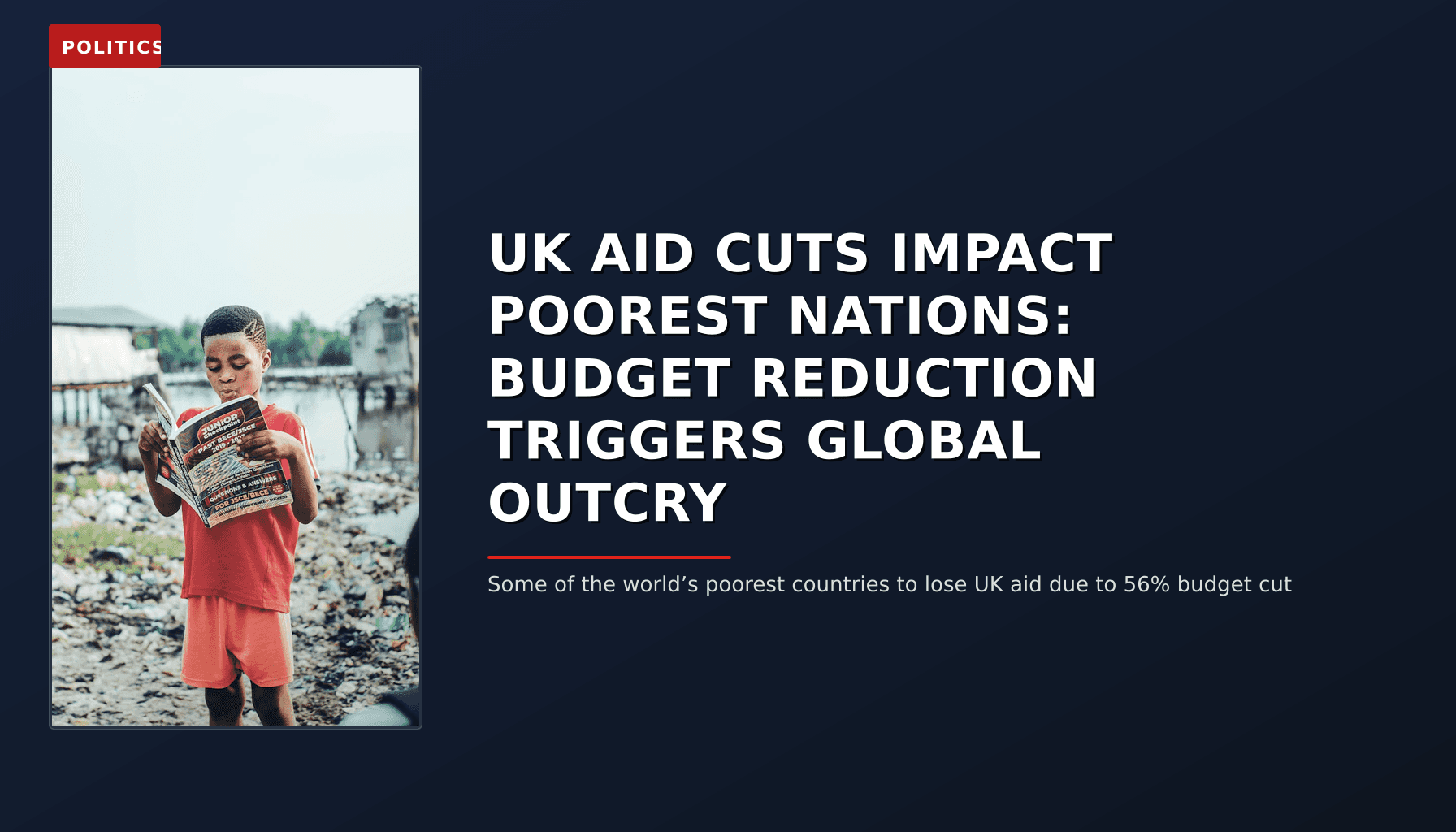
UK AID CUTS IMPACT POOREST NATIONS: BUDGET REDUCTION TRIGGERS GLOBAL OUTCRY
The UK's decision to cut its aid budget by 56% has sparked global concern, threatening development efforts in some of the world's poorest countries.

The UK's significant reduction in aid spending threatens to undermine development efforts in some of the world's poorest countries.
According to recent developments, the United Kingdom has announced a substantial cut to its international aid budget, with reductions expected to reach as high as 56%. This decision comes amid ongoing debates about domestic priorities and global responsibilities. The move has sparked concern among humanitarian organisations and world leaders, who fear it could have dire consequences for countries already grappling with severe economic challenges.
The UK government has stated that this reduction is part of a broader review of public spending to address rising domestic costs and ensure value for money. However, critics argue that such cuts come at the expense of some of the world's most vulnerable populations. Nations heavily reliant on UK aid are now facing an uncertain future as they prepare for reduced or even halted financial support.
International bodies, including the United Nations and the World Bank, have expressed alarm over the potential repercussions of these cuts. They highlight that many low-income countries were already struggling with debt sustainability and economic instability before the pandemic. Further reductions in aid could exacerbate existing crises, leading to increased poverty, political instability, and social unrest.
Development experts warn that the UK's decision could set a dangerous precedent for other donor nations. If major contributors begin scaling back their aid commitments, it could lead to a significant funding shortfall for global development initiatives. This could particularly affect regions reliant on multilateral assistance for healthcare, education, and infrastructure projects.
The UK has long been one of the largest donors to international development efforts, often contributing around 0.7% of its national income in aid. This figure was enshrined in law under the Development Assistance Act of 1970, though it has faced periodic scrutiny and adjustment over the years. The recent cut represents a significant deviation from this longstanding commitment.
Critics within the UK argue that such reductions are short-sighted and undermine long-term strategic interests. They point to the importance of aid in fostering stability, economic growth, and good relations with developing nations. Opponents of the cuts also stress the moral obligation to support those least able to help themselves.
While the government maintains that this is a necessary step to manage public finances, there are questions about how these reductions will be implemented. Will they target specific countries or sectors? How will affected nations adapt to reduced funding? These details remain unclear as the policy takes shape.
The move has also drawn criticism from political allies and opponents alike. Some within the UK's governing party argue that the cuts go too far, while others insist that they are a necessary response to economic pressures. The debate underscores the tension between domestic priorities and international obligations.
As the situation evolves, there is growing pressure on the UK government to provide clear guidance on how these cuts will be implemented and what support mechanisms will remain in place for vulnerable nations. International partners are urging a reversal of this decision to avoid further destabilisation in already fragile regions.
For now, it remains to be seen whether other donor countries will follow suit or continue their contributions despite the UK's lead. The implications for global development efforts could be profound, highlighting the delicate balance between national fiscal responsibility and international humanitarian obligations.
More Stories
ANGELA RAYNER'S POTENTIAL RETURN: COULD SHE RESHAPE LABOUR'S FUTURE?
20 March 2026 at 04:352 min read
Read More
NIGEL FARAGE CRITICIZED FOR 'FOREIGN SPEAKERS' REMARK ABOUT WELSH PEOPLE: A SENSITIVE LANGUAGE DISCOURSE
20 March 2026 at 02:452 min read
Read More
CRITICISM OVER MUSLIM PRAYER EVENT: BADENoch'S SUPPORT FOR A TORY MP SPARKS CONTROVERSY
20 March 2026 at 00:553 min read
Read More
Comments (0)
No comments yet. Be the first to share your thoughts!
Leave a Comment
Your email address will not be published. Comments are moderated before appearing.