
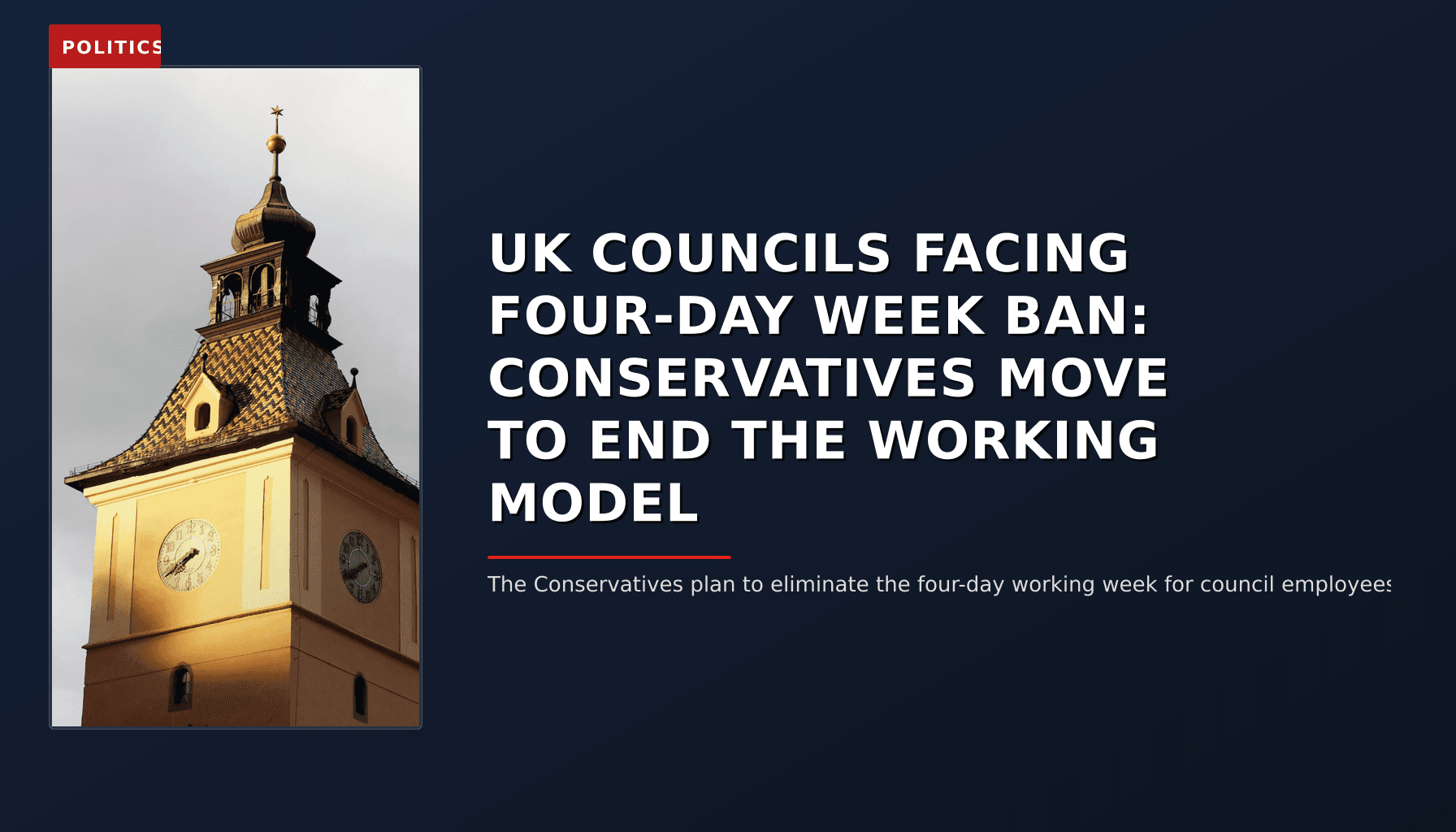
UK COUNCILS FACING FOUR-DAY WEEK BAN: CONSERVATIVES MOVE TO END THE WORKING MODEL
The Conservative Party proposes ending the four-day workweek for local council staff, sparking debates on productivity and worker well-being.


The Conservative Party has proposed legislation to end the four-day workweek for local council employees, sparking debate over productivity and worker well-being.
In a move that has sparked heated debate across the UK, the Conservative Party has announced plans to ban the four-day working week for local council staff. This proposal comes as councils nationwide have increasingly adopted the four-day schedule, which reduces annual leave but is claimed to boost productivity. The government's stance is part of broader efforts to standardise employment practices in public sector services.
According to recent reports from political news outlets, the Conservative Party's announcement has been met with mixed reactions. While some argue that a shorter workweek enhances efficiency and employee satisfaction, others maintain that it undermines traditional holiday entitlements. The proposed legislation aims to roll back what the government perceives as an excessive deviation from standard working practices.
Local councils have been experimenting with the four-day workweek for several years, driven by both financial constraints and the desire to improve work-life balance. Supporters of this model highlight increased productivity and reduced absenteeism among staff, while critics worry about potential service disruptions and the impact on annual leave entitlements.
A financial magazine reported that local government employment patterns have shifted significantly in recent years, with many councils opting for a four-day schedule. This shift has been particularly noticeable in urban areas, where staffing costs are higher and productivity gains are more critical to balancing budgets.
Read more: YVETTE COOPER DEFIES IRAN'S STRAIT OF HORMUZ TOLL DEMANDS: A CRUCIAL STAND
The Conservative Party's proposed ban is part of a larger push to standardise working conditions across the public sector. Critics argue that such measures risk undoing progressive changes aimed at improving both employee well-being and service delivery. They point to studies suggesting that shorter workweeks can lead to higher job satisfaction and lower turnover rates.
As the proposal makes its way through parliament, debates are expected to focus on balancing productivity with worker welfare. Opponents of the ban argue that the four-day week has proven effective in enhancing efficiency without compromising service quality. They emphasize the importance of allowing councils flexibility in managing their workforce.
The move by the Conservatives has already drawn criticism from labour unions and local government associations, which view it as an unnecessary interference in employment practices. These groups are preparing to campaign against the legislation, highlighting its potential negative impact on both workers and the communities they serve.
Looking ahead, the outcome of this legislative effort could set a precedent for future employment policies in the public sector. If successful, it may prompt other political parties to reconsider their stance on non-traditional working arrangements. The debate underscores the ongoing tension between standardisation and innovation in workplace practices.

More Stories

YVETTE COOPER DEFIES IRAN'S STRAIT OF HORMUZ TOLL DEMANDS: A CRUCIAL STAND
9 April 2026 at 09:532 min read
Read More
ED MILIBAND URGED TO MAINTAIN STANCE AGAINST NORTH SEA DRILLING: CRITICS CLAIM BENEFITS FLOW SOLELY TO NIGEL FARAGE
9 April 2026 at 09:342 min read
Read More
PLAID CYMRU UNVEILS AMBITIOUS NHS AND ECONOMY PLANS: FOCUS ON CHILDREN'S SERVICES
9 April 2026 at 08:053 min read
Read More
Comments (0)
No comments yet. Be the first to share your thoughts!
Leave a Comment
Your email address will not be published. Comments are moderated before appearing.