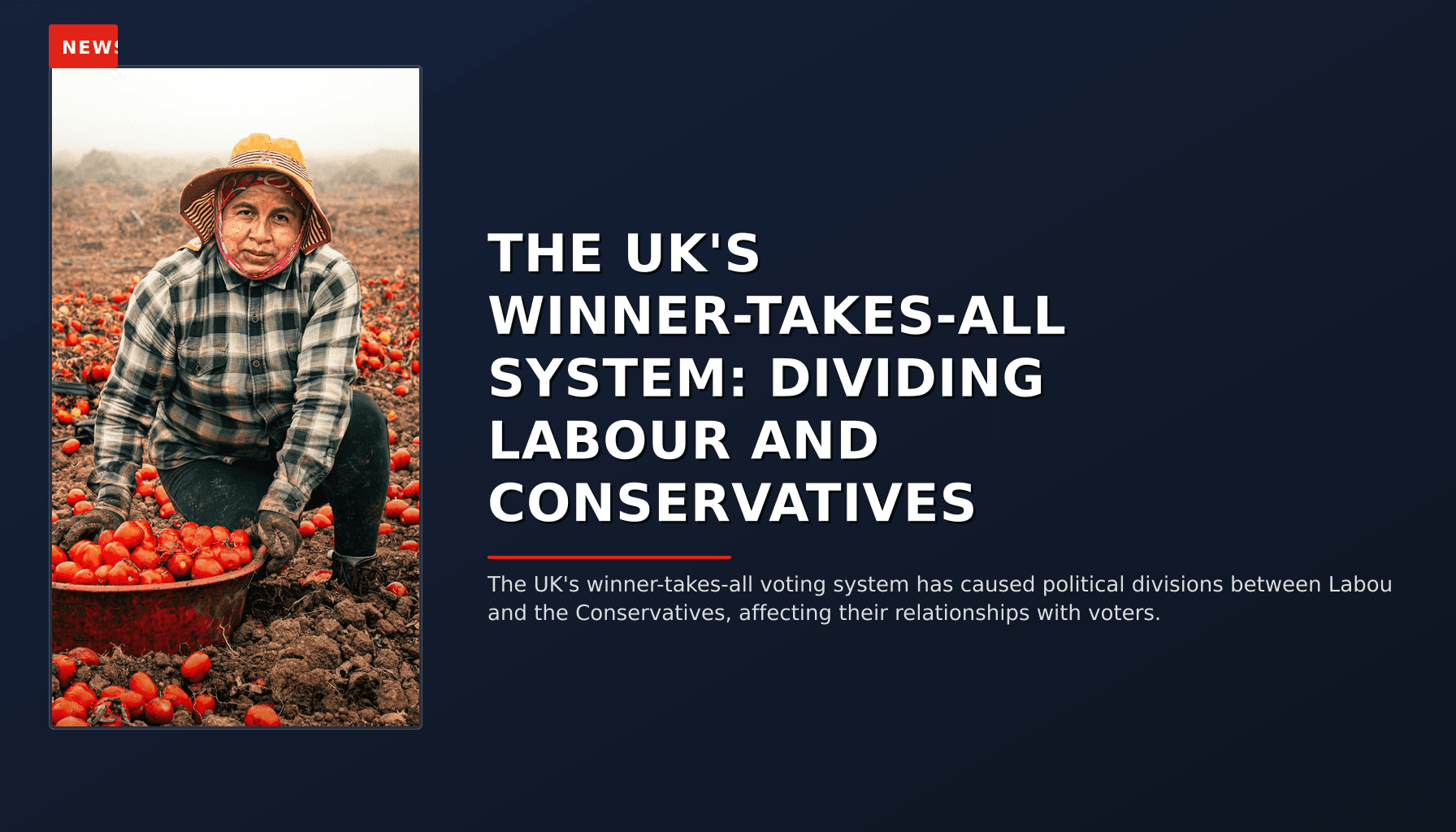
THE UK'S WINNER-TAKES-ALL SYSTEM: DIVIDING LABOUR AND CONSERVATIVES
The UK's winner-takes-all voting system is deepening divisions between Labour and the Conservatives, leading to voter neglect and growing calls for reform.

The winner-takes-all voting system is deepening political divisions between Labour and the Conservatives, causing voter neglect in key regions.
In a developing story with limited sources, the UK's electoral framework has come under scrutiny for its role in exacerbating political tensions. The current winner-takes-all system is increasingly seen as a catalyst for division, particularly between the Labour Party and the Conservatives. This approach, where the majority party secures a disproportionate share of seats relative to their vote share, has been linked to heightened polarization in recent elections.
According to experts, the structure of the UK's voting system can amplify existing divides by rewarding dominant parties while marginalizing smaller voices. This dynamic not only affects election outcomes but also shapes the political strategies of major parties. Labour and the Conservatives are accused of neglecting voters in regions where they hold limited influence, a trend that has grown more pronounced over time.
The system's impact on voter engagement is a pressing concern. Critics argue that both major parties focus their efforts on swing areas, often at the expense of their core supporters in safe seats. This selective attention can lead to feelings of alienation among voters who feel overlooked by their representatives.
Sources suggest that this neglect has fostered frustration among voters in traditionally Labour or Conservative strongholds. For instance, regions where one party consistently wins may see reduced attention and policy focus, leading to a sense of being taken for granted. This dynamic can erode trust in the political system and diminish turnout in future elections.
Read more: ENGLISH TEACHERS CONSIDER STRIKE OVER PAY: GOVERNMENT AND UNION AT IMPAS...
While some claim that the voting system directly causes this neglect, others argue it is merely a symptom of broader political strategies. The debate highlights the tension between maintaining a stable government and ensuring fair representation for all voters.
Moving forward, calls for electoral reform are growing louder, with advocates arguing that a more proportional system could mitigate these divisions. However, any changes would require bipartisan agreement and public support, which remain challenging to achieve in the current political climate.

More Stories
Comments (0)
No comments yet. Be the first to share your thoughts!
Leave a Comment
Your email address will not be published. Comments are moderated before appearing.