Rupert Lowe judicial review challenge
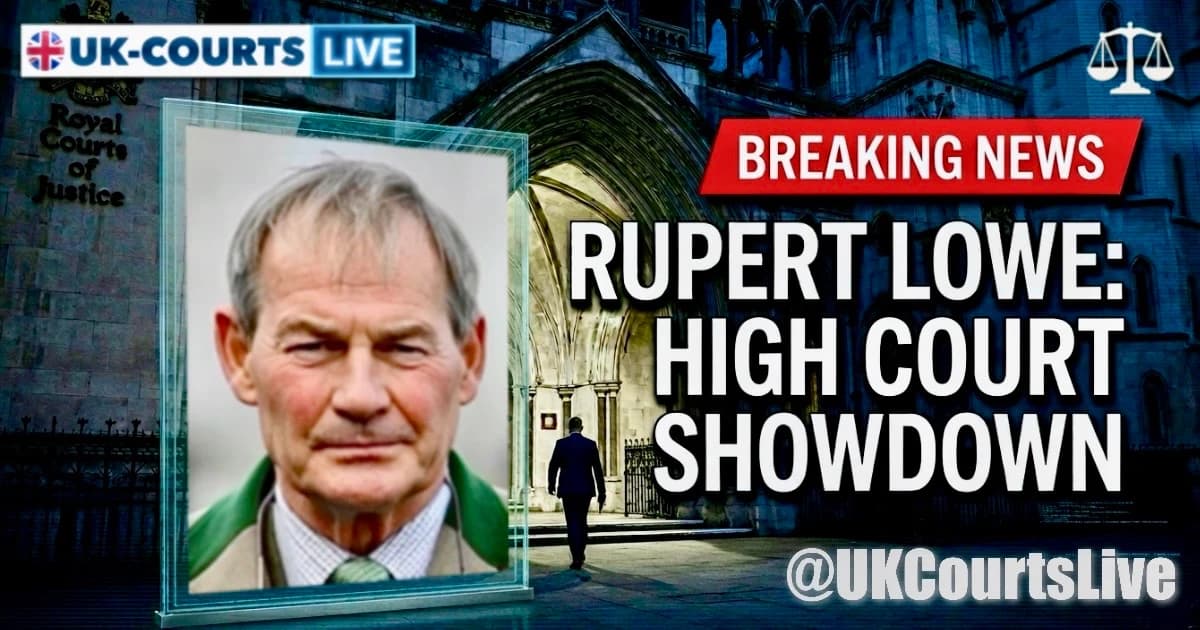
In a high-stakes constitutional showdown at the Royal Courts of Justice, Mr. Justice Chamberlain has reserved judgment on whether the High Court can intervene in the ICGS investigation into Rupert Lowe MP. With the Great Yarmouth MP alleging procedural "perversity," the ruling will determine if the parliamentary watchdog remains beyond the reach of judicial review or if the 1689 Bill of Rights must yield to modern standards of natural justice.

The High Court has reserved judgment on a pivotal jurisdictional challenge brought by Rupert Lowe MP against the Independent Complaints and Grievance Scheme following a day of intense legal argument at the Royal Courts of Justice.
The Member of Parliament for Great Yarmouth is seeking a judicial review of the parliamentary watchdog’s investigation into his conduct, alleging that the current process is marred by procedural unfairness and perversity.
Mr Justice Chamberlain heard submissions yesterday focusing on the fundamental constitutional boundary between the senior judiciary and the House of Commons.
The core of the legal dispute rests on whether the High Court possesses the supervisory jurisdiction to intervene in the internal disciplinary mechanisms of Parliament, or if such an intervention would constitute a breach of parliamentary privilege under Article IX of the Bill of Rights 1689.
Counsel for Mr Lowe, Christopher Newman, argued that the modern evolution of the ICGS has transformed it into an adjudicative body with the power to impose career-ending sanctions, thereby necessitating oversight to prevent a legal "Wild West."
Conversely, Sarah Hannett KC, representing the ICGS, maintained that the House of Commons retains exclusive cognisance over the discipline of its members and that the court has no standing to interfere in an ongoing investigation.
The legal reality of the challenge is considered complex, as the courts historically show extreme deference to the autonomy of the legislature in managing its own internal affairs.
If the court rules it lacks jurisdiction, the ICGS investigation will proceed unimpeded to its conclusion, which is anticipated by late spring or early summer 2026.
A loss at this preliminary stage would be professionally significant for the MP, as it removes the final legal barrier to the watchdog delivering its formal findings.
Under the Recall of MPs Act 2015, should the investigation result in a finding of serious misconduct and a subsequent suspension from the House of 10 sitting days or more, a recall petition would be triggered in his constituency.
Such a sanction would allow voters in Great Yarmouth the opportunity to force a by-election, making the procedural integrity of the investigation a matter of acute political survival for the claimant.
The claimant’s legal team had previously failed in an application for an interim injunction to freeze the probe, with the court ruling in February that the public interest in the continuation of parliamentary standards investigations was paramount.
With oral arguments now concluded, the parties await a written ruling which will determine whether the High Court will grant permission for a full judicial review or if the matter must be settled entirely within the parliamentary estate.