
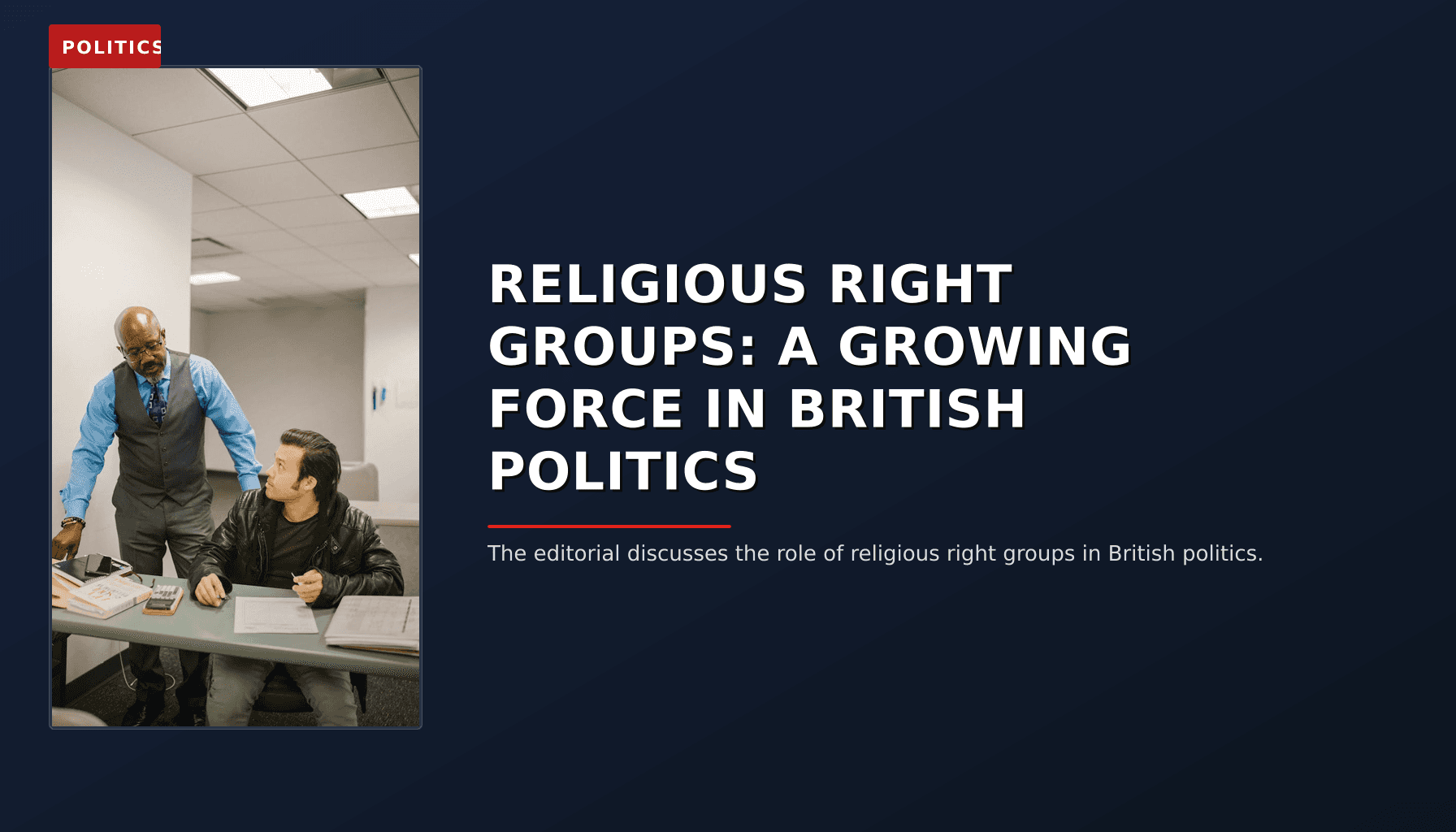
RELIGIOUS RIGHT GROUPS: A GROWING FORCE IN BRITISH POLITICS
The role of religious right groups in British politics is under scrutiny as allegations of exploiting faith for power emerge, sparking debates on ethics and influence.


The editorial examines the influence of religious right groups in shaping UK political discourse.
Recent allegations have sparked a heated debate about the role of religious right groups within British politics. The claims suggest that these organisations are leveraging faith to amass political power, a contention that has divided public opinion and drawn significant media attention. As the controversy unfolds, questions arise about the extent of their influence and whether such tactics cross ethical boundaries.
According to recent reports, critics argue that these groups are using religion as a tool to advance their political agendas, often bypassing traditional channels of engagement. This approach has led to accusations of manipulation, where faith is said to be exploited for personal gain or ideological dominance. The allegations paint a picture of a growing movement that wields considerable influence behind the scenes.
While there is no concrete evidence to support these claims, the lack of transparency in their operations has fuelled speculation. Sources close to the groups maintain that their intentions are purely religious, and any political involvement is incidental. However, independent investigators have raised concerns about potential misuse of resources and misrepresentation of faith teachings.
The debate over religious influence in politics is not new. Historically, religious organisations have played a role in shaping societal norms and laws. But the modern context presents unique challenges, with groups increasingly aligning themselves with specific political ideologies. This blurring of lines between spirituality and governance has led to calls for greater scrutiny.
Read more: 76 CHILDREN DETAINED UNDER DISPUTED AGE SCHEME: CRITICS DEMAND ANSWERS
Experts warn that conflating religion with politics can lead to polarisation and undermine the separation of church and state. They stress the importance of maintaining a distinction to ensure fairness and inclusivity in public policy-making. The current situation, however, raises doubts about whether such boundaries are being respected in the UK today.
As the inquiry continues, it remains uncertain how these allegations will impact the broader political landscape. If proven true, the implications could be significant, leading to reforms in how religious groups engage with politics. For now, the public is left to weigh the evidence and consider the ethical dimensions of faith-based political activism.
More Stories
76 CHILDREN DETAINED UNDER DISPUTED AGE SCHEME: CRITICS DEMAND ANSWERS
5 April 2026 at 15:272 min read
Read More
U.K. LABOUR PARTY CONSIDERS BACKING DOWN ON FOIE GRAS AND FUR BANS: EASE NEGOTIATIONS FOR EU TRADE DEAL
5 April 2026 at 14:142 min read
Read More
Kemi badenach attacks PM: Scathing criticism over Iran war response
7 March 2026 at 14:153 min read
Read More
Comments (0)
No comments yet. Be the first to share your thoughts!
Leave a Comment
Your email address will not be published. Comments are moderated before appearing.