
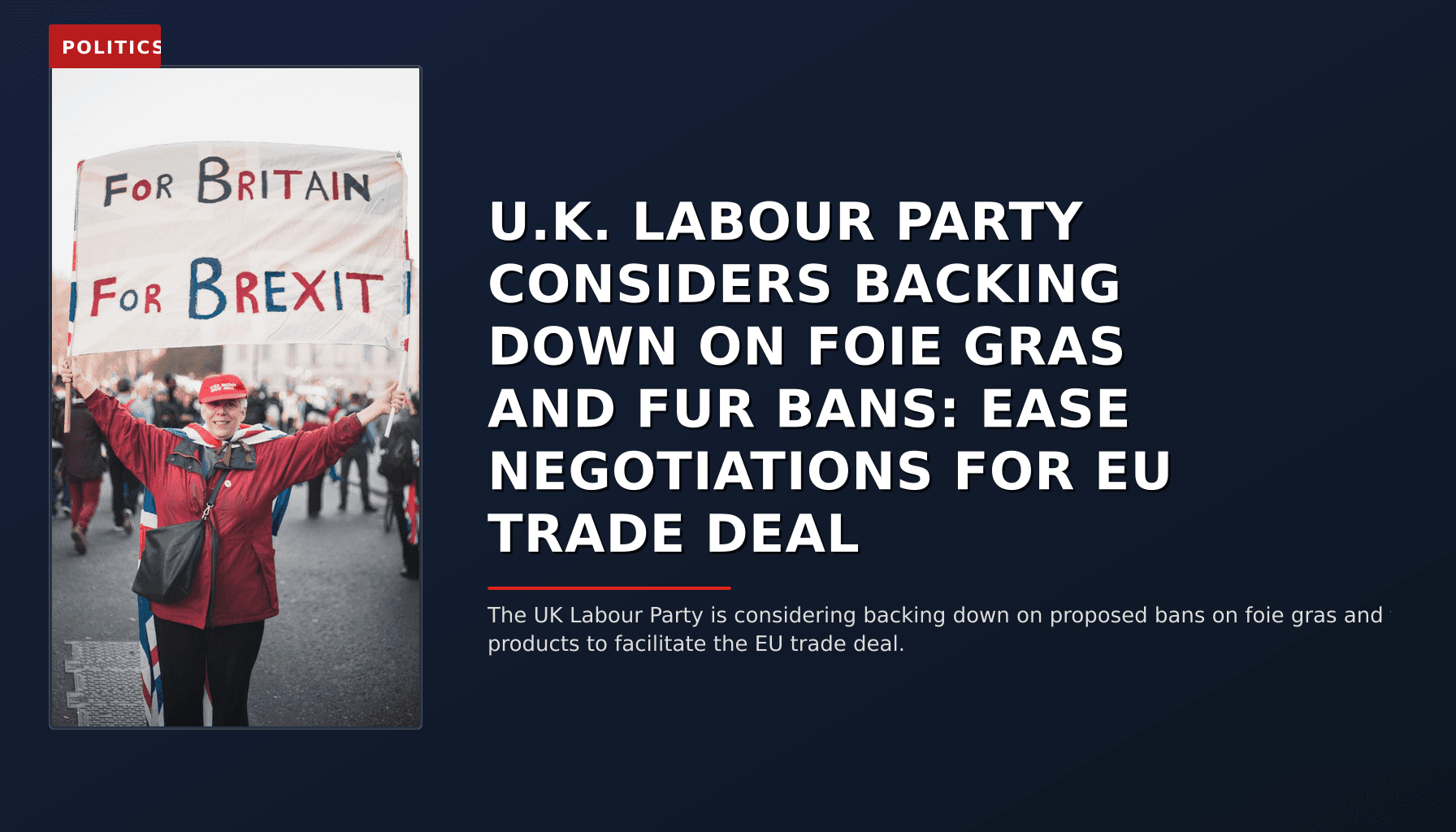
U.K. LABOUR PARTY CONSIDERS BACKING DOWN ON FOIE GRAS AND FUR BANS: EASE NEGOTIATIONS FOR EU TRADE DEAL
The UK Labour Party is considering softening its stance on bans on foie gras and fur products to facilitate a post-Brexit trade deal with the EU, according to recent reports.


The UK Labour Party is reportedly reconsidering its stance on banning foie gras and fur products to facilitate a post-Brexit trade agreement with the EU.
It has been reported that the UK Labour Party is contemplating a withdrawal or modification of proposed bans on foie gras and fur products, potentially in an effort to ease negotiations for a post-Breuk trade deal with the European Union. This decision could significantly impact the future of animal welfare standards in the UK and its trading relations with the EU.
According to sources, Labour's reconsideration of these policies stems from the recognition that maintaining such bans could complicate ongoing discussions aimed at establishing a comprehensive trade agreement following Brexit. The trade deal is seen as a critical component for ensuring economic stability and fostering collaboration between the UK and the EU post-Brexit.
The proposed bans on foie gras and fur products have been contentious topics within Labour circles, with internal debates highlighting the tension between upholding ethical standards and prioritizing economic interests. This decision reflects a broader strategic shift within the party to balance its progressive policies with pragmatic considerations for international trade.
Labour's potential U-turn on these issues comes amid increasing pressure from industry stakeholders and EU representatives who have expressed concerns over the implications of such bans on cross-border trade. These stakeholders argue that harmonizing regulations is essential for a smooth post-Brexit economic transition.
Read more: Kemi badenach attacks PM: Scathing criticism over Iran war response
The move has sparked debate among animal rights groups, who view the proposed bans as crucial steps toward improving animal welfare standards. They are now urging Labour to maintain its original stance, emphasizing the ethical imperative of protecting animals despite potential trade implications.
As the UK continues to navigate its post-Brexit landscape, the Labour Party's decision-making process will be closely monitored by both domestic and international observers. The balance between upholding ethical principles and fostering economic partnerships remains a delicate one for policymakers.
The outcome of these negotiations could set a precedent for future trade agreements, influencing how animal welfare issues are addressed in international commerce. It underscores the complex interplay between policy, ethics, and economic interests in global trade discussions.
Moving forward, Labour's stance on these issues will likely be a key topic in upcoming parliamentary debates and may influence public perception of the party's commitment to ethical policies versus practical economic strategies.
Read more: Unprecedented £40bn planned for parliament refurbishment: Public scrutiny intensifies

More Stories
Kemi badenach attacks PM: Scathing criticism over Iran war response
7 March 2026 at 14:153 min read
Read More
Unprecedented £40bn planned for parliament refurbishment: Public scrutiny intensifies
6 March 2026 at 22:143 min read
Read More
Conservative peer resigns over PPE deal investigation: Scrutiny intensifies
6 March 2026 at 20:363 min read
Read More
Comments (0)
No comments yet. Be the first to share your thoughts!
Leave a Comment
Your email address will not be published. Comments are moderated before appearing.