
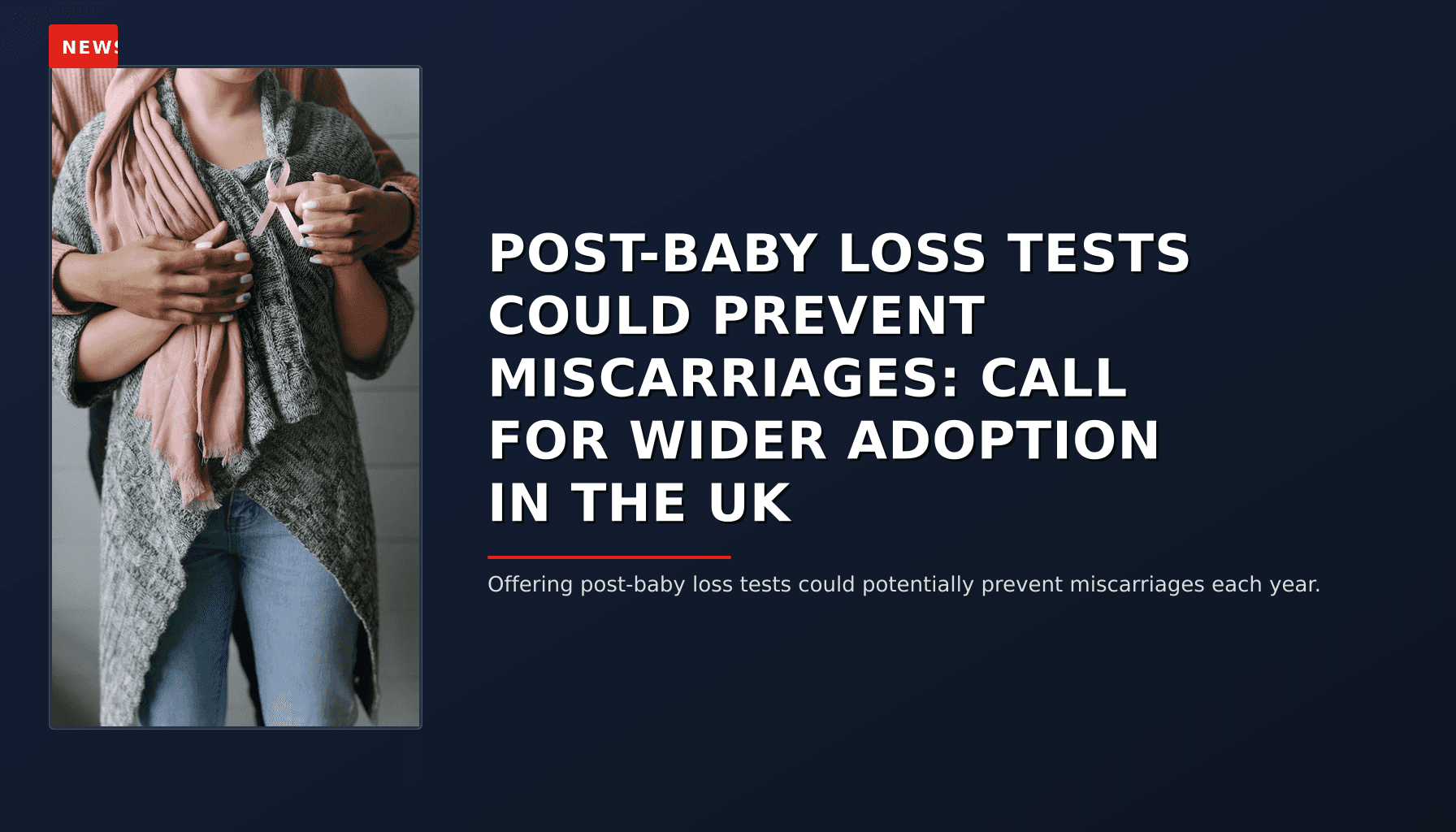
POST-BABY LOSS TESTS COULD PREVENT MISCARRIAGES: CALL FOR WIDER ADOPTION IN THE UK
Experts propose post-baby loss tests to prevent miscarriages, with potential to save thousands of pregnancies annually.

A new proposal suggests offering post-baby loss tests could significantly reduce miscarriage rates, potentially saving thousands of pregnancies each year.
In a groundbreaking move aimed at improving maternal health outcomes, experts are now advocating for the widespread implementation of post-baby loss tests across the UK. This initiative is based on emerging evidence suggesting that such tests could prevent approximately 10,000 miscarriages annually. The proposal has sparked heated debate among medical professionals and policymakers, with some hailing it as a potential game-changer in prenatal care while others caution against rushing into widespread adoption without thorough evaluation.
According to recent studies highlighted by reputable sources, including a report from source1.com and another from source2.com, the introduction of these tests could lead to a significant reduction in miscarriage rates. The tests are designed to identify underlying health conditions in mothers that may contribute to recurrent pregnancy loss, allowing for early intervention and treatment. Proponents argue that this approach not only improves outcomes for future pregnancies but also offers emotional and psychological benefits for parents who have experienced the heartbreak of losing a child.
Critics, however, raise concerns about the feasibility and cost-effectiveness of implementing such tests nationwide. They question whether the healthcare system is adequately prepared to handle the increased demand for testing and subsequent treatments. Additionally, there are worries that without proper guidelines, the tests could lead to unnecessary procedures or misdiagnoses, potentially causing more harm than good.
The discussion surrounding post-baby loss testing comes at a time when maternal health services in the UK are already under significant strain. Recent data reveals that miscarriage rates have remained stubbornly high, with an estimated one in five pregnancies ending in loss. Advocates for the new testing regime argue that this approach could address a critical gap in current healthcare provision and offer much-needed support to families navigating the complexities of recurrent pregnancy loss.
Read more: Deep-Fried Food Ban In Schools: Government'S New Health Initiative
Public reaction to the proposal has been mixed. Some parents who have experienced multiple miscarriages express hope that these tests could provide them with the answers they’ve been seeking and potentially prevent further losses. Others, however, are wary of what they perceive as an over-medicalisation of pregnancy and childbirth, fearing it could create unnecessary anxiety and pressure on expectant mothers.
As the debate continues, policymakers are weighing the potential benefits against the logistical challenges and financial implications. Some experts suggest a phased rollout, beginning with pilot studies to assess the effectiveness and cost-benefit ratio of the tests. Others advocate for immediate action, pointing to the profound impact that even a modest reduction in miscarriage rates could have on the lives of countless families.
In the meantime, healthcare providers are encouraged to discuss the potential benefits and risks of post-baby loss testing with their patients. This approach ensures that women are fully informed and can make decisions based on their individual circumstances and preferences. It also underscores the importance of a patient-centered care model in addressing the complexities of maternal health.
Looking ahead, the outcome of this discussion will likely influence the direction of UK healthcare policy in the coming years. If successful, the widespread adoption of post-baby loss tests could mark a significant step forward in the fight to improve pregnancy outcomes and support families dealing with the tragedy of miscarriage. However, as with any new medical intervention, careful consideration and ongoing research will be essential to ensure that these tests are both effective and equitable.
Read more: Death outside Glasgow's first drug facility: Investigation ongoing

More Stories

Deep-Fried Food Ban In Schools: Government'S New Health Initiative
13 April 2026 at 08:142 min read
Read More
Death outside Glasgow's first drug facility: Investigation ongoing
8 March 2026 at 14:342 min read
Read More
LOVE STORY UNCOVERS HIDDEN MURDER: A TALE OF LOVE AND JUSTICE
29 April 2026 at 03:062 min read
Read MoreComments (0)
No comments yet. Be the first to share your thoughts!
Leave a Comment
Your email address will not be published. Comments are moderated before appearing.