
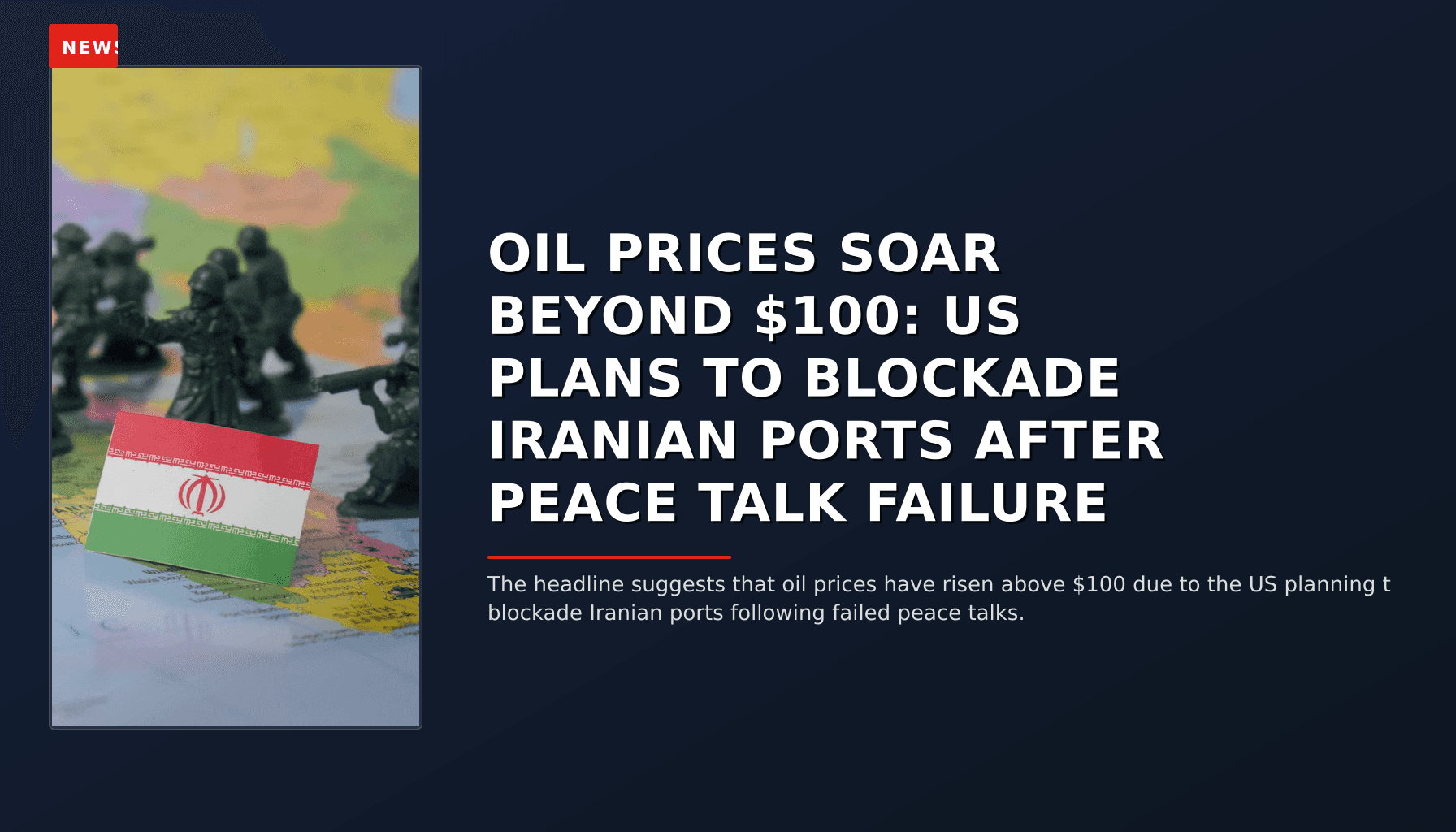
OIL PRICES SOAR BEYOND $100: US PLANS TO BLOCKADE IRANIAN PORTS AFTER PEACE TALK FAILURE
Global oil prices surge above $100 amid reports of potential US sanctions on Iranian ports following failed peace talks. The situation raises concerns over energy security and inflation.


Global oil markets are under strain as prices surge above $100 following reports of potential US sanctions against Iran.
In a significant development, global oil prices have surged past the $100 per barrel mark, fueling concerns about rising energy costs. According to recent market data from Oilprice.com and The Economist, this upward trend has intensified over the past week. Analysts suggest that geopolitical tensions are the primary driver behind this escalation.
The US government appears to be escalating its confrontation with Iran through potential sanctions. Sources indicate that discussions surrounding a blockade of Iranian ports have gained traction, though no official confirmation has been provided yet. These measures would follow failed peace talks between the two nations, as reported by The New York Times, which highlights the breakdown in diplomatic efforts.
It is understood that the US administration is considering targeted sanctions on Iranian ports to pressure Tehran over its nuclear program and regional influence. This move could severely impact global oil supplies, given Iran's significant role in OPEC. Market analysts warn of potential volatility in energy prices as a result.
Despite reports of failed peace talks, there are conflicting narratives about the current state of negotiations. Some sources suggest ongoing discussions, while others point to a definitive breakdown. This ambiguity underscores the complexity of the situation and raises questions about the likelihood of military confrontation.
Read more: Oil prices exceed $100 a barrel: First time in four years
The geopolitical landscape is increasingly tense, with both sides showing little willingness to back down. The US has repeatedly emphasized its commitment to preventing Iran from acquiring nuclear weapons, while Tehran continues to assert its sovereignty and regional interests. This stalemate heightens the risk of broader conflict in the Middle East.
Economic experts predict that sustained oil price increases could trigger further inflationary pressures worldwide. Consumers and businesses may face higher costs for energy-dependent goods and services, exacerbating existing cost-of-living challenges. The impact on global markets will be closely monitored as tensions continue to unfold.
International observers are urging caution, calling for continued dialogue to avoid escalating hostilities. Diplomatic efforts remain crucial in preventing a potentially catastrophic escalation of this conflict. The involvement of global powers, including the UK and EU, could play a decisive role in de-escalating the situation.
Looking ahead, all eyes will be on whether the US proceeds with sanctions and how Iran responds to these measures. The outcome of such actions will have profound implications for global energy security and international relations. As peace talks remain uncertain, the world braces for potential economic and geopolitical fallout.
Read more: RORY MCILROY WINS 2026 MASTERS: A HISTORIC SECOND CONSECUTIVE VICTORY

More Stories
Oil prices exceed $100 a barrel: First time in four years
9 March 2026 at 00:472 min read
Read More
RORY MCILROY WINS 2026 MASTERS: A HISTORIC SECOND CONSECUTIVE VICTORY
13 April 2026 at 00:122 min read
Read More
NAVY BLOCKADES: A HISTORIC TACTIC RESURFACES IN MODERN DIPLOMATIC STRATEGIES
12 April 2026 at 22:522 min read
Read More
Comments (0)
No comments yet. Be the first to share your thoughts!
Leave a Comment
Your email address will not be published. Comments are moderated before appearing.