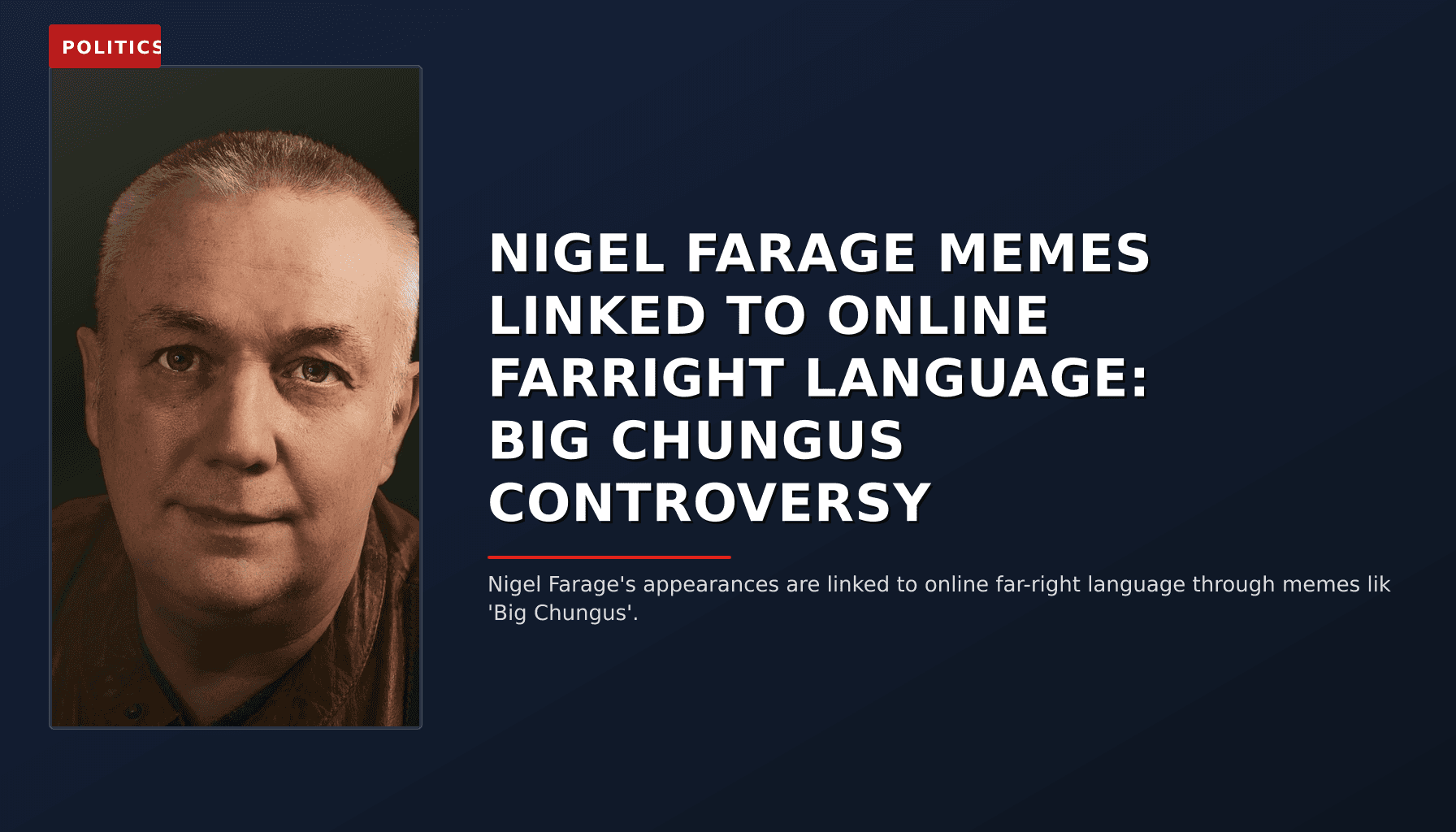
NIGEL FARAGE MEMES LINKED TO ONLINE FARRIGHT LANGUAGE: BIG CHUNGUS CONTROVERSY
Controversy surrounds Nigel Farage's association with online memes featuring 'Big Chungus', linked to far-right content. The implications for his political image are significant as the debate over meme culture's role in shaping public perception continues to grow.

Nigel Farage's appearances are tied to controversial memes featuring 'Big Chungus', sparking debate over his association with far-right content.
The recent surge in online discussions surrounding Nigel Farage has raised eyebrows due to his connection to a series of memes that incorporate the term 'Big Chungus'. This phrase, often linked to far-right circles and associated with derogatory content, has become a focal point for critics who argue it reflects a broader pattern of language usage tied to the former Brexit Party leader.
According to multiple online sources, including articles from reputable news outlets, these memes not only feature Farage's image but also employ language commonly found in far-right communities. The term 'Big Chungus' itself has gainedNotoriety for its association with racist and xenophobic rhetoric, further complicating the narrative around Farage's public persona.
Farage's appearances in such content have sparked debate about his proximity to online extremist movements. Critics suggest that by allowing his image to be used in these memes, he inadvertently aligns himself with ideologies he has previously denounced.
It is important to note that while the memes are a significant part of this discussion, they do not represent direct statements from Farage himself. However, the viral nature of these images and their accompanying language raises questions about the broader implications for his public image and political messaging.
The use of 'Big Chungus' in these memes is not isolated but part of a larger trend where Farage's name or image is co-opted by various online communities to push certain agendas. This phenomenon is not uncommon in politics, where figures can be appropriated by different groups for varying purposes, often beyond their control.
While some argue that such meme culture should not tarnish an individual's reputation, others believe it reflects a deeper alignment with the sentiments of the far-right movement. The challenge here lies in discerning whether these memes are merely opportunistic or indicative of a more profound ideological connection.
In any case, this controversy underscores the unpredictable nature of online content and its impact on public figures. As meme culture continues to influence political discourse, understanding the boundaries between satire, parody, and overtly harmful rhetoric becomes increasingly crucial.
Moving forward, it will be essential for both Farage and his supporters to address these associations proactively. Whether through public statements or policy changes, managing this narrative will be key in maintaining his credibility and effectiveness as a political figure.
More Stories

Comments (0)
No comments yet. Be the first to share your thoughts!
Leave a Comment
Your email address will not be published. Comments are moderated before appearing.