
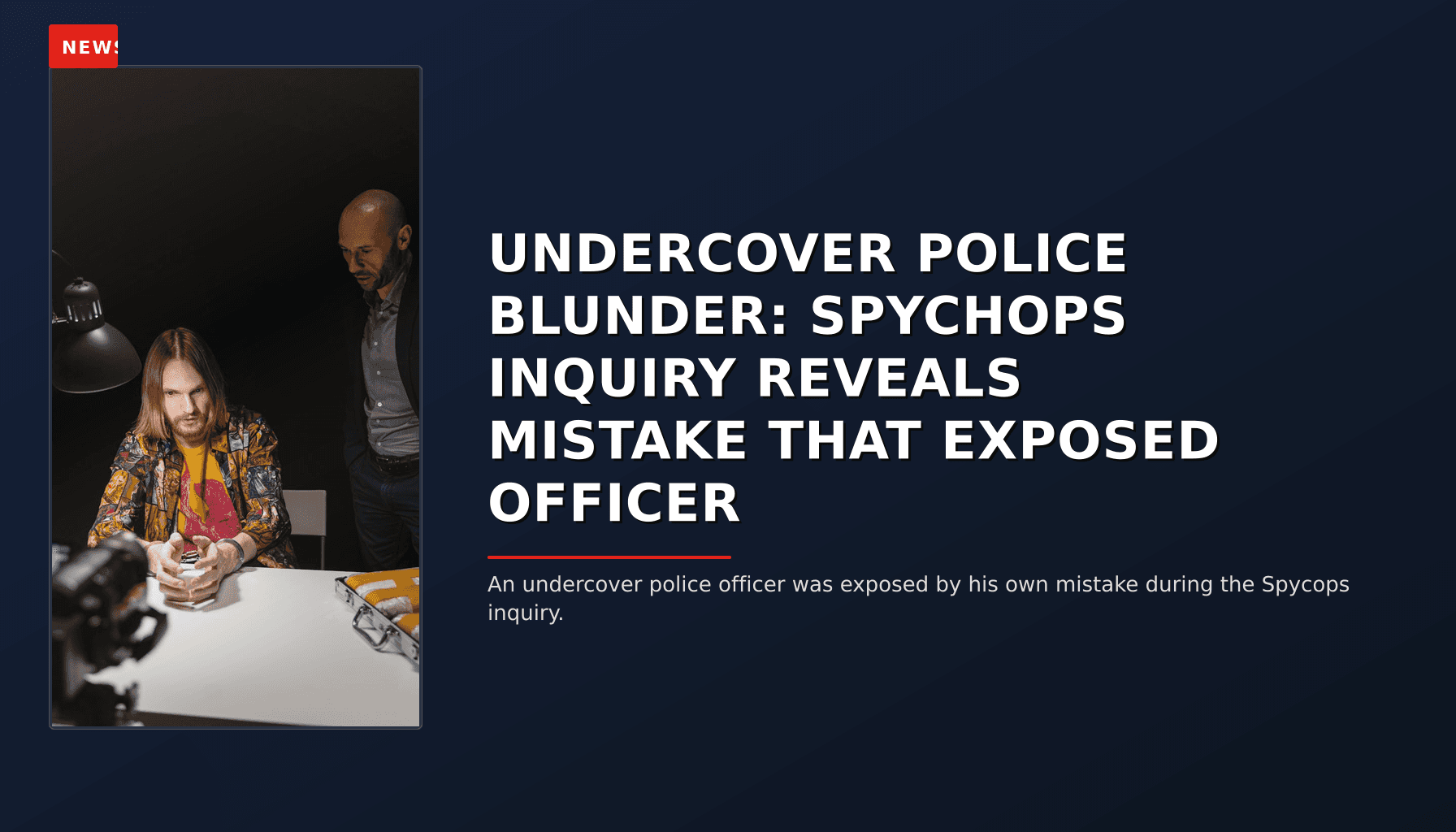
UNDERCOVER POLICE BLUNDER: SPYCHOPS INQUIRY REVEALS MISTAKE THAT EXPOSED OFFICER
An undercover police officer was exposed due to their own mistake during the Spycops inquiry, raising questions about operational integrity and accountability.

An undercover police officer's error during the Spycops inquiry led to their exposure, raising questions about operational integrity.
In a surprising turn of events, an undercover police officer has been exposed due to their own mistake during the ongoing Spycops inquiry. This revelation comes at a time when the inquiry is already grappling with significant allegations regarding covert operations conducted by law enforcement agencies. The incident highlights potential lapses in operational security that could have far-reaching implications for how such investigations are conducted in the future.
The specifics of the blunder remain unclear, as different sources provide conflicting accounts about whether it was an intentional oversight or an accidental slip-up. While some reports suggest that the officer’s error was a simple yet critical misstep, others indicate that the exposure might have been more deliberate, raising questions about the individual’s intentions and judgment.
The Spycops inquiry has already drawn substantial attention for its examination of undercover policing tactics, particularly those involving operations that targeted political activists. The inquiry is tasked with reviewing whether such practices were appropriate and whether they overstepped legal boundaries. This latest development adds another layer of complexity to the investigation, as it now includes an internal failure within the police force.
While no official statement has been released regarding the incident, sources close to the inquiry have hinted that the exposure occurred during a routine review of undercover operations. This suggests that even supposedly secure and discreet police activities are subject to rigorous scrutiny, underscoring the need for strict protocols in such sensitive operations.
The incident has sparked debates about the accountability and oversight mechanisms within law enforcement. Critics argue that such mistakes could undermine public trust in the police, especially when the inquiry is already questioning the ethics of undercover operations. Supporters, however, maintain that thorough reviews are essential to ensure that these tactics are used responsibly and legally.
As the inquiry continues, there are growing calls for transparency regarding how such incidents are handled. Questions have also been raised about whether the individual involved will face disciplinary action or if this could impact the broader inquiry’s findings. The outcome of this case may set a precedent for how future undercover operations are managed and scrutinized.
The Spycops inquiry has already had significant implications for the relationship between law enforcement and the communities they serve. This latest development serves as a reminder that even within the most secure operations, human error can play a pivotal role in shaping outcomes. As the investigation progresses, it will be crucial to assess not only the actions of individual officers but also the systems in place that are supposed to prevent such incidents from occurring.
In the meantime, the police force is likely conducting its own internal review to understand how this blunder happened and to implement measures to prevent similar occurrences in the future. The findings of this review could influence policy changes within law enforcement agencies, affecting how undercover operations are planned and executed moving forward.
The exposure of the undercover officer during the Spycops inquiry underscores the delicate balance between maintaining national security and respecting individual rights. As the inquiry unfolds, it is essential to consider not only the legal ramifications but also the broader implications for public trust in law enforcement institutions. The outcome could shape future policing strategies and the extent to which such operations are permissible under the law.
More Stories

UK TRADE MINISTER URGES GREATER AMBITION IN RESETTNG UK-EU TRADE RELATIONS: A NEW DIRECTION IN BRITISH POLICY
22 March 2026 at 12:152 min read
Read More
STARMER FACES BACKLASH: LABOUR INTERNAL STRIFE AMID GLOBAL TENSIONS
22 March 2026 at 10:352 min read
Read More
LOWEST HOUSE OF LORDS ATTENDANCE: LEDEBEEV AND BOTHAM'S POOR RECORD
22 March 2026 at 10:101 min read
Read More
Comments (0)
No comments yet. Be the first to share your thoughts!
Leave a Comment
Your email address will not be published. Comments are moderated before appearing.