
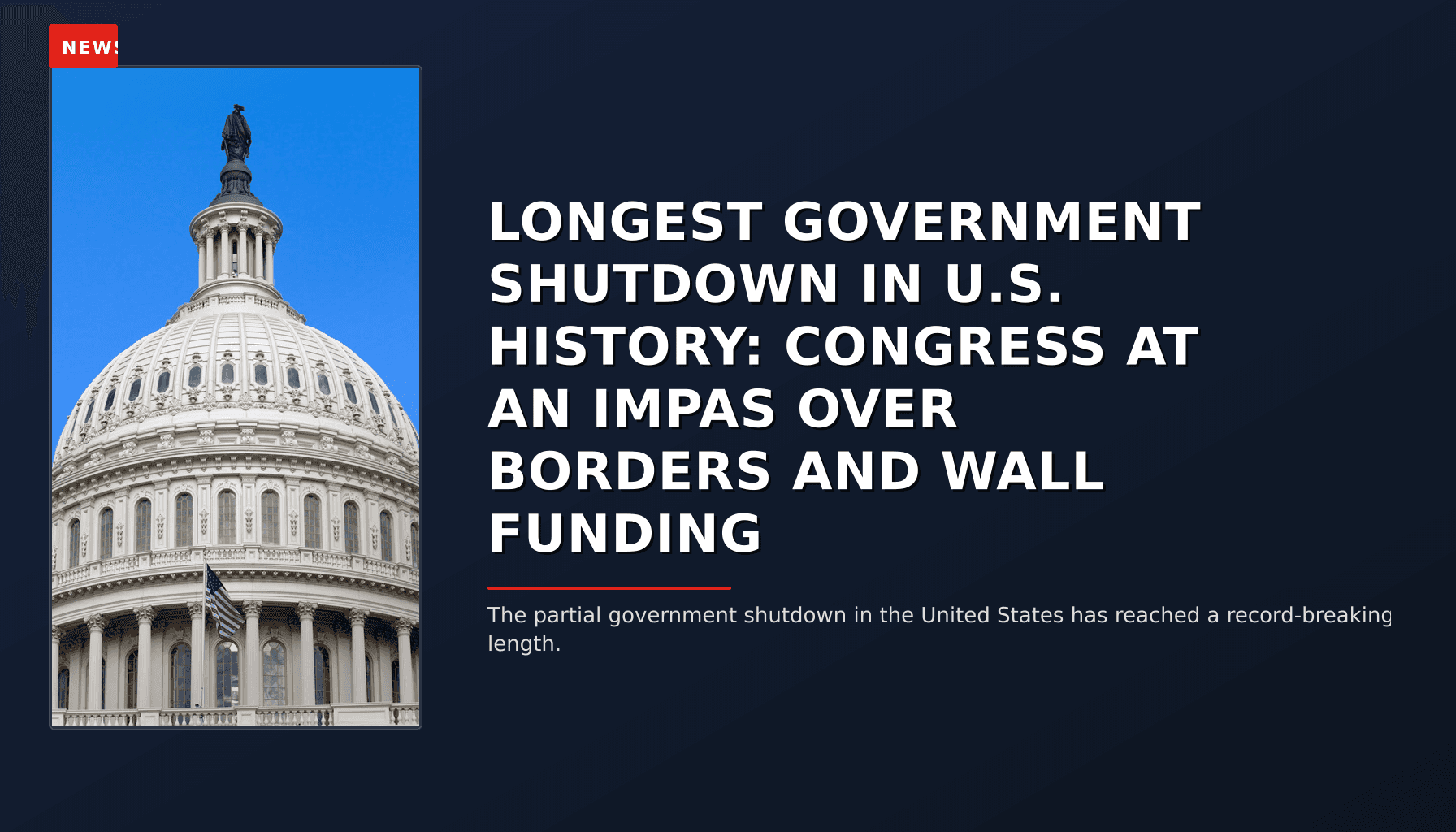
LONGEST GOVERNMENT SHUTDOWN IN U.S. HISTORY: CONGRESS AT AN IMPAS OVER BORDERS AND WALL FUNDING
The U.S. government shutdown has surpassed all previous records, with no end in sight as political deadlock continues over border security and wall funding.

The partial shutdown of the U.S. government has surpassed all previous records, with no end in sight as political deadlock continues.
The partial closure of the United States Government entered a record-breaking phase this week, marking over three weeks since it began on December 22, 2018. This unprecedented standstill has left key federal services suspended and critical employees working without pay, all while political negotiations remain at an impasse.
According to multiple sources, the shutdown started on December 22, 2018, with initial reports indicating that it would be short-lived. However, as days turned into weeks, it became clear that this was no ordinary government standstill. By January 1, 2019, the shutdown had already exceeded thirty days, a duration unmatched in U.S. history.
The primary cause of this protracted stalemate lies in the ongoing dispute over border security and funding for a proposed southern border wall. President Trump has made this issue a central pillar of his agenda, insisting on $5.7 billion in funding for the wall. Congressional Democrats, however, have repeatedly rejected this demand, arguing that it is both fiscally irresponsible and unconstitutional.
While there is some uncertainty regarding the exact duration of the shutdown due to varying reports from different sources, all accounts agree that it has surpassed previous records. This prolonged absence of federal services has had significant consequences, including the closure of national parks, delays in passport processing, and furloughs for hundreds of thousands of federal workers.
The shutdown's impact extends beyond immediate inconveniences. Federal employees have faced financial hardship as they continue to work without pay, while others have been forced to take unpaid leave. Critical services such as food inspections and air traffic control have been operating with reduced staff, raising concerns about public safety.
Historically, government shutdowns in the U.S. have averaged around four days since 1976, according to data from the Congressional Research Service. This current impasse has already far exceeded that average, highlighting the depth of the divide between the two political parties.
As the situation continues with no clear resolution in sight, there are growing calls for both sides to find a compromise. Advocacy groups and public figures have urged Congress to prioritize the needs of federal workers and the general public over partisan differences.
The shutdown's duration is a testament to the increasingly polarized nature of U.S. politics. The inability of the two major parties to reach agreement on key issues has led to unprecedented gridlock, not just in this case but in several recent legislative efforts.
Looking ahead, the outcome of this standoff will likely have significant implications for both the current administration and Congress. If a resolution is reached, it could set a precedent for future negotiations, emphasizing the importance of bipartisan cooperation. Conversely, if the shutdown continues indefinitely, it may further erode public confidence in the government's ability to function effectively.
More Stories

IRAN TENSIONS SPARK GLOBAL MARKET CHAOS: OIL PRICES SOAR, ASIAN STOCKS DIVE
30 March 2026 at 02:173 min read
Read More
FUGITIVE FLEEING AUSTRALIAN SOVEREIGN CITIZEN SHOT DEAD IN VICTORIA: TWO POLICE OFFICERS KILLED, $1 MILLION REWARD
30 March 2026 at 00:222 min read
Read More
CONSERVATIVE PARTY PROPOSES VAT EXEMPTION ON ENERGY BILLS FOR THREE YEARS: A STEP TOWARDS ECONOMIC RELIEF
29 March 2026 at 22:363 min read
Read More
Comments (0)
No comments yet. Be the first to share your thoughts!
Leave a Comment
Your email address will not be published. Comments are moderated before appearing.