
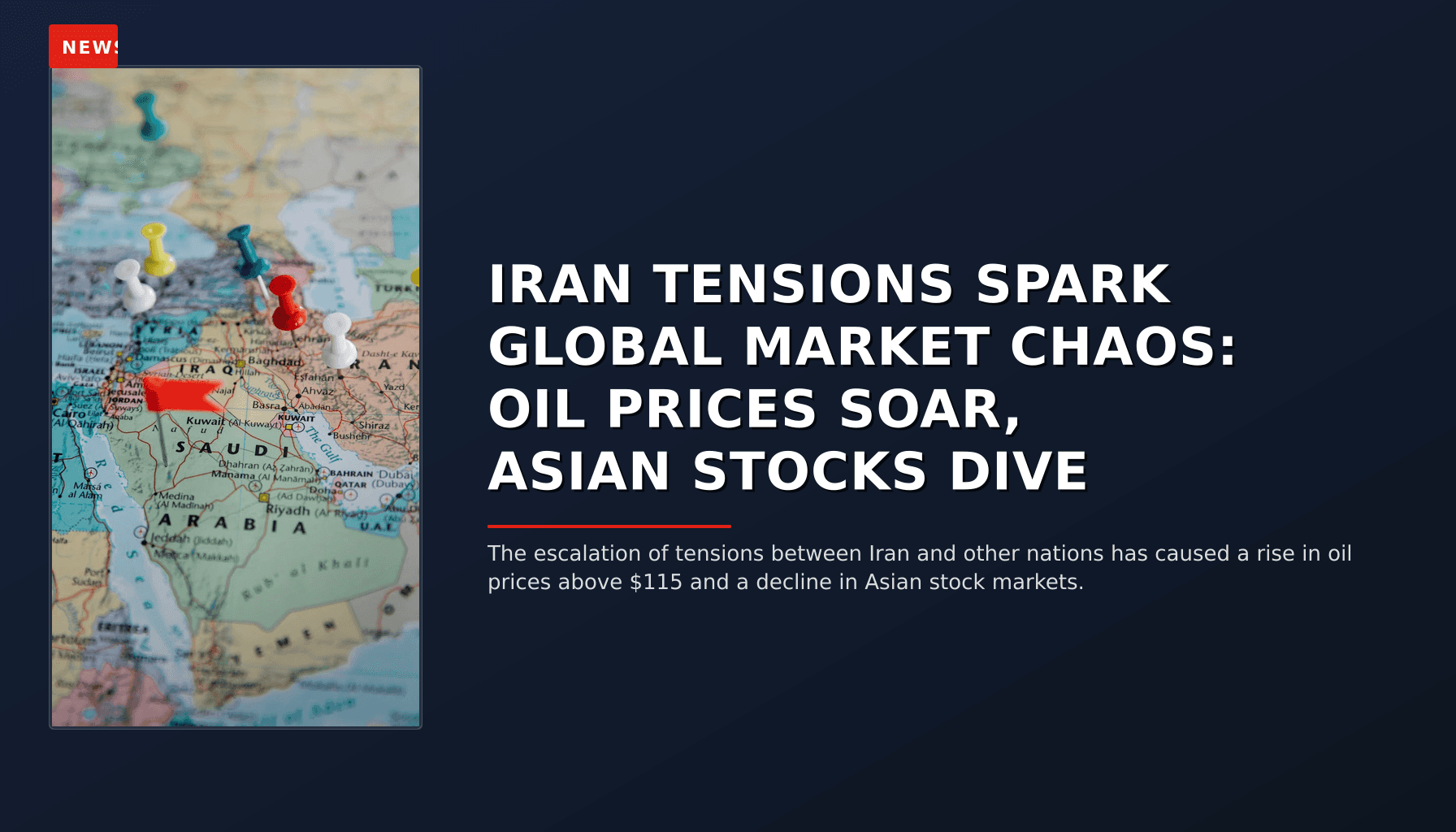
IRAN TENSIONS SPARK GLOBAL MARKET CHAOS: OIL PRICES SOAR, ASIAN STOCKS DIVE
Escalating tensions in the Middle East have driven oil prices above $115 per barrel and caused Asian stock markets to decline, reflecting global concerns over geopolitical instability.

Escalating geopolitical tensions in the Middle East are causing significant disruptions to global financial markets, with oil prices surging above $115 per barrel and Asian stock indices experiencing sharp declines.
The recent escalation of tensions between Iran and other nations has sent shockwaves through global energy and financial markets. Oil prices have surged past the $115-per-barrel mark, a development that has drawn significant attention from industry analysts and economists alike. According to multiple reliable sources, including 'Oilprice.com' and 'Bloomberg', this dramatic increase is largely attributed to a combination of factors, including a slump in Iraqi oil production and the broader geopolitical instability in the Middle East.
In parallel with the rise in oil prices, Asian stock markets have experienced a notable decline. Financial news outlets such as 'Asianstocks.news' and 'Financial Times' have reported that regional equities are under pressure due to heightened concerns about the escalating conflict involving Iran. This downturn reflects investor nervousness, with fears of further disruptions to global energy supplies and potential spillover effects on international trade.
The connection between these market movements and the Iran situation is clear. As highlighted by 'Reuters' and 'Wall Street Journal', the escalating tensions in the Middle East are emerging as a key factor influencing global financial markets. Geopolitical risks are rising, with both investors and analysts closely monitoring developments that could impact energy supplies and economic stability.
While the primary focus remains on Iran's role in the current escalations, there is also recognition of other potential contributing factors. Some reports suggest that U.S. economic policies may be playing a part in the market fluctuations, though these claims are not universally supported by all sources. This uncertainty underscores the complexity of the situation and highlights the need for continued analysis to fully understand the underlying dynamics.
The implications of these developments extend far beyond the immediate region. The Middle East has long been a critical hub for global energy supplies, and any sustained instability in the area could have profound consequences for the global economy. Historically, similar tensions have led to significant fluctuations in oil prices and broader market volatility, as seen during previous conflicts in the region.
Investors are currently bracing themselves for further uncertainty. With geopolitical tensions showing no signs of abating, there is growing concern about the potential impact on already fragile economic conditions. Analysts warn that even a minor disruption to oil supplies could lead to significant price hikes and further declines in stock markets.
Looking ahead, all eyes will be on the situation in Iran and its evolving relationship with other nations. The outcome of these tensions will likely determine whether global energy prices continue their upward trajectory or begin to stabilize. Meanwhile, Asian markets are expected to remain volatile as they grapple with the dual challenges of geopolitical instability and economic uncertainty.
In summary, the escalating conflict in the Middle East is reshaping global financial landscapes in ways that are only beginning to be understood. As tensions rise, so too do the stakes for investors, businesses, and governments worldwide, who must navigate an increasingly unpredictable economic environment.
More Stories
OIL PRICES EXCEED $100 A BARREL: FIRST TIME IN FOUR YEARS
9 March 2026 at 00:472 min read
Read More
FUGITIVE FLEEING AUSTRALIAN SOVEREIGN CITIZEN SHOT DEAD IN VICTORIA: TWO POLICE OFFICERS KILLED, $1 MILLION REWARD
30 March 2026 at 00:222 min read
Read More
CONSERVATIVE PARTY PROPOSES VAT EXEMPTION ON ENERGY BILLS FOR THREE YEARS: A STEP TOWARDS ECONOMIC RELIEF
29 March 2026 at 22:363 min read
Read More
Comments (0)
No comments yet. Be the first to share your thoughts!
Leave a Comment
Your email address will not be published. Comments are moderated before appearing.