
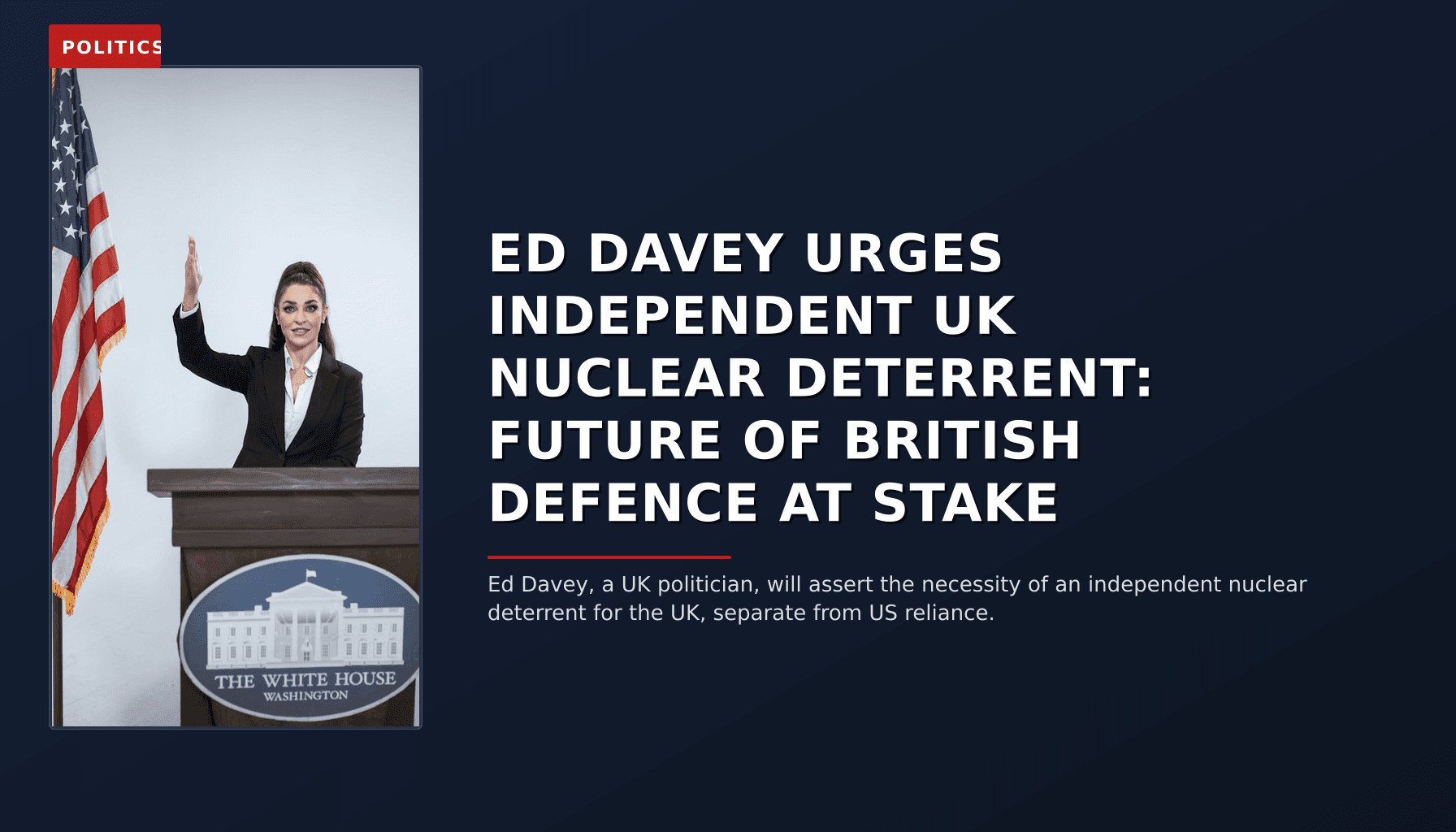
ED DAVEY URGES INDEPENDENT UK NUCLEAR DETERRENT: FUTURE OF BRITISH DEFENCE AT STAKE
Ed Davey advocates for an independent UK nuclear deterrent, challenging reliance on US systems and sparking a national debate on defence strategy.

Ed Davey calls for an independent nuclear deterrent, breaking away from US reliance, sparking debate on UK's security strategy.
As the debate over national security intensifies, Ed Davey, a leading figure in UK politics, has made a compelling case for establishing an independent nuclear deterrent. Speaking in a recent address, Davey argued that the UK must no longer rely on US systems for its nuclear defence, a stance that has drawn both support and criticism from across the political spectrum. This assertion comes at a time when global tensions are rising, prompting questions about the future of British defence policy.
Davey's argument hinges on the belief that an independent nuclear capability is essential for the UK to maintain sovereignty and deter potential adversaries effectively. He emphasized that while current arrangements with the United States provide a level of security, they do not guarantee full independence or control over strategic decisions. This perspective aligns with growing concerns among defence experts about the long-term viability of relying on external nuclear protection.
According to sources, the UK's existing nuclear deterrent does have some degree of reliance on US technology and infrastructure, though the extent of this dependency remains unclear. Advocates for independence argue that this interdependence could potentially compromise British decision-making in times of crisis, undermining national security interests. Such concerns have been echoed in recent defence strategy reviews, which highlight the need for greater autonomy in nuclear capabilities.
Critics, however, caution against the rapid development of an independent deterrent, citing the immense costs and potential risks of escalation. They argue that maintaining a close relationship with US nuclear forces ensures stability and mutual defence under existing treaties. This viewpoint is particularly prevalent among those who advocate for continued transatlantic cooperation in matters of security.
The debate over UK's nuclear strategy reflects broader tensions within British politics about the country's role on the international stage. Proponents of independence, including Davey, envision a more assertive foreign policy that reduces reliance on external powers. Conversely, others believe that collaboration with key allies like the US remains crucial for maintaining global stability.
Looking ahead, the government is expected to release a comprehensive review of the UK's nuclear deterrent later this year. This report will likely address questions about the extent of current dependencies and outline a path forward for future capabilities. The outcome of this review could have significant implications for UK defence spending and international relations.
In the meantime, Davey has called for a national conversation on the importance of an independent nuclear deterrent. He stresses that such a capability is not only a matter of national security but also a symbol of British sovereignty in an increasingly uncertain world. As the discussion unfolds, the UK's approach to nuclear defence will continue to be a focal point in both domestic and international affairs.
More Stories
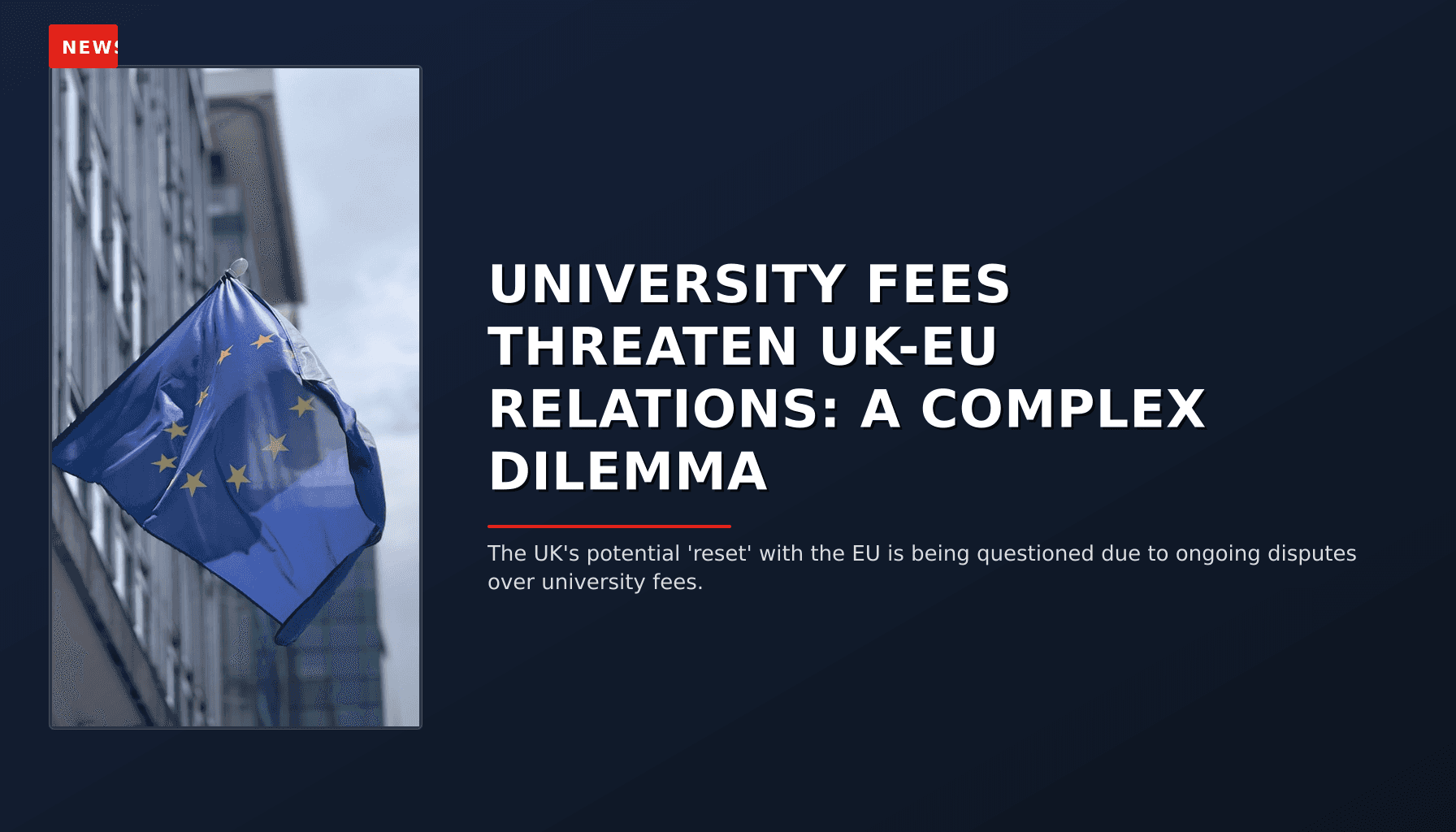
UNIVERSITY FEES THREATEN UK-EU RELATIONS: A COMPLEX DILEMMA
15 March 2026 at 17:452 min read
Read More
THE STRAIGHT OF HORMUZ: UK CONSIDERS OPTIONS TO SECURE CRITICAL WATERWAY
15 March 2026 at 16:371 min read
Read More
KEMI BADENACH ATTACKS PM: SCATHING CRITICISM OVER IRAN WAR RESPONSE
7 March 2026 at 14:153 min read
Read More
Comments (0)
No comments yet. Be the first to share your thoughts!
Leave a Comment
Your email address will not be published. Comments are moderated before appearing.