
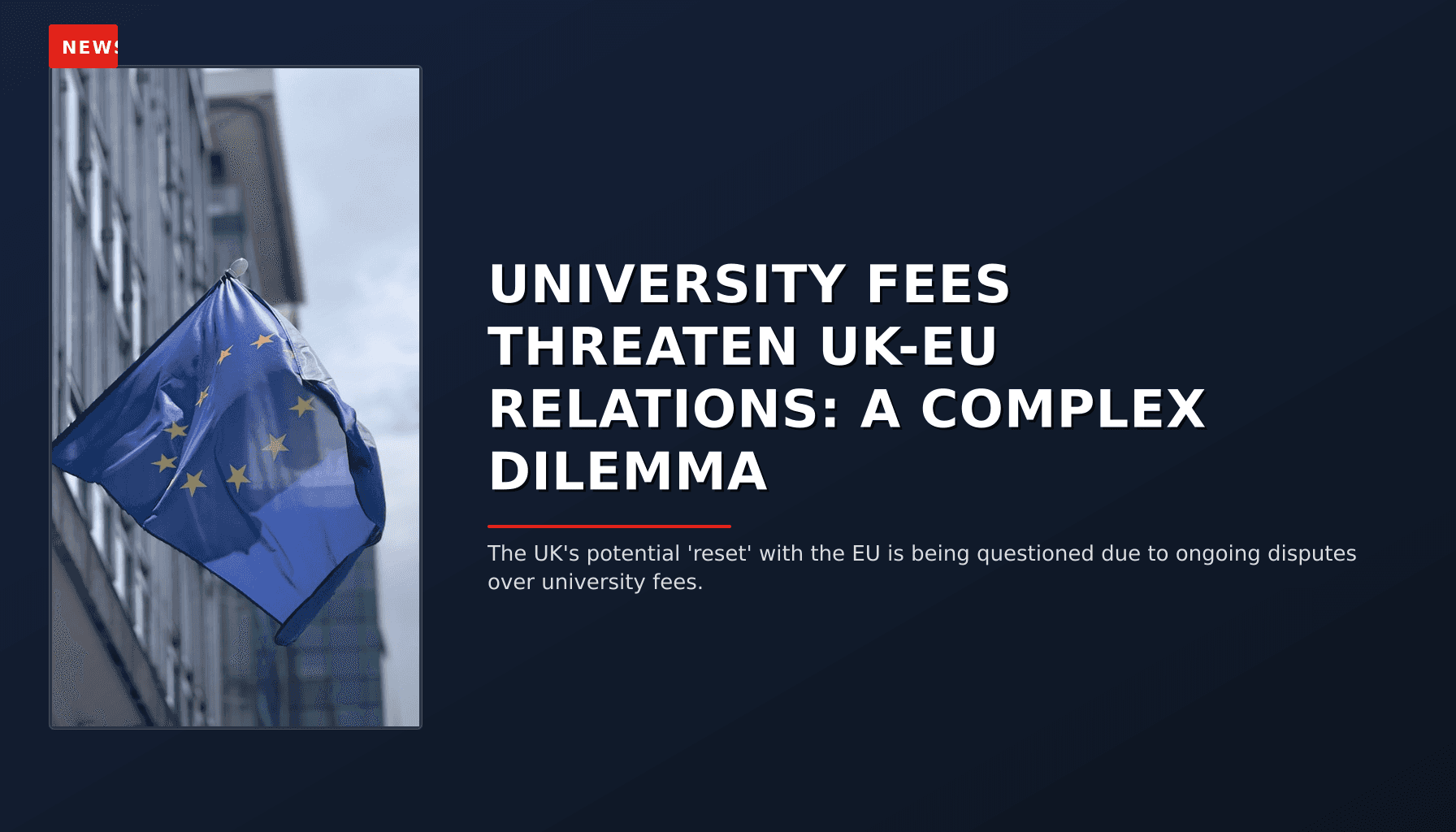
UNIVERSITY FEES THREATEN UK-EU RELATIONS: A COMPLEX DILEMMA
The issue of university fees in the UK is raising concerns about its impact on relations with the EU, potentially complicating post-Brexit diplomatic efforts.

The issue of university fees could complicate efforts to improve UK-EU relations post-Brexit.
As the UK seeks to redefine its relationship with the European Union, a surprising yet significant obstacle has emerged: university fees. The matter has sparked heated debates among policymakers and education experts alike, potentially casting a shadow over broader diplomatic efforts. Recent reports suggest that disagreements over how higher education costs are structured could hinder progress toward establishing more amicable ties between the UK and its former trading partner.
The issue of university fees in the UK has long been a contentious topic, but its implications for EU relations have only recently come to light. According to sources, both parties are reviewing how student tuition charges are set and enforced, with some suggesting that these discussions could influence future trade agreements or cultural exchanges. While specific details remain under wraps, the stakes are high, especially as both sides aim to rebuild trust following Brexit.
Experts warn that this dispute could serve as a microcosm of larger issues plaguing UK-EU interactions. 'University fees might seem like a minor issue,' one analyst said, 'but they can symbolize deeper divisions in how we approach education and economic policies.' This sentiment is echoed by diplomatic observers who believe that resolving such matters will require careful negotiation and mutual understanding.
The UK's current university fee structure has been criticized for being among the highest in Europe. Critics argue that this deters EU students from pursuing degrees in British institutions, potentially affecting both academic collaboration and economic ties. Meanwhile, proponents of the system defend it as a necessary measure to sustain high-quality education amid limited public funding.
As the situation unfolds, the implications for students are profound. EU nationals currently studying or planning to enroll in UK universities face uncertainty about whether their fees will rise or if they'll be subject to new regulations. This anxiety is compounded by broader concerns about how Brexit has already altered access to educational opportunities across Europe.
Diplomatic sources indicate that both the UK and the EU are aware of the sensitivity surrounding this issue. There are ongoing discussions aimed at finding a balanced approach that respects both financial realities and the importance of academic mobility. However, reaching an agreement may prove challenging, given differing priorities and political climates on either side of the Channel.
Looking ahead, the outcome of these negotiations will be closely monitored by educators, policymakers, and students alike. If resolved constructively, this issue could set a positive precedent for future UK-EU collaboration. Conversely, any misstep might exacerbate existing tensions and hinder efforts to reset their relationship.
More Stories
THE STRAIGHT OF HORMUZ: UK CONSIDERS OPTIONS TO SECURE CRITICAL WATERWAY
15 March 2026 at 16:371 min read
Read More
KEMI BADENACH ATTACKS PM: SCATHING CRITICISM OVER IRAN WAR RESPONSE
7 March 2026 at 14:153 min read
Read More
UNPRECEDENTED £40bn PLANNED FOR PARLIAMENT REFURBISHMENT: PUBLIC SCRUTINY INTENSIFIES
6 March 2026 at 22:143 min read
Read More
Comments (0)
No comments yet. Be the first to share your thoughts!
Leave a Comment
Your email address will not be published. Comments are moderated before appearing.