
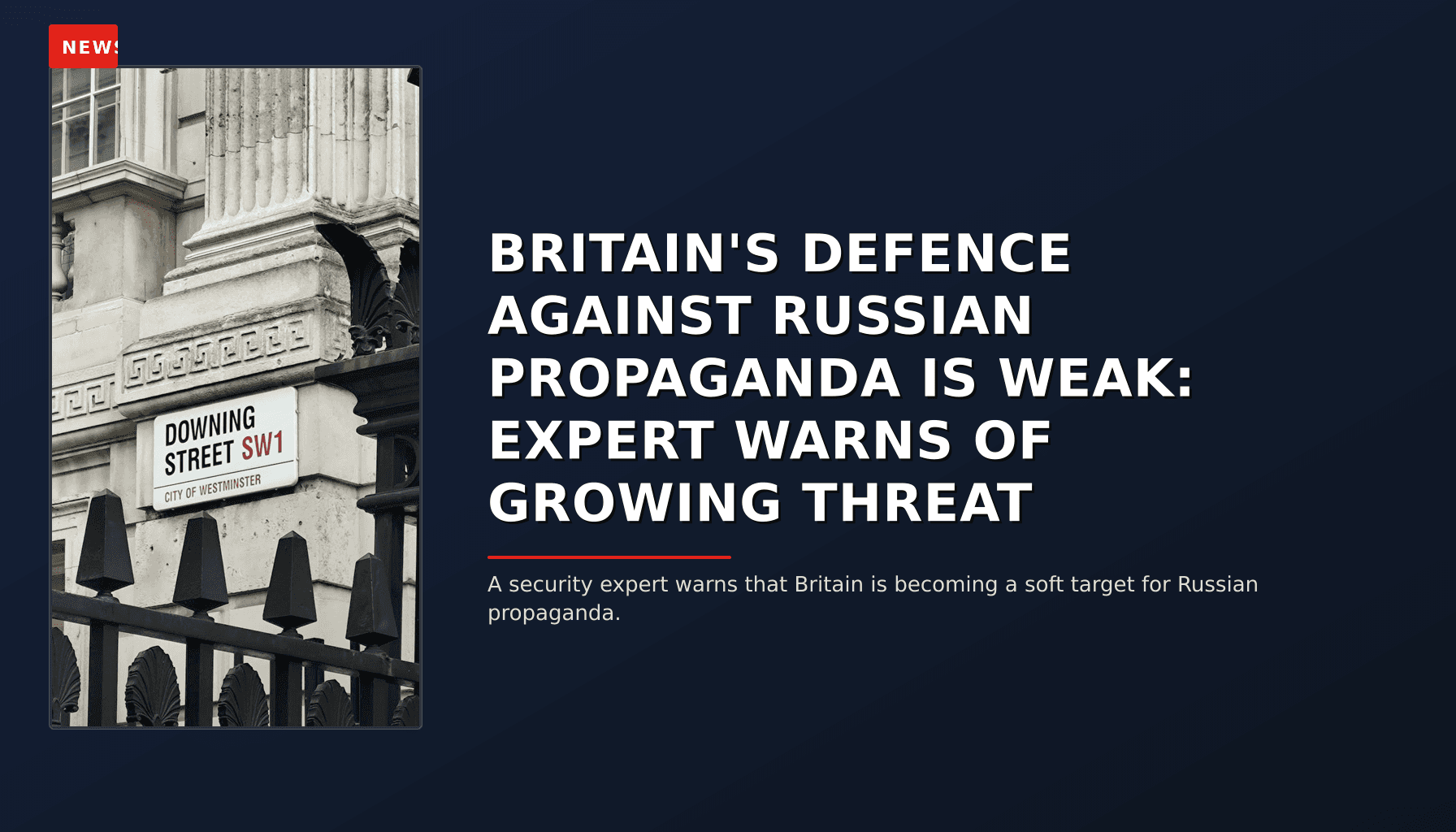
BRITAIN'S DEFENCE AGAINST RUSSIAN PROPAGANDA IS WEAK: EXPERT WARNS OF GROWING THREAT
Security expert warns Britain's defences against Russian disinformation are insufficient, increasing vulnerability to propaganda.

Security expert raises concerns over UK's vulnerability to Russian disinformation campaigns.
According to a recent warning from a security expert, Britain is becoming an increasingly soft target for Russian propaganda. This concerning revelation comes amid ongoing tensions between the two nations and growing concerns about the effectiveness of the UK's defences against disinformation. As cyber threats continue to evolve, the need for robust countermeasures has never been more critical.
The expert highlights that the United Kingdom lacks sufficient defences to combat the spread of Russian-originated disinformation. This claim is supported by recent analyses pointing to gaps in the nation's ability to detect and neutralise such threats effectively. While other countries have made significant strides in this area, the UK appears to lag behind, leaving it more vulnerable than its counterparts.
Sources indicate that Russia has been intensifying its propaganda efforts against Western democracies, including Britain. This strategy aims to exploit existing divisions within societies and undermine trust in democratic institutions. The British government has acknowledged the challenge but critics argue that current measures are insufficient to counter the scale and sophistication of these attacks.
The risk lies not just in the volume of disinformation but also in its ability to influence public opinion and policy decisions. If successful, Russian campaigns could lead to political instability and weakened alliances with other Western nations. The expert's warning serves as a stark reminder of the potential consequences of underestimating this threat.
Read more: Uk Government Proposes Electricity Price Changes To Promote Clean Energy
Despite these concerns, some officials maintain that the UK is well-prepared to handle such threats. They point to existing frameworks and collaborative efforts with international partners as evidence of robust defences. However, independent analyses suggest that more needs to be done to address vulnerabilities in both technological infrastructure and public education on media literacy.
The situation underscores the broader challenge faced by democracies worldwide in countering state-sponsored disinformation. While Russia is not the only country employing such tactics, its efforts against the UK have intensified in recent years, coinciding with geopolitical shifts in Europe. This makes it imperative for Britain to reassess its strategies and enhance its capabilities in this critical area of national security.
Public awareness campaigns and improved media literacy are seen as crucial components in fortifying defences against disinformation. Equipping citizens with the tools to discern credible information from propaganda is essential in mitigating the impact of these campaigns. Additionally, fostering collaboration between government agencies, tech companies, and civil society can create a more resilient defence system.
Looking ahead, experts recommend that the UK invests heavily in cybersecurity infrastructure and strengthens international alliances to combat this growing threat collectively. The stakes are high, with the potential for significant damage to national security and democratic stability if these recommendations are not heeded. The clock is ticking as Britain continues to navigate an increasingly complex information landscape.
Read more: Deep-Fried Food Ban In Schools: Government'S New Health Initiative
While the immediate effects of Russian propaganda may be subtle, the long-term consequences could be profound. From eroding public trust in institutions to undermining key alliances, the impact of unchecked disinformation poses a significant threat to British sovereignty and global stability. It remains to be seen whether the UK can mount an effective response before it is too late.

More Stories

Uk Government Proposes Electricity Price Changes To Promote Clean Energy
21 April 2026 at 02:322 min read
Read More
Deep-Fried Food Ban In Schools: Government'S New Health Initiative
13 April 2026 at 08:142 min read
Read More
Kemi badenach attacks PM: Scathing criticism over Iran war response
7 March 2026 at 14:153 min read
Read MoreComments (0)
No comments yet. Be the first to share your thoughts!
Leave a Comment
Your email address will not be published. Comments are moderated before appearing.