
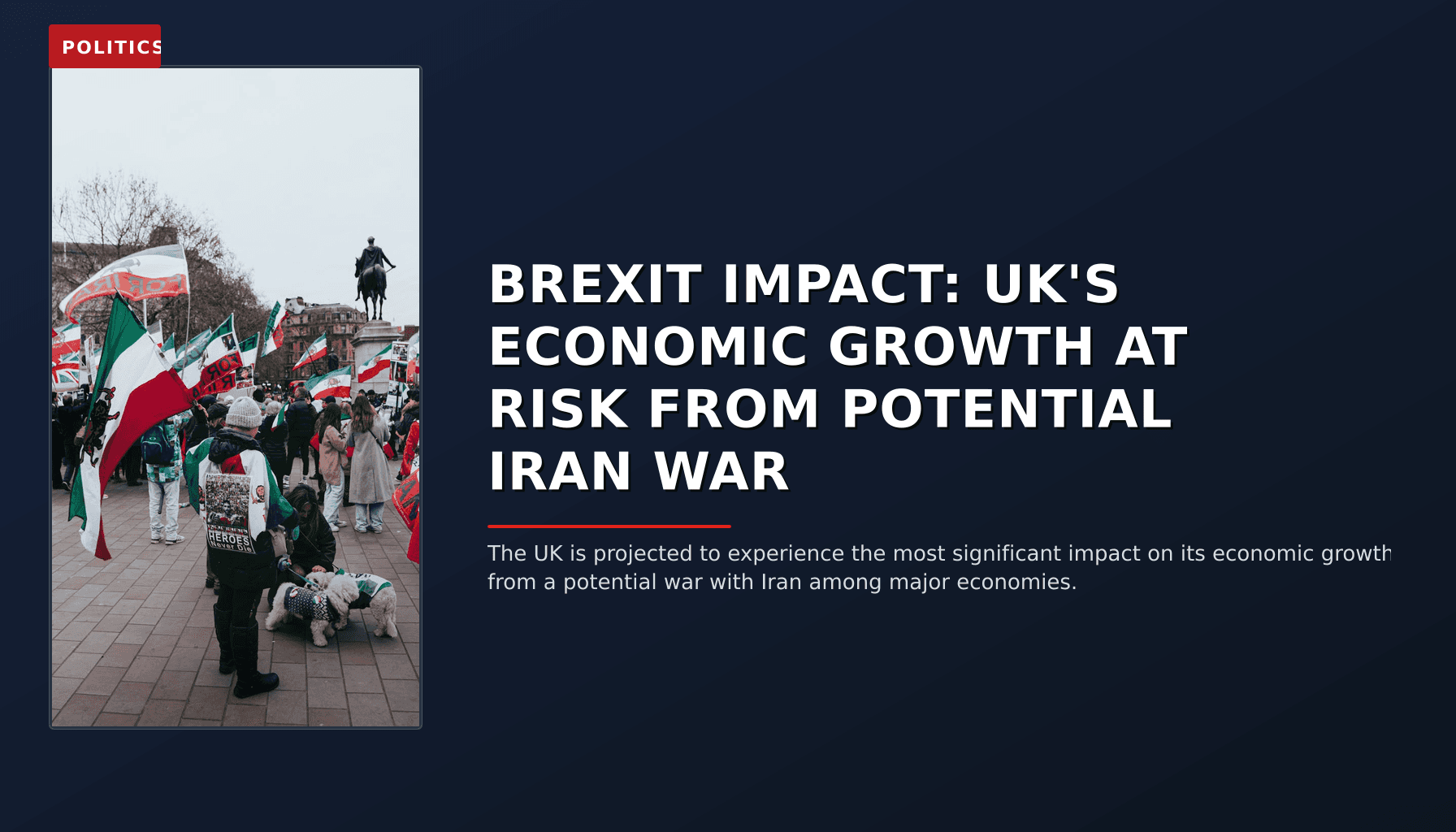
BREXIT IMPACT: UK'S ECONOMIC GROWTH AT RISK FROM POTENTIAL IRAN WAR
The UK may face the most severe economic repercussions compared to other major economies if a war with Iran breaks out, according to recent projections.

The UK could face the most severe economic repercussions compared to other major economies if a war with Iran breaks out.
As global tensions rise, particularly between the US and Iran, the UK's economy is poised to bear one of the heaviest burdens in the event of a conflict. Recent projections suggest that the UK could experience the most significant hit to its GDP compared to other major economies, according to an analysis by The Economist. This development comes amid growing concerns over the global economic stability as geopolitical tensions continue to escalate.
The potential impact on the UK's growth is particularly stark due to its close trade ties with both the US and Europe. A conflict involving Iran could disrupt oil supplies, sending shockwaves through energy markets and potentially leading to higher prices for businesses and consumers alike. This would complicate an already challenging economic landscape, especially as the UK grapples with the ongoing effects of Brexit.
According to The Economist's report, which has been a key source in this developing story, the analysis is based on modelling scenarios that project how different economies might be affected under various conflict conditions. While the exact extent of the impact remains uncertain, the findings underscore the vulnerability of the UK's economy in such a scenario.
Economists have long warned about the risks of an Iran war, particularly given the region's strategic importance to global trade routes and energy supplies. The UK, as a major trading nation, is deeply integrated into these global supply chains, making it especially susceptible to disruptions caused by conflicts in the Middle East.
Despite these concerns, there is no direct confirmation from official sources regarding the specific impact on the UK's economy. Different reports have pointed to varying economies being most affected, which adds a layer of uncertainty to the projections. This lack of clarity underscores the complexity of predicting the economic fallout from such a conflict.
The potential consequences extend beyond immediate economic impacts. A prolonged conflict could also affect investor confidence, currency stability, and global supply chains, further complicating recovery efforts in the UK and other nations. The financial markets have already shown signs of volatility as tensions increase, with investors seeking safer assets amid the uncertainty.
In light of these projections, policymakers in the UK are likely to monitor the situation closely. They may consider measures to mitigate potential economic disruptions, such as diversifying energy sources or strengthening trade relationships with other regions. However, the effectiveness of such strategies will depend on how the conflict evolves and how other major economies respond.
As the situation continues to unfold, the UK's position in global markets and its ability to navigate these challenges will be under close scrutiny. The outcome of any potential conflict could have far-reaching implications for the nation's economic future and its standing on the international stage.
More Stories
KEMI BADENACH ATTACKS PM: SCATHING CRITICISM OVER IRAN WAR RESPONSE
7 March 2026 at 14:153 min read
Read More
WATER PRIVATISATION CONTROVERSY: DEADLY CONSEQUENCES AND PUBLIC SCRUTINY
28 March 2026 at 21:062 min read
Read More
SPEAKER URGED TO ACT OVER STARMER: CALL FOR INVESTIGATION INTO ALLEGED QUESTION AVOIDANCE
28 March 2026 at 19:432 min read
Read More
Comments (0)
No comments yet. Be the first to share your thoughts!
Leave a Comment
Your email address will not be published. Comments are moderated before appearing.