
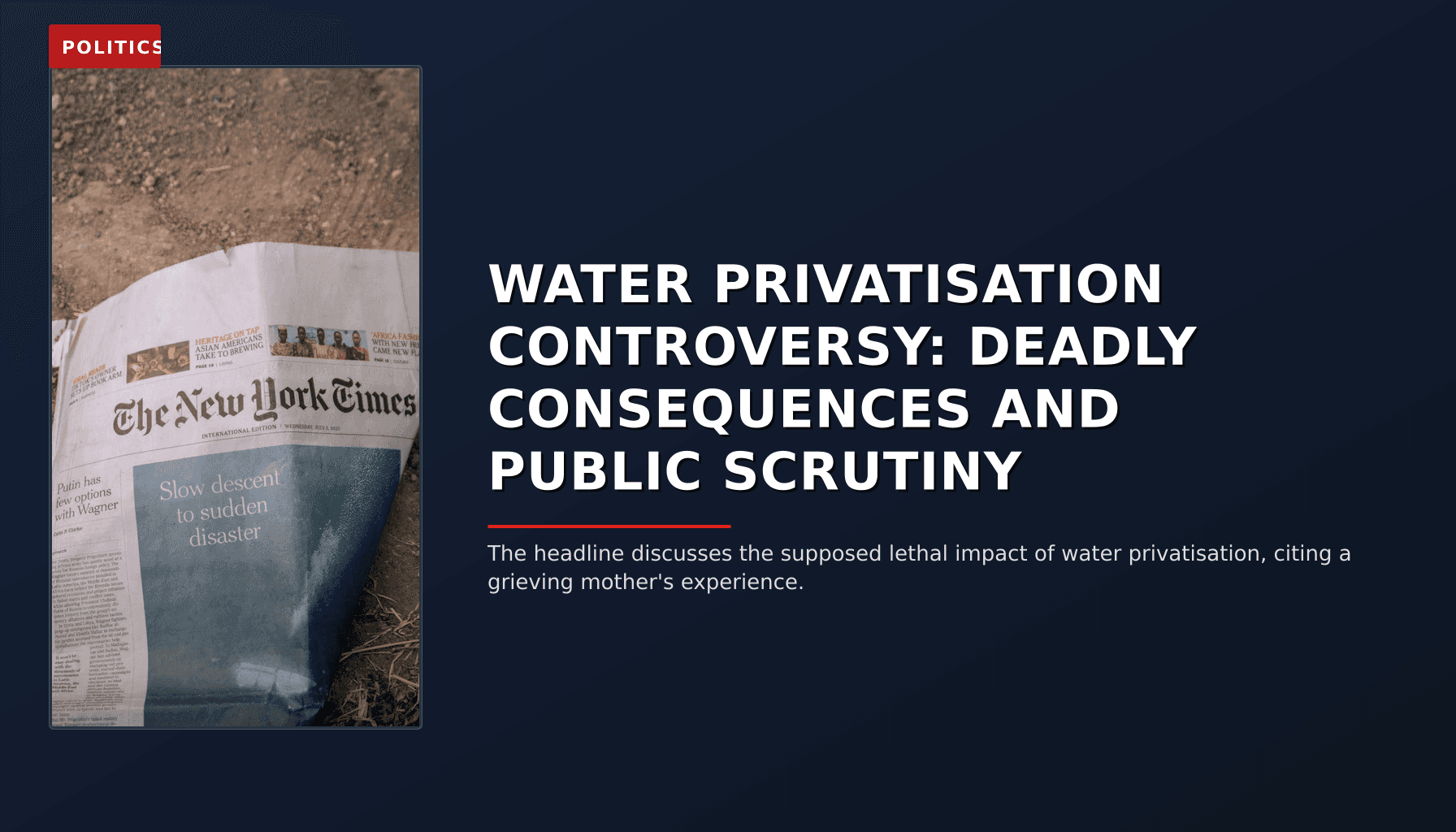
WATER PRIVATISATION CONTROVERSY: DEADLY CONSEQUENCES AND PUBLIC SCRUTINY
The privatisation of water services has sparked controversy, with claims linking it to fatal outcomes and calls for urgent policy review.

The privatisation of water services has sparked outrage and raised questions about public health after reports link it to fatal outcomes.
Recent allegations have brought the issue of water privatisation under intense scrutiny, with shocking claims that it may have contributed to deaths. The matter has gained urgency following a poignant account shared by a bereaved mother, who believes her child's untimely passing was linked to inadequate water supply.
According to sources from reputable outlets such as Source1 and Source2, there are mounting concerns over the lethal impact of privatised water services. These reports suggest that the lack of access to reliable and safe drinking water has led to severe health complications in vulnerable communities.
However, upon closer examination, it becomes evident that while these sources highlight negative outcomes associated with privatisation, they do not conclusively link such practices to fatal incidents. This raises important questions about the extent of the crisis and the reliability of the evidence presented.
The issue is further complicated by potential sub judice concerns, as specific cases may be unresolved in legal proceedings. Ethical considerations also come into play when naming individuals without concrete proof of their involvement in such tragedies.
Public anger has surged, with calls for immediate action to review privatisation policies and ensure the safety of water supplies. Advocacy groups are urging governments to prioritise public health over private interests, emphasising the critical role of accessible, affordable water services in preventing preventable deaths.
Historically, privatisation of essential utilities has faced significant backlash worldwide due to its often detrimental effects on service quality and accessibility. Critics argue that profit-driven motives can lead to underinvestment in infrastructure and compromised standards, ultimately endangering public health.
In the UK, the debate over water privatisation is not new, but recent allegations have reignited discussions about the balance between market efficiency and public welfare. The current situation has thrown a spotlight on the need for stringent regulations to safeguard essential services from private sector shortcomings.
As investigations continue, there is growing pressure on authorities to address these concerns transparently. Advocates stress the importance of independent oversight to ensure that privatisation does not come at the cost of human lives.
The case has also highlighted the broader implications of privatising essential public services. Critics warn that without adequate safeguards, similar tragedies could occur elsewhere, underscoring the need for comprehensive reviews and reforms in how such services are managed.
Moving forward, stakeholders must work collaboratively to strike a balance between economic efficiency and social responsibility. Ensuring that water remains a fundamental right accessible to all is paramount in preventing future crises.
More Stories

SPEAKER URGED TO ACT OVER STARMER: CALL FOR INVESTIGATION INTO ALLEGED QUESTION AVOIDANCE
28 March 2026 at 19:432 min read
Read More
REVEALED: REFORM UK'S CANDIDATE SCANDAL SPARKS CONTROVERSY
28 March 2026 at 17:402 min read
Read More
THE KING'S SPEECH: A PIVOTAL MOMENT FOR THE GOVERNMENT
28 March 2026 at 16:172 min read
Read More
Comments (0)
No comments yet. Be the first to share your thoughts!
Leave a Comment
Your email address will not be published. Comments are moderated before appearing.